Here’s what both sides get wrong about Range of Light National Monument ‘dispute’ | Opinion
A friend and colleague who has never shown the slightest interest in mountains, forests and meadows recently sent the following text:
“Do you know anything about a national monument dispute at the Sierra National Forest?”
The question caused a rueful chuckle. Yeah, I know something. Just hadn’t realized (up until then) that one woman’s crusade to bestow national monument status upon 1.4 million acres of public land northeast of Fresno had again risen to “dispute” levels. As has been the case every two or three years since 2013, when Deanna Wulff began pushing the Range of Light National Monument concept.
Guess that’s what happens when you avoid Facebook.
As Joe Biden nears the end of his presidency, the timing fits. During four years in the Oval Office, Biden has used his presidential authority under the Antiquities Act of 1906 to create five national monuments and expand two others (both in California) originally designated by President Barack Obama. Not since Jimmy Carter has a first-term president been such an active monument-maker.
The hope among certain environmental groups is that Biden will go out with a flourish by making the Range of Light National Monument (named after John Muir’s famous phrase for the Sierra Nevadas) a reality. After starting as a one-woman crusade, Wulff’s dream is now supported by 150 businesses and organizations as well as dozens of national and state politicians, including Fresno Assemblyman Joaquin Arambula, who wrote an August letter asking Gov. Gavin Newsom to urge Biden to raise his pen. Fresno County Supervisor Nathan Magsig took a different tact, penning a letter to Biden this week asking him to reject the proposal.
Will it happen? That greatly hinges on the result of Tuesday’s presidential election. If Donald Trump is reelected, then no. Biden wouldn’t – and shouldn’t – bother to create a new national monument Trump is certain to rescind. (For context, Trump trimmed a combined 2 million acres from Bears Ears and Grand Staircase-Escalante monuments in Utah, shortly after Obama expanded them. Biden then signed new proclamations to reverse Trump’s actions. The matter remains tied up in court.)
In the event of a Kamala Harris victory, the odds are better. Though compared to others being proposed the Range of Light National Monument is on a whole other level – both in terms of its size and the impact such an action would create.
Monument designation largely symbolic
Personally, I’m not a huge fan of the Sierra National Forest (and the San Joaquin River Gorge Special Recreation Management Area outside Auberry) becoming a national monument. Not because I think it’s a terrible idea. Mostly because I believe it’s unnecessary, a largely symbolic move that would accomplish little besides create a demand for new signage and engender unnecessary hostilities.
Why do I feel this way? First, because roughly 43% of the area between Yosemite and Kings Canyon national parks included in the Range of Light National Monument proposal is already designated wilderness. This includes most of the John Muir and Ansel Adams wilderness areas, as well as the Kaiser, Dinkey Lakes and Monarch wilderness areas in their entirety.
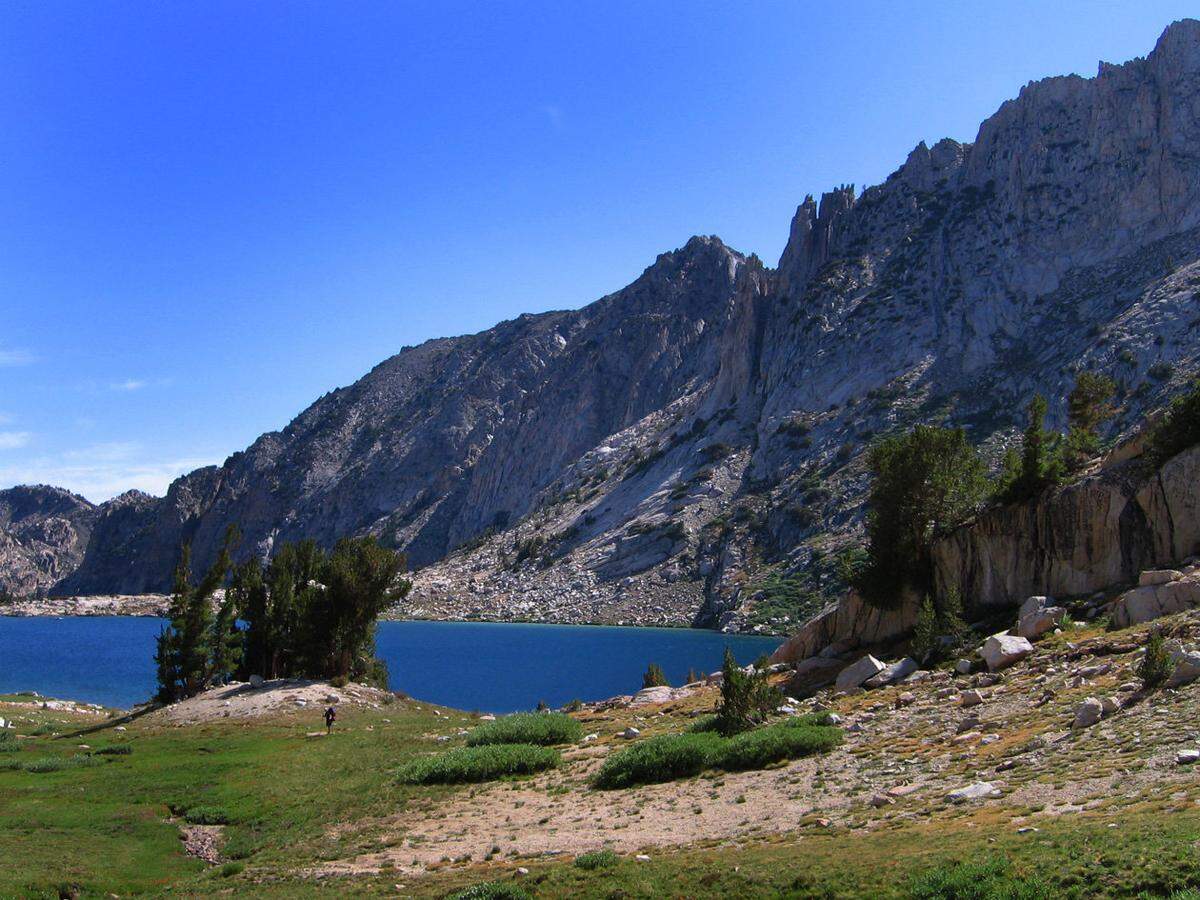
These 603,000 acres, dotted with sculpted peaks, sparkling lakes and glacially carved gorges, are already afforded the highest level of environmental protection available under federal law. In such places, activities like logging, grazing, mining and motorized travel are prohibited. Even mountain biking is forbidden. People who visit either travel on foot or horseback.
Lower-elevation areas have fewer restrictions, but that doesn’t mean the forest is being pillaged and exploited. Statements in Wolff’s 11-page executive summary calling commercial logging “the primary focus” of the Sierra National Forest are blatantly false.
Because of environmental restrictions and changes to the forest management plan, timber harvesting in the 21st century is about half what it was 30 years ago and a tiny fraction of what it was 100 years ago. The numbers have increased recently – but only because the Sierra National Forest lost more than 36 million trees between 2015-2020 because of drought, bark beetle infestations and climate change. No other national forest in California experienced that level of tree mortality.
Many of these weakened trees then burned in the Creek Fire, likely adding to the toll of destruction. In numerous areas (particularly near roads and infrastructure) charred trees have been removed for safety. But to cast such salvage operations as “commercial logging” is disingenuous.
Park service management? Nope
There also seems to be a misconception that changing the national forest into a national monument would come with a change in management and administration. Sorry, that’s not happening.
In 2000, when President Bill Clinton carved the Giant Sequoia National Monument from the Sequoia National Forest to give better protections to giant sequoia groves, the National Park Service didn’t suddenly receive the keys to all the buildings and road gates.
Rather, the US Forest Service has continued to manage those 328,000 acres, and the same would be true if a Range of Light National Monument was established. (It would be different if the area became a national park. But that requires an act of Congress.)
I’m also skeptical about claims and studies that a national monument would lead to big increases in federal investment and tourism. Those things didn’t happen in the Giant Sequoia National Monument, where the forest supervisor received a sum total of $300,000 to improve restrooms and change signs, and they’re unlikely to happen in this case.
For research purposes, I read through a few Facebook posts (and the replies) written by folks opposed to the national monument. Unsurprisingly, many are uninformed and based on falsehoods. Fishing, hunting and mining would still be allowed, as would four-wheeling and riding ATVs on approved roads. Nobody is trying to take away your favorite activity.
The real solution to managing our public land for both recreational enjoyment and the preservation of the environment is for Congress to fund national forests and national parks at levels sufficient for that immense task. Something this country stopped doing decades ago. Not to simply change the name.
This story was originally published October 30, 2024 at 12:00 PM.