Sick of political TV ads? Here’s why Fresno-area viewers are bombarded with so many | Opinion
Television viewers who sit through commercial breaks while watching the local news or football games during an election cycle are not eligible for combat pay.
But after being bombarded with political ads for weeks and months, perhaps they should be.
This is true in many places but particularly the central San Joaquin Valley, where the airwaves are inexpensive compared to California’s largest metro areas. Meaning outside groups and the candidates themselves – who pay vastly different rates to air commercials on local stations – can afford to load up.
“TV ads in the Fresno market cost one-tenth of what they do in LA, one-eighth of what they do in San Francisco and far less than San Diego and Sacramento,” said Tim Orman, a political consultant who has advised local Republican candidates for decades. “That’s one of the reasons why we see so many of them.”
For voters living in Fresno and Clovis, the barrage of ads is extra annoying because most involve candidates whose names aren’t on our ballots. This is especially true with regard to the five Congressional races whose districts are either completely or partially contained within the Fresno television market.
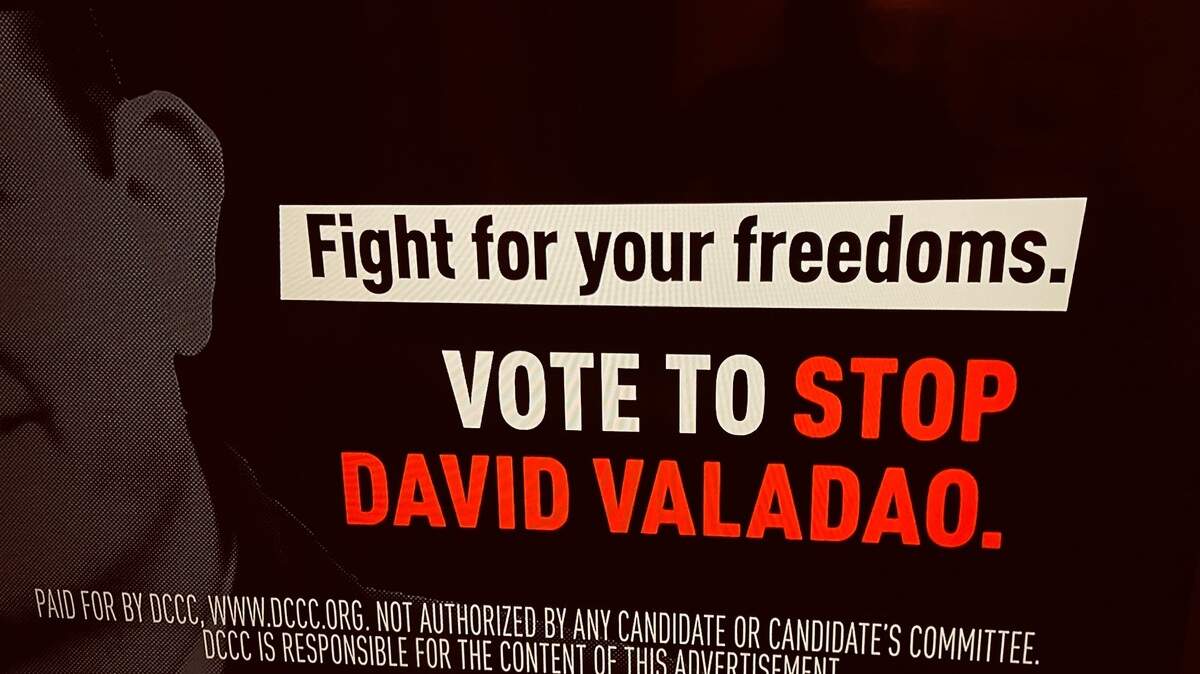
Of those races, two (CD 22 and CD 13) are rated toss-ups by the nonpartisan Cook Political Report and could tip the House majority in favor of either Republicans or Democrats. Outside money that pours into these two particular races explains why local viewers see so many TV ads for David Valadao vs. Rudy Salas and John Duarte vs. Adam Gray, so few for Jim Costa vs. Michael Maher and none for Tom McClintock vs. Mike Barkley. (Vince Fong is more or less running unopposed in CD 20 given that Mike Boudreaux suspended his campaign and endorsed Fong).
When a candidate or political group purchases a local TV ad, the commercial is broadcast to viewers within a six-county area (Fresno, Tulare, Kings, Madera, Merced and Mariposa) that includes 1,045,594 registered voters, according to the California Secretary of State’s 60-day report. Fresno County voters (511,713) account for nearly half of that total.
Congressional ads target few voters
CD 22, where Valadao and Salas are squaring off for a second time, is heavily weighted toward Kern County and the Bakersfield TV market. However, the district also contains 73,768 registered voters in Tulare County and 32,925 in Kings County.
Those numbers add up to 10.2% of registered voters in the Fresno TV market. Meaning nearly 90% of voters targeted with ads attacking and defending Valadao and Salas live outside the district and do not cast ballots in that race.
That percentage for CD 13, a rematch of Duarte’s razor-thin victory in 2022, is 21%. All those ads with Duarte and Gray going back and forth are meaningful to Merced County’s 130,472 voters as well as the combined 88,168 living in western Fresno and Madera counties – just not for the remaining 79% of the Fresno market.
But as Orman pointed out, the number of people those commercials actually influence is even smaller. Much smaller.
“By this point in the campaign there are very few undecideds,” said Orman, who is helping advise Duarte. “The vast majority have already made up their minds, especially in these House races where you have familiar candidates.”
Roughly $33.4 million was spent on the Valadao-Salas race during the 2022 election cycle, according to OpenSecrets.org. (On a cost per vote basis, it was the most expensive in the country.) Of that $33.4 million, $26 million was spent by outside PACs and party central committees compared to $7.4 million by the two campaigns.
Federal election laws prohibit outside political groups from coordinating their advertisements with the candidate’s official campaigns.
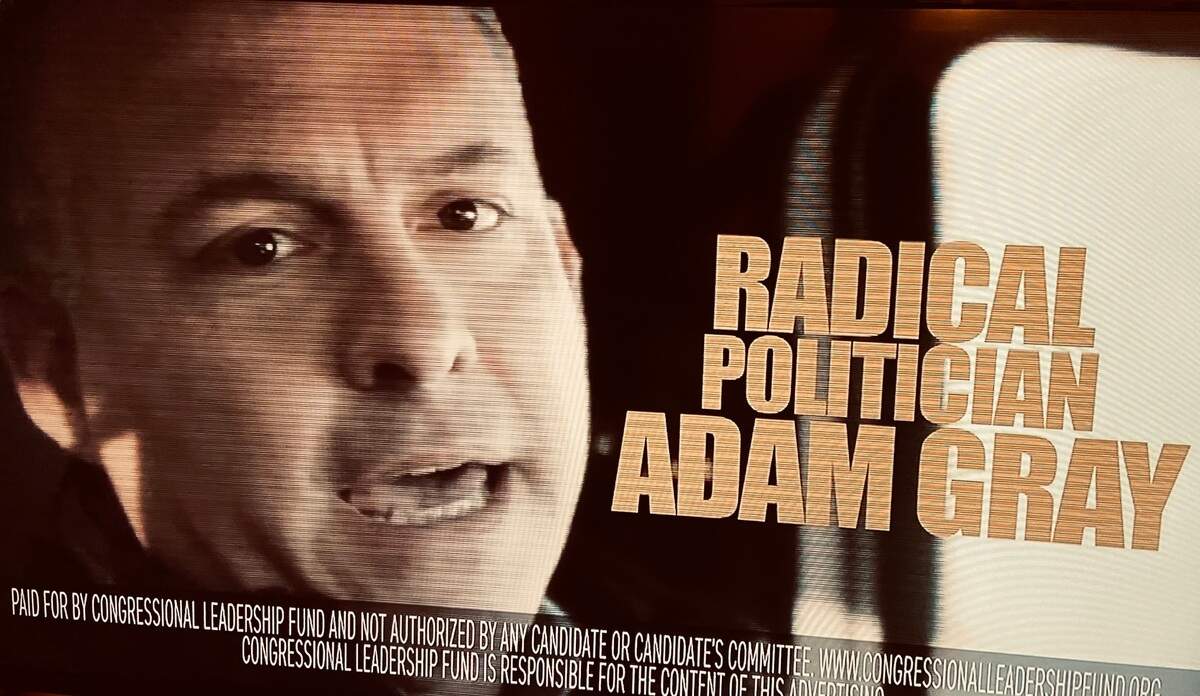
But they can – and often do – react to them. For example, the Congressional Leadership Fund dedicated to electing Republicans is currently airing a commercial that uses video from Gray’s own ad (showing him driving a truck through an orchard) to deride him.
“It’s why you see a lot of attack ads,” Orman said. “Those are effective, up to a point.”
Candidates pay lower ad rates
How much do TV commercials cost to air in the Fresno market?
It depends on a variety of factors including who’s buying them, what station you’re buying from and which dates and time slots. All of that information is public record. Every political ad buy, for every licensed TV and radio station, must be reported to the Federal Communications Commission and made available for public inspection.
A 30-second spot that airs midweek during KMPH-26’s Great Day morning newscast might cost a “legally qualified candidate” as little as $100. But the same commercial airing during the premium NFL game on a Sunday afternoon costs $6,000.
Per FCC rules, candidates pay the station’s lowest ad rates within 60 days of a general election. Outside groups pay “issue rates” that are five or six times the amount of candidate rates, Orman said.
“Even if you’re buying at issue rates it’s still cheaper (in the Fresno market) than it is in LA, San Francisco, San Diego or Sacramento,” he added.
Federal regulations also stipulate candidates must be given equal airtime to their opponents. This explains why you’ll see a Salas attack ad and a pro-Gray ad during one commercial break, followed by a Valadao attack ad and a pro-Duarte ad in the next. Or various combinations.
Even though digital advertising has made inroads, it’s estimated that roughly 70% of all political ad spending during the 2024 election cycle will occur on linear television.
“Candidates love seeing themselves on TV,” said Heather Grevenworth, a Sacramento-based Democratic strategist. “You can never underestimate that.”
And whether we love it or not, we’re stuck seeing their faces on our TV screens for a few more weeks.