Fresno is finally giving its urban forest proper thought. Here’s how you can help | Opinion
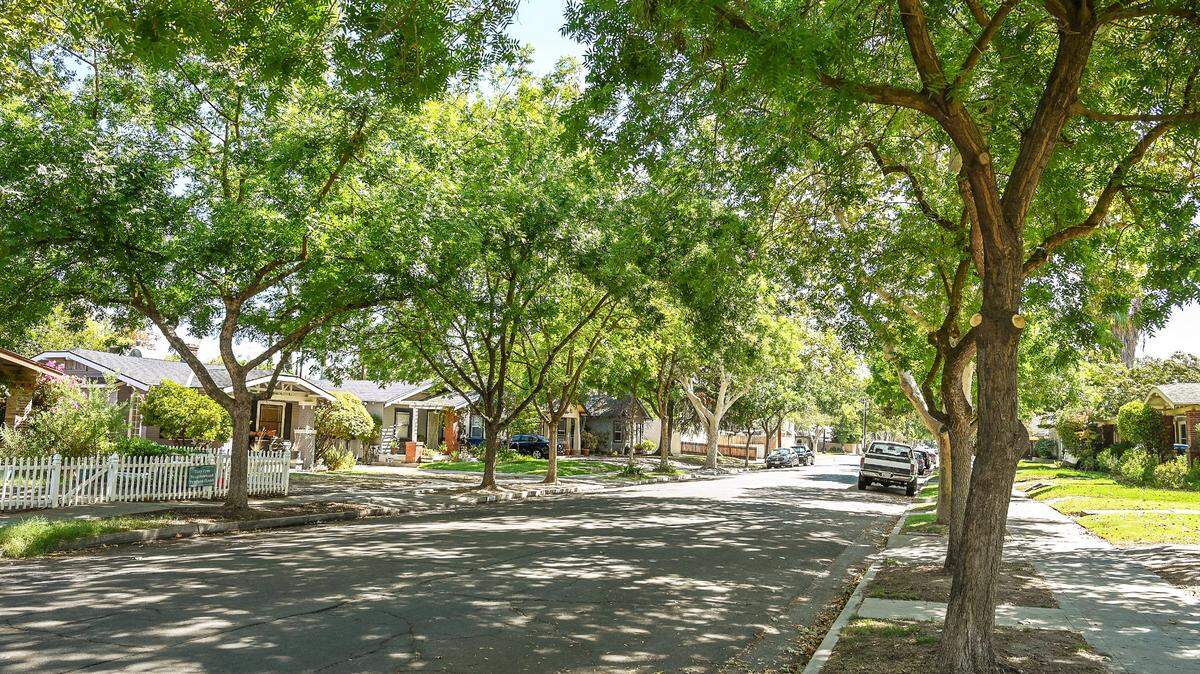
Fresno wants to hear your thoughts about trees.
Yes, trees. Those miraculous organisms that convert carbon dioxide into the oxygen we breathe, improve our air quality, create aesthetically pleasing outdoor spaces, reduce energy consumption and provide shade when it’s hot.
For the first time, Fresno is crafting an Urban Forest Management Plan that will serve as a “roadmap for how the city will care for its trees and expand its tree canopy over the next 40 years.”
To fund the plan’s development, city officials obtained a Cal Fire Urban and Community Forestry Grant in the amount of $307,288.96 and hired a consulting firm to seek community input via an online survey.
The 24-question survey, linked from the city’s website in English, Spanish, Hmong and Punjabi, asks respondents how much, and why, they value trees. Where on public property more trees should be planted. How the city can best help homeowners care for trees in their yards. What resources should be devoted to this effort.
I suggest everyone take the 10 minutes necessary to complete the survey.
For no other reason than a lack of interest might give city officials the idea that Fresno residents don’t care much about trees. Which would be an unfortunate message to send.
“I’m very interested to see what comes out of the Urban Forest Management Plan,” said Mona Cummings, CEO of the nonprofit Tree Fresno. “A city of the size of Fresno should have a management plan for its tree canopy as well as its own urban forester.”
Fresno’s first attempt at a comprehensive tree plan for all the trees under its care follows 2021 GPS-aided tree census that estimated 131,725 trees were growing on city-owned property (i.e. parks, trails, street medians, sidewalk strips), as well as recent efforts by elected leaders to plant more trees and provide for their care. The city is not responsible for trees growing on private and commercial property, apartment complexes or school grounds.
Studies of Fresno’s urban forest follow the familiar pattern: Neighborhoods in whiter, more affluent parts of town tend to have more trees, while neighborhoods where poorer people of color live have fewer.
To help bring about more “tree equity,” the Fresno City Council last year (with a push from Councilmember Tyler Maxwell) committed to planting 1,000 new drought-tolerant trees annually on city property until 2035 and provide jobs in tree maintenance and jobs to youth.
The council resolution also pledged to keep Fresno’s trees on a 10-year maintenance cycle after the city let things lapse for a good long while.
Funding for tree trimming restored
According to Scott Mozier, Fresno’s public works director, no general fund money was allocated for tree trimming in city budgets between 2009 to 2020 (initially as a response to the Great Recession) until Mayor Jerry Dyer restored that line item to the tune of $2.8 million annually.
“The funding challenges combined with years of drought made things very difficult for our urban forest,” Mozier said.
Within the Department of Public Works, the city employs a five-person forestry crew (two two-person units and a supervisor) that does tree inspections and responds to downed limbs, dangerous leaners and other situations that need swift attention reported by other agencies or residents on the FresGo app.
For a city of 116 square miles and roughly 1,700 miles of streets, that’s not a lot of people. (The workforce can be beefed up in emergency storm response situations, such as what we experienced in March.)
Meanwhile, all routine tree trimming and maintenance is outsourced to a private contractor, West Coast Arborists, which has a requirements contract with the city.
Fresno has long lacked an Urban Forest Management Plan to provide a long-term vision for increasing its tree canopy and guide decision-making by city agencies.
However, the effort involves much more than just planting trees in neighborhoods that don’t have enough of them. It’s about what Cummings, the Tree Fresno CEO, called “right tree, right place.”
Meaning no more trees that can’t tolerate drought conditions (i.e. redwoods) and also more diversity. With Tree Fresno’s help, the city in 2019 adopted a “street tree list” containing more than 60 approved species of various sizes and shapes.
Thank goodness, because there are enough neighborhoods in Fresno where crape myrtles seem to be the only tree growing.
“We have told the city of Fresno, ‘We’re fresh out of crape myrtles.’” Cummings said with a chuckle.
Be sure to include that while responding to the city’s tree survey. A moratorium on crape myrtles.
Only kidding.
This story was originally published May 25, 2023 at 5:30 AM.