San Joaquin Valley is mired in ‘exceptional’ drought. So why aren’t we saving water?
Remember a couple weeks ago when it rained half an inch in Fresno and snowed in the Sierra?
Sure was nice while it lasted. But with nothing but sunny skies in the short-term forecast and La Niña ocean conditions expected once again this winter, all signs point to a fourth consecutive year of California drought.
Lest anyone forget while we were being bombarded by election conjecture and commercials, California remains historically parched. The last three years were the driest on record.
Our particular section of the Golden State (i.e. the San Joaquin Valley) has it worst of all. We’re experiencing what federal agencies have termed “exceptional” drought, compared to other regions where drought conditions are categorized as “extreme,” “severe” and “moderate.”
Because the San Joaquin Valley is experiencing California’s worst drought conditions as well as our economic dependence on agriculture, those of us living here should be extra diligent about conserving water.
Especially when instructed to do so by Gov. Gavin Newsom, who in July 2021 called for a 15% voluntary reduction in water use rather than impose mandatory restrictions similar to those implemented in 2015 by former Gov. Jerry Brown.
“As the state prepares for the possibility of a fourth dry year and potential weather extremes, it’s more important than ever that all of us adopt water conservation as a way of life,” Newsom said in a recent statement. “Together, we can save water and save California.”
A recent report by the Public Policy Institute of California illustrates Californians fell well short of meeting Newsom’s 15% savings goal. The state’s urban water agencies managed to save just 4% between July 2021 and August 2022 compared to 2020 use levels before jumping to 9% over the summer months.
To illustrate their data, the authors took the monthly supply reports from every urban water agency in the state and plotted them on a graph, separated into six geographic regions. Displayed in such a fashion, it’s easy to see where Californians did a good job saving water and where they didn’t.
Urban water agencies in the North Coast and San Francisco Bay Area were on the upper end of the graph, meeting or nearly meeting Newsom’s 15% savings goal, followed by those in the Sacramento Valley and Central Coast. Southern California and the San Joaquin Valley brought up the rear. Until last summer, users barely saved any water at all.
Every drop of water savings helps
What’s up with that? Shouldn’t those of us living in California’s most drought-stricken area, in a region whose largest industry depends on irrigation, be the state’s biggest water hawks?
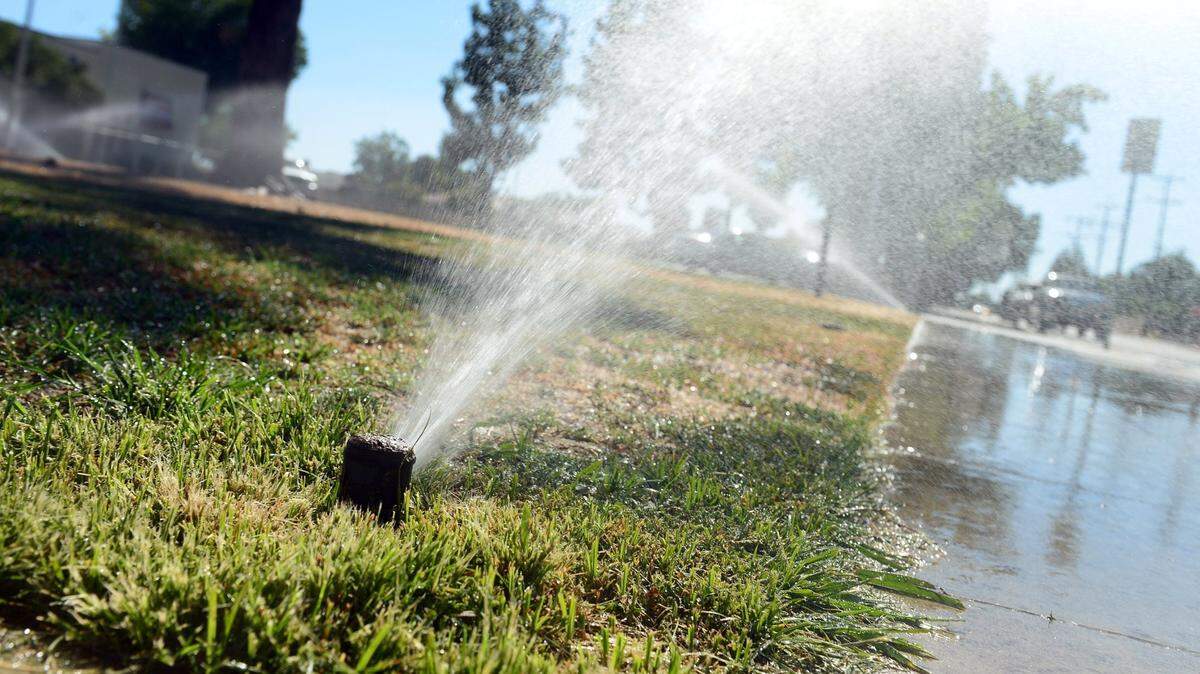
Evidently not. At least not judging by the PPIC report — or my neighbor’s sprinklers that continue to soak his front yard (and half of mine) multiple times per week in defiance, or ignorance, of Clovis’ winter watering schedule.
If you’re one of those people who maintains a lush lawn, takes long showers and washes the car in the driveway with an open house while bemoaning how farmers aren’t getting enough water for their crops, time to connect the dots.
It’s easy to think of California water consumption as a three-slice pie. Roughly 50% of the pie goes to the environment (half of that via federally designated wild and scenic rivers in the state’s far north), 40% goes to agriculture and 10% to cities. So even though residential use helps account for the smallest slice, every drop of savings helps.
California’s water crisis won’t be solved through conservation alone. The state needs to recycle more water, capture more water (like the Fresno Metropolitan Flood Control District, which fills 150 ponds with storm runoff from a 400 square-mile area), store more water (preferably underground) and tear out our lawns. Our archaic water rights laws need reworking, as well.
Newsom insisted he’s looking at every option, including a few novel ideas that he termed “break-the-glass scenarios.” In the meantime, now that reelection is no longer a concern, mandatory water restrictions should be implemented without a moment’s hesitation.
Californians, and San Joaquin Valley residents in particular, largely ignored Newsom’s request to reduce our water consumption. The next step is being forced.