Funding is no longer an issue for river parkway through Fresno. So what’s the hold up?
From no money to more than we can spend, all at once. State government at its finest.
For decades, the biggest impediment preventing the public from enjoying many properties along the San Joaquin River Parkway was the lack of funding for their regular upkeep.
Today’s current, temporary predicament couldn’t be more different. The tiny state agency responsible for assembling the 22-mile recreation and ecological corridor from Friant Dam to Highway 99 is flush with operations and maintenance money — a result of the $15 million designated to the San Joaquin River Conservancy in the 2021-22 state budget.
This quick turn of events has conservancy staff and members of the governing board feeling added pressure to create river access and alter the public narrative that so much of the parkway isn’t accessible.
“What do we need to do to start spending this money to get these places open? How do we help with this heavy lift? What’s the answer?” Madera County Supervisor and SJRC Board vice chair Brett Frazier asked during an April 6 workshop.
“We need to present that things are moving forward, not holding still,” Frazier added.
Frazier’s comments were directed at John Shelton, the San Joaquin River Conservancy’s executive officer who gave board members an overview of the conservancy’s current properties as well as requirements, deadlines and potential uses of the $15 million.
Shelton presented a chart showing 950 parkway acres are already open for public use (not including Lost Lake Park.) However, as has long been the case, roughly 80% of those 950 acres are located on the river’s Madera County side and not easily accessible from Fresno.
Shelton’s next chart itemized 1,211 acres that he characterized as “informally open — and ready to be formally opened.” Properties on that list included River West Fresno, Ball Ranch, Ledger Island and River Vista.
The initial push will be to increase operations of Sycamore Island Park from three days per week to seven and to begin trash pickup and porta potty service at Ball Ranch and Ledger Island. Both projects require formal RFPs, which Shelton said are “nearly done” and should go out for bid by June.
A third request for proposal will be prepared to open Wildwood Native Park seven days per week. (It too is currently open Friday and weekends.) Fourth on the list is a bid contract to have porta potty service at other locations.
“We’ve been working, and there’s been a lot of progress,” Shelton said in a subsequent interview. “But the progress isn’t something that people see yet.”
Shelton estimated the three RFPs and porta potty contract would cost less than $500,000 annually. Which illustrates how little they would tap the $15 million, which must be spent by 2024 or conveyed by 2026 as currently written.
Three new parkway positions
Until now, the conservancy has made do with three staff members — none of whom are supposed to be working in the field. The expected additions of a recreation officer and two maintenance specialists by August or September will double the workforce and allow existing staff to perform the jobs they’ve been hired to do.
For example, Rebecca Raus is an environmental resource analyst responsible for writing grant applications and management agreements.
“She’s my contracts person,” Shelton said.
However, Raus is also the person who the operator of Sycamore Island Park calls when the front gate gets broken into, something that has happened “five or six” times over the past two years. One time, someone drilled through the keypad.
So instead of devoting all her time to preparing contracts (such as those required to get River West moving ahead), Raus must deal with comparatively trivial matters. And what’s up with idiots who keep busting through the gate?
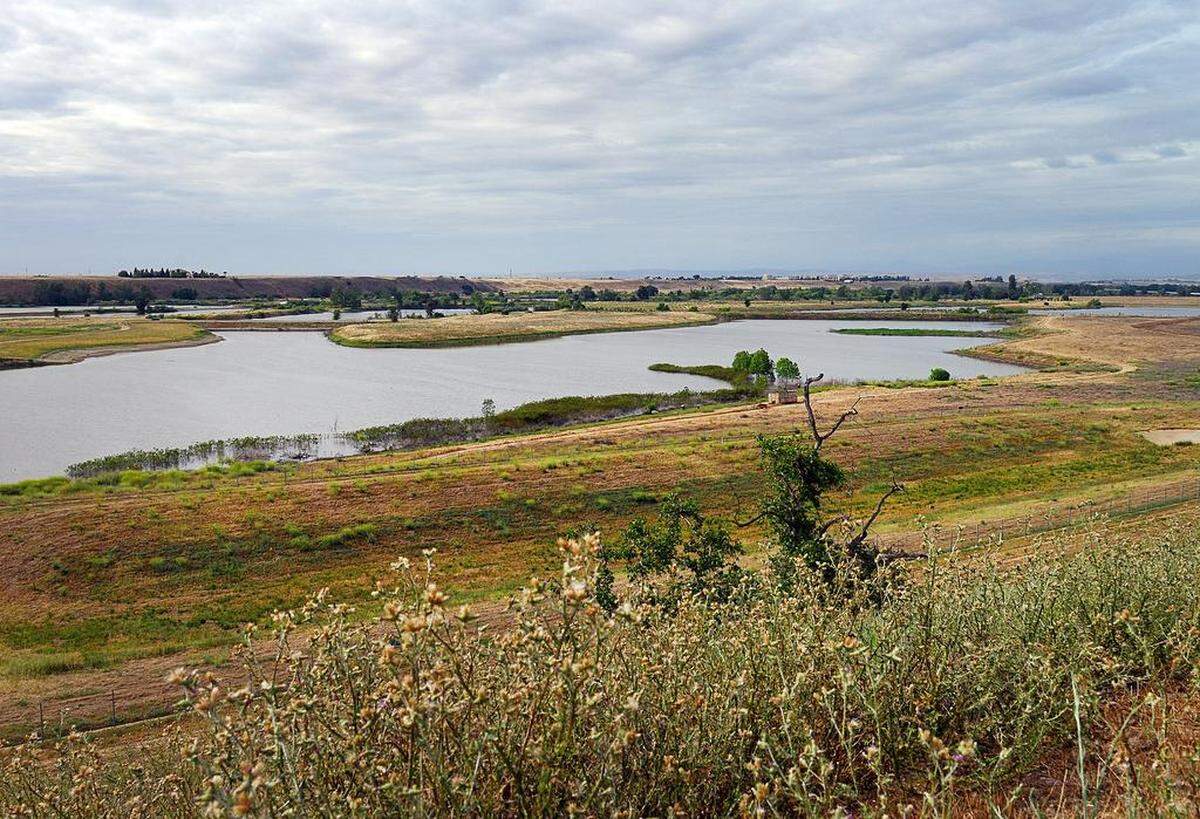
The new positions should alleviate those bottlenecks as well as give the conservancy more of a presence on parkway properties. Research into law enforcement patrols, new signage options and more permanent improvements (i.e. parking areas, cement picnic benches, vault toilets) is also underway.
If all goes smoothly, some 2,000 acres along the San Joaquin River Parkway will be open to the public, including trash and porta potty service, by late summer or early fall.
This in itself will begin to change the public narrative. However, any real community catharsis probably has to wait until the ribbon cutting at River West and its 2.4-mile extension of the Lewis S. Eaton Trail. Construction is still scheduled to begin in 2024.
Which is an unfortunate side effect when an 11-year debate over Fresno’s most tantalizing river bottom lands dominates the headlines and sucks all the oxygen from the room. Even $15 million doesn’t make that go away.