Here’s a safe bet: Tussle over sports gambling in California will be loud, expensive
Here’s a bet Californians can take to the bank: In 2022 we’ll be inundated with conflicting messaging about legalized sports gambling.
It’ll be up to voters to decide not only whether placing bets on professional and college games should be legal, but also who controls the action. Those are the real stakes.
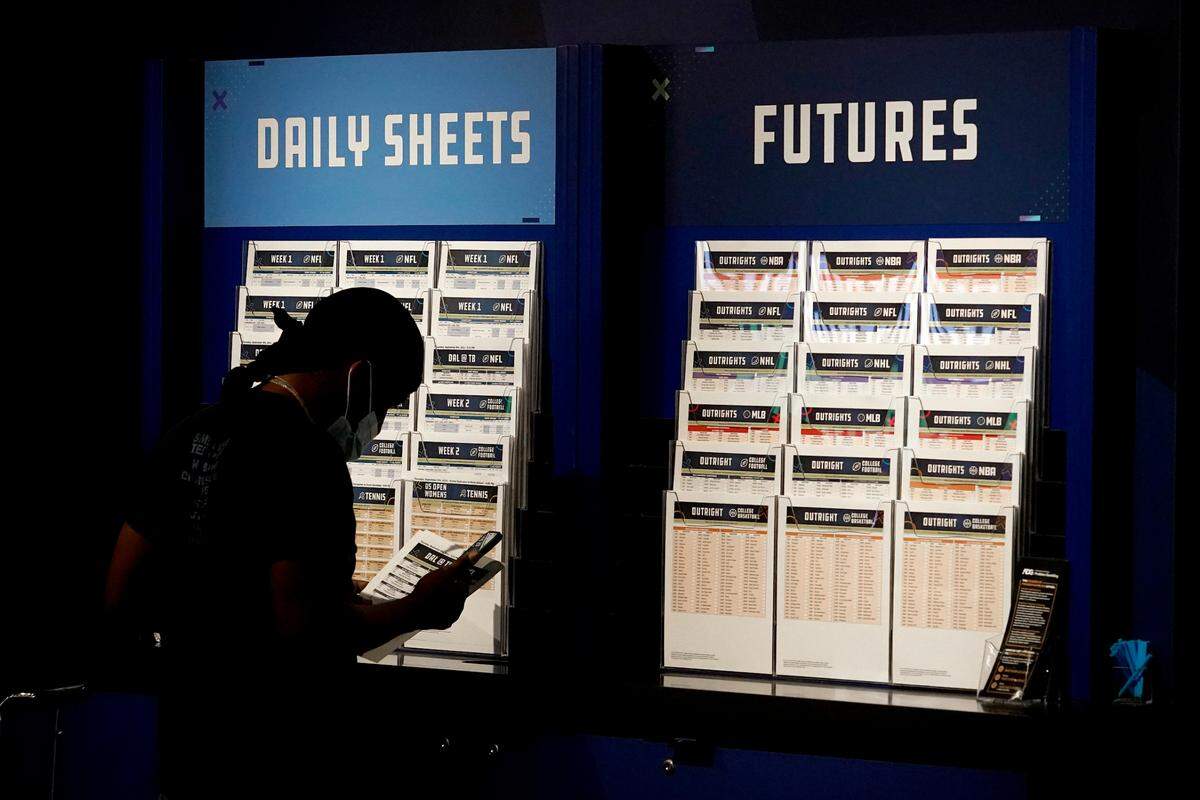
Since a 2018 Supreme Court decision lifted a federal ban on sports gambling, 33 states have legalized the practice in some form. California remains the largest holdout. Industry analysts project retail and online sports betting in the nation’s most populous state could generate more than $3 billion annually.
As with any revenue pie of that size, competing interests are jockeying for the largest portions. They include Native American tribes that operate 66 casinos on tribal lands throughout the state and privately owned cardrooms with 86 locations in cities including Fresno, Clovis, Visalia and Madera. Equally desperate not to miss out are national online sports betting operators including DraftKings, FanDuel and BetMGM.
This being California, the next steps promise to be anything but straightforward. A 2020 legislative effort died in committee after it drew opposition from wealthy and politically powerful tribes. As a result we’re left with four initiatives vying to reach the November ballot that would legalize sports gambling by amending the state Constitution.
The only measure to qualify so far, one backed by four of the state’s largest gaming tribes, would permit in-person wagering at tribal casinos and four horse racing tracks with 70 percent of the tax revenues earmarked to the state’s general fund.
However, that initiative fails to address the most convenient and potentially lucrative segment of the sports betting market: online wagering.
Two competing measures, both still gathering signatures, fill that void in differing ways. One, supported by the mayors of San Jose, Colma, Inglewood and Gardena alongside major cardroom operators, would legalize online and in-person sports betting while also permitting licensed cardrooms to offer additional card and tile games currently limited to tribal casinos.
The other, backed by DraftKings, FanDuel and other national operators, would legalize online betting in partnership with tribal casinos that meet certain requirements while directing 85 percent of tax revenues to homelessness programs. It has gained the support of Fresno Mayor Jerry Dyer and the mayors of Sacramento, Oakland and Long Beach.
“This initiative helps do that by generating hundreds of millions of dollars in badly needed revenue — without raising taxes on residents,” Dyer said in an October statement. “Here in Fresno, and in communities across the state who are looking for ways to house their most vulnerable residents, this ongoing revenue stream will help us craft the critical long-term solutions needed to end homelessness.”
Four sports betting measures?
If three weren’t enough, a fourth measure backed by a different set of tribes would grant exclusive rights over both in-person and online sports betting to federally recognized tribes with lands in California.
Got all that? If all four wind up on the November ballot, a potential but unlikely scenario, voters could not be blamed for throwing up their arms in confusion and rejecting the whole lot.
Which would serve us right — while serving no one except those who oppose legal betting on sports for moral reasons.
In an era where NFL studio hosts make picks against the spread and the bottom-of-the screen scroll caters as much to fantasy sports as the actual scores, are there any of those people left?
Evidently not in great numbers. A recent Sacramento Bee poll asking whether gambling on sports should be legal in California generated 573 responses. Seventy percent answered “yes.”
So rather than dwell on whether sports betting should be legalized, the more pertinent questions begin with how and who. How should all this work, and who should reap the benefits?
Native American tribes have long held sway over California’s gambling industry. Tribal casinos generate an estimated $8 billion in annual revenues, a figure comparable to what Nevada’s casinos take in. Most of the money comes from slot machines, which aren’t permitted at card rooms or race tracks.
Tribes protect gaming turf
No matter how lucrative gaming has become for certain tribes — the wealth isn’t close to evenly spread — the take is never enough. Besides legalizing sports gambling, both tribal-backed initiatives would also allow their casinos to offer roulette and dice games such as craps.
That last bit, roulette and craps, prompted the cardroom industry to ask the California Supreme Court to declare the tribal-backed measure unconstitutional because it contains too many unrelated subjects.
Cardroom operators are also behind Taxpayers Against Special Interest Monopolies, a political action committee that has already raised more than $20 million in opposition to the tribal initiative.
They’ll need every penny. The competing measure backed by DraftKings and supported by mayors of four of the state’s eight largest cities (including Dyer) has a $100 million campaign kitty.
And who knows how much tribal casinos are willing to spend to protect their turf. In 2008 four Southern California tribes coughed up $115 million to prevent cardrooms and other gambling interests from overturning their expansions.
With $3 billion per year at stake, the tussle over legalized sports gambling is shaping up as one of the most pervasive and expensive initiatives in state history. Place your bets now.
This story was originally published January 7, 2022 at 7:00 AM.