Fresno, Valley residents are asked to lessen polluting habits. Why aren’t industries?
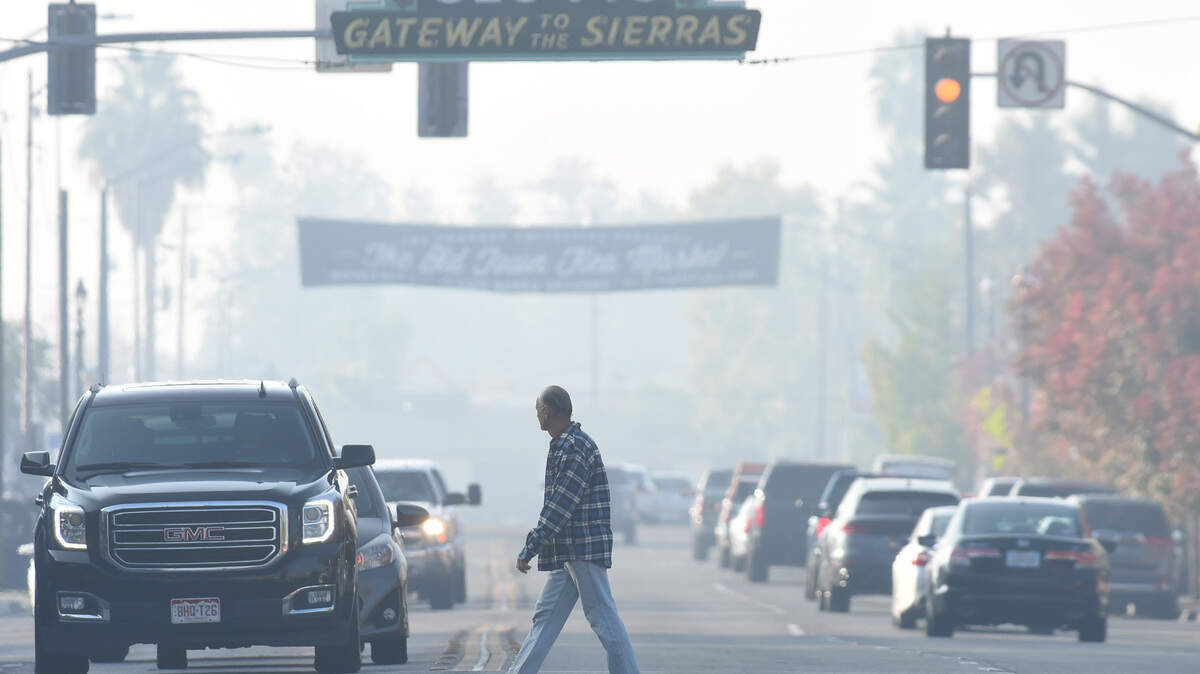
Following a short breather, Fresno and central San Joaquin Valley residents are once again inhaling nasty air that will probably shorten each of our life spans.
Which prompted the usual response from the Valley Air District: We’re all “discouraged” not to burn wood — on some days not even in EPA-registered stoves — and refrain from making excess car trips.
Samir Sheikh, the district’s executive director and air pollution control officer, delivered the message himself during a recent appearance on the weekly COVID-19 media briefing hosted by the Fresno County Department of Public Health.
“We have some really bad meteorological conditions that … put a lid over the Valley,” Sheikh said. “We have specific weather conditions that really lead to the formation of PM 2.5, which is a very impactful pollutant. It’s very unhealthy for residents to breathe.”
Nothing Sheikh said during the Zoom meeting was false or inaccurate — though I will take issue with some of his labeling. Yes, the Valley is a giant bowl that traps air pollution, and high-pressure systems keep those pollutants from escaping. And, yes, residential burning and nitrogen oxide produced by car tailpipes contribute to those frightening PM 2.5 readings captured by $250 and $600,000 air monitors alike.
It’s what Sheikh neglected to mention, or couched in vague descriptors, that pricked up my ears as well as those belonging to local air quality activists.
Because not once during his lengthy response to a question about what’s causing our poor air quality did Sheikh mention oil or biomass production. Nor did he bring up agricultural burning or the toxic methane gas produced by the region’s numerous dairies. Power plants, glass factories, wineries, distribution centers and dust all escaped his notice.
Rather, Sheikh relied on vague terms such as “stationary” sources of air pollution. Or, even worse, “day to day” or “built-in” sources. Terms that imply pollutants each of us must accept as part of life in the Valley.
Which is precisely how Sheikh and the politicians on the air district’s governing board that give the marching orders wish to frame public sentiment.
“The air district doesn’t mind blaming the habits of everyday citizens,” said Tom Franz, president of the Association of Irritated Residents. “But they hate to place the blame on any industry that they believe contributes to the regional economy.”
Economy, political donations come first
It’s all fine and dandy for the air district to make residential burning a central pillar of its public outreach campaign — and even hand out a few citations to habitual violators — or sponsor Spare the Air events.
“Makes it look like they’re doing something,” Franz said.
Just don’t ask them to go after polluting industries with anything approaching the same zeal. Why? Take a look at the campaign finance disclosure forms of any local politician, especially the Republicans. Many of their donations come from oil and energy companies, large-scale farmers, developers (who often double as farmers) and dairies.
During bad air periods, Valley residents are asked to lessen their polluting habits. So why aren’t polluting industries asked to do likewise?
The answer is simple: Lessening production would cost money and result in less profit. And, by golly, we can’t have that. No matter how many asthma sufferers that posture impacts.
“They like to encourage individual behavior because it’s politically inconvenient to go after the actual pollution sources,” said Cathy Garoupa White, executive director of the Central Valley Air Quality Coalition.
Nowhere is this more apparent than in the air district’s messaging over nitrogen oxide emissions primarily produced by tailpipes. NOx (as it is often called) is a primary source of PM 2.5, the tiny particulate matter linked to respiratory issues, birth defects and cardiovascular disease.
In informational packets and fact sheets, the air district claims more than 85 percent of the Valley’s NOx comes from so-called “mobile” sources such as cars, semi trucks and trains — sources that are under state and federal jurisdiction.
In other words, the NOx problem is something the Valley Air District can’t fix on its own.
Ammonia emissions virtually ignored
While that may be true, those same informational packets leave out the fact that mobile sources are responsible for less than 15 percent of our direct PM 2.5 emissions. Most of that comes from “miscellaneous processes,” of which farming operations are the largest single contributor.
Nor does the air district spread the word about the nitrogen-based compound called ammonia that enters the atmosphere and combines with NOx produced by vehicles, power plants and factories to form PM 2.5.
Yet out of the 308.1 tons of ammonia produced daily in the San Joaquin Valley during the winter of 2017, 60 percent came from dairy operations. Another 31 percent came from pesticides and fertilizers. (Those figures were pulled from the “emissions inventory” included in the Valley Air District’s PM 2.5 attainment plan approved by the California Air Resources Board in 2019.)
Why doesn’t the air district raise public awareness about ammonia and where that toxic compound comes from? Because that would result in hurt feelings from dairy operators who donate to local political campaigns.
Jaime Holt, the air district’s chief communications officer, insists that reducing all forms of pollution from all sectors is part of the Valley’s road to cleaner air. Emissions from industry are regulated — largely through incentives to pollute less — and dirty practices such as ag burning are being phased out.
Just not as much, or as soon, as needed. When inconvenient politics get in the way of public health, we all suffer.