What kind of person hoards toilet paper during a pandemic? This kind, study says
Are you an organized yet anxious person? Someone who’s prudent and diligent but tends to act on emotion?
Congratulations, you might be a toilet paper hoarder.
In fact, science says you probably are.
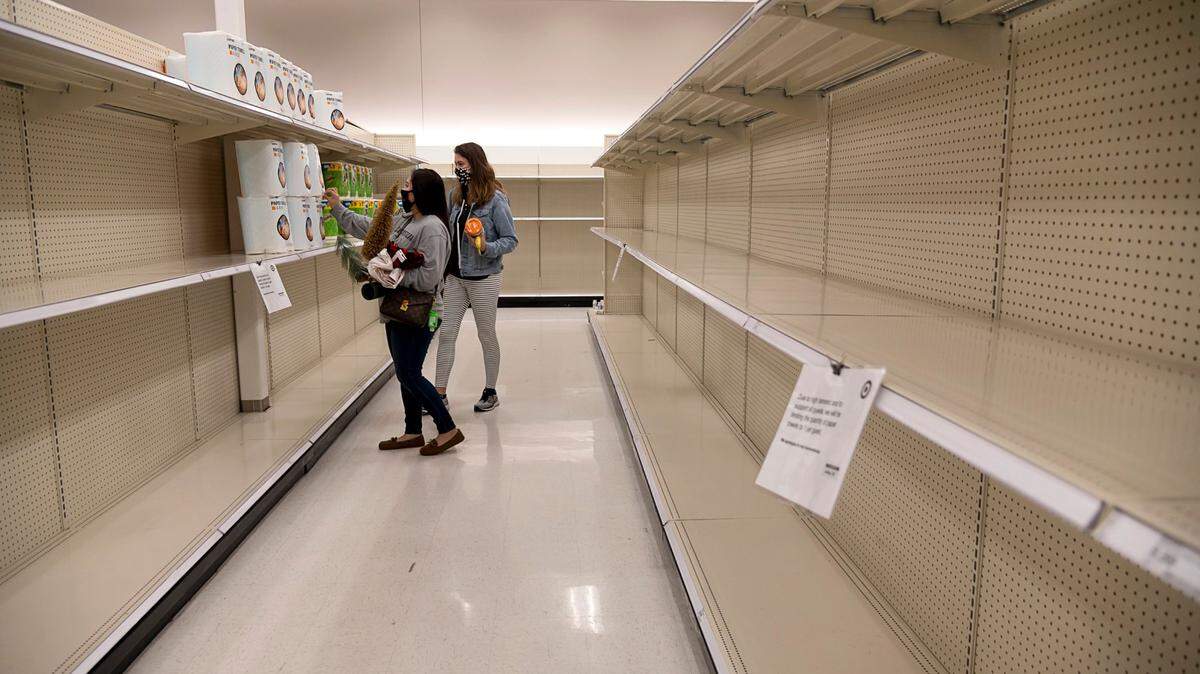
During a recent visit to Target, I couldn’t help but notice all the bare shelves in the toilet paper aisle. My first thought: Are we really doing this again? The second: What kind of person panic buys toilet paper during a pandemic?
“Yes” is the answer to the first question. As cases of COVID-19 spike around Fresno and the nation, paper products, disinfectant wipes and other household items are again in high demand at supermarkets and big-box stores. It feels like a repeat of March and April.
Answering the second is a little more complicated. Fortunately, keen minds have already done most of the heavy lifting.
In a study published on the open-access journal Plos One, European researchers surveyed 1,029 volunteers from 35 countries (including the U.S.) to determine which personality traits are associated with toilet-paper hoarding.
Some of the findings are intuitive, as in we didn’t need a study to determine this. For example, people who felt the most threatened by the pandemic were also the ones most likely to stockpile toilet paper.
“Given that stockpiling is objectively unrelated to saving lives or jobs during a health crisis,” the authors write, “this finding supports the notion that toilet paper functions as a purely subjective symbol of safety.”
Which might be the best thing you can say about a coronavirus denier. At least they leave some for the rest of us.
Personalities of panic buyers
Likewise, those who panic buy toilet paper also score high in the personality factor of emotionality. That is, people who worry a lot or whose behavior is governed by anxieties and fears.
Again, this tracks with our general assumptions.
The study’s third major finding is what I found most interesting. People who hoard toilet paper have a higher level of conscientiousness, which goes against the presumed narrative that conscientious types refrain from panic buying due to increased self-control.
Nope. Researchers found instead that conscientious people (defined as individuals with high levels of organization, diligence, perfectionism and prudence) tend to shop more frequently and purchase more toilet paper while doing so.
For those folks, some of whom don’t realize the effect of their own actions, conscientiousness is a one-way street.
Two other findings worth a mention: Older people stockpile more toilet paper than younger people, and Americans more than Europeans. God bless the USA.
Threat of shortages lessened
Despite the empty store shelves, retailers and manufacturers say they’ve learned from past mistakes. Supply chains have been simplified, fulfillment centers added and buying limits implemented, lessening the threat of nationwide shortages.
“I’m not going to be a Pollyanna and say things are perfect,” Consumer Brands Association CEO Geoff Freeman told the Washington Post. “But we are fundamentally in a different place than we were in March and April. Even retailers rationing is a demonstration of lessons learned. The psychology of empty shelves causes a vicious cycle.”
Meaning there’s no need for anyone to purchase toilet paper from some sketchy retailer on Amazon. You know, the tiny rolls that arrive months later looking like they were designed for a dollhouse.
While it’s easy to dismiss toilet-paper hoarders as selfish — which they are — these findings remind us that fear and anxiety are powerful forces. And that people who stockpile such goods are coming from a place of distress.
So instead of being angry and frustrated with them, perhaps show some empathy.
Which is all well and good, until you’re the one with no toilet paper at home staring at rows of empty shelves.
Then it’s fine to get exasperated at all the emotional, conscientious types. You have my express permission.
This story was originally published November 25, 2020 at 8:00 AM.