Why did Creek Fire get so large, so fast? Ideal conditions took 100 years to create
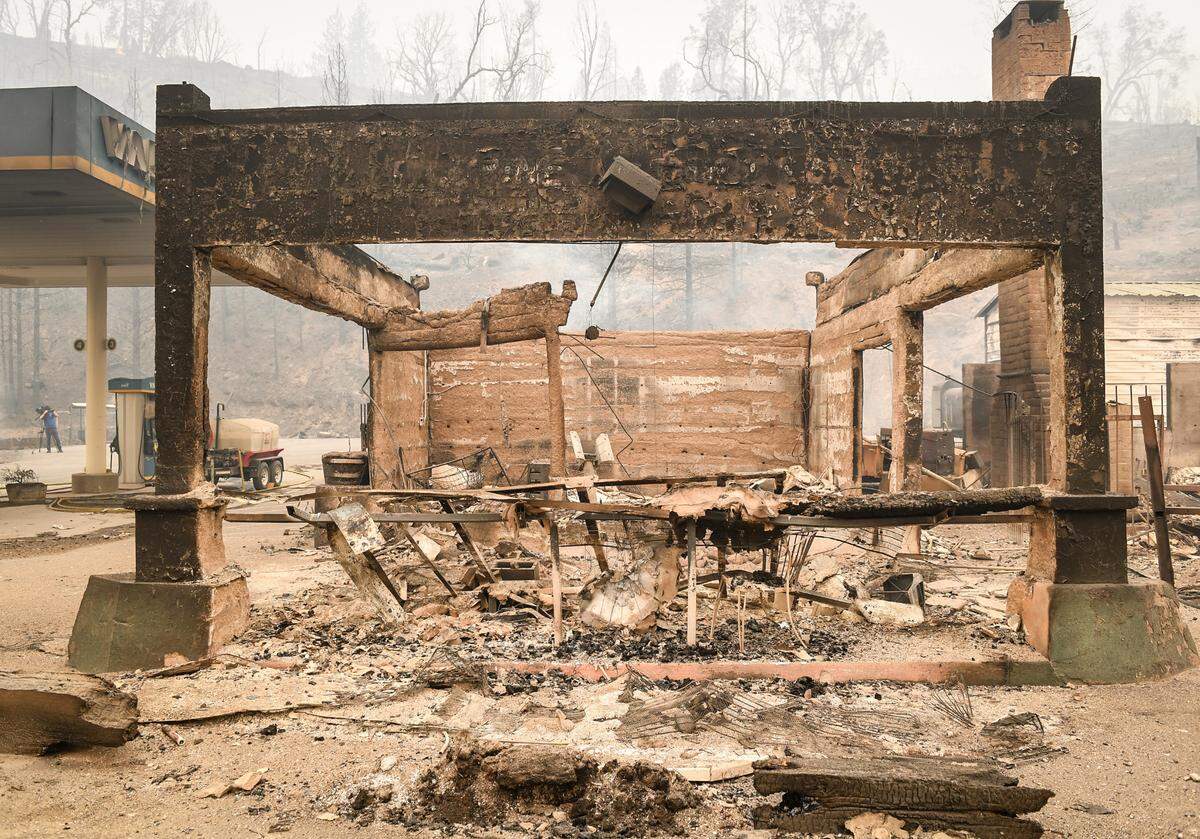
Despite torching 162,000 acres of the Sierra National Forest since Friday, the Creek Fire didn’t just flare up over one holiday weekend.
As hard as it may be to hear while so many Fresno and Madera county residents lose or evacuate their homes and hundreds of first responders risk their own safety, this megafire in our local mountains has been a century in the making.
In the words of one publicity averse fire captain whose units are among those protecting Shaver Lake village, “This is the big one we’ve been fearing.”
How did the Creek Fire become so large in such a short time despite starting in calm weather before the winds picked up overnight Monday?
Here’s as plainly as it can be stated: The conditions were ideal for such a calamitous, destructive fire to occur, and we helped create them.
“A lot of folks will latch on to one singular cause for why things are as bad as they are,” said Daniel Swain, a climate scientist from the UCLA Institute of the Environment & Sustainability who studies and blogs about extreme weather.
“The reality is there isn’t one singular cause. It’s a constellation of factors.”
My ears first heard the threat in the 1980s as a summer camp counselor at Huntington Lake. During mandatory fire inspection, a U.S. Forest Service inspector would discuss the overzealous fire suppression mindset that guided our public-lands policies throughout most of the 20th century.
As a result of snuffing out every wildfire, ignoring the role fire plays in the ecosystem, millions of acres of forest are loaded with more fuel (i.e. deadfall, underbrush, dense tree growth) than what naturally occurs. So when one does ignite, it burns hotter, bigger and with more devastating effects.
“This whole area is a giant tinderbox,” the fire inspector would say — or at least those are the words that stick in my memory.
Over the last few decades, public lands managers have tried to rectify the situation with more controlled burning. Just not nearly enough to make a dent.
Don’t deny role of climate change
Next comes another part of the equation, a scientific reality that people of a certain bent refuse to accept: climate change. Blaming environmentalists for restricting logging (which by itself isn’t a remedy, either) is easier than trying to understand complex science, I guess.
Make no mistake, climate change didn’t cause the Creek Fire. However, using Swain’s words, it “helped set the stage for a fire that just exploded.”
From 2011-17, California experienced severe drought. The period from late 2011 through 2014 was the driest in state history. As a result, the state’s forests were easy prey to bark beetles.
An estimated 129 million trees throughout California have died since 2010, and nowhere was that mortality event felt more acutely than in the 1.3 million acres of Sierra National Forest, where the Creek Fire currently rages.
“This is the epicenter,” the forest’s ecosystems staff officer told me in 2018.
How does climate change fit in? It’s a lot more complex than two or three degrees of warmer air temperatures. According to Swain, each degree results in a 7% increase in what’s called the vapor pressure deficit, which robs trees of the moisture they need to grow and makes the vegetation more arid.
Start assembling the pieces: The Creek Fire is raging in a forest that is historically overgrown, following a lengthy drought and an abnormally dry winter, that is loaded with dead trees and contains less moisture due to climate change. Now add the triple-digit temperatures we’ve been experiencing for the last month, and what you’re left with are ideal conditions for a large, destructive wildfire.
A fire many mountain fire officials and residents saw coming, but kept hoping and crossing their fingers would never materialize.
California wildfires getting bigger
Some perspective on the Creek Fire’s explosive growth: The 2015 Rough Fire, the largest in California that year, burned 151,623 acres in the Kings River drainage east of Fresno. That fire took more than a month to get to 85,000 acres. The Creek Fire barely needed 48 hours to eclipse that size.
In 1994, firefighters battled for nine days to save the town of Big Creek from a fire that started in a Southern California Edison powerhouse. That fire never reached 6,000 acres.
“This where anecdotes from the firefighting perspective really do match up with the scientific evidence,” Swain said. “Which is to say wildfires in California are getting much bigger very quickly, and even more important they’re burning more severely and more intensely than they used to.”
Here’s what’s really scary: More than 2 million acres have already burned throughout California in 2020 — the most in state history — and the worst part of wildfire season has yet to arrive.
Of course, that’s of zero consolation to our friends and neighbors directly impacted by the Creek Fire. Or to the thousands more stunned and heartbroken about what’s taking place in our slice of the Sierra.
But this fire has been smoldering for decades. We helped fan the flames.
This story was originally published September 8, 2020 at 2:42 PM.