
David Valadao district could include Fresno, thanks to Texas governor | Opinion
AI-generated summary reviewed by our newsroom.
- David Valadao continues to win (8 of 9) in a Democratic-leaning district.
- New redistricting plan may reshape Valadao's base before the 2026 election.
- California GOP criticizes state map shift but ignores similar GOP moves in Texas.
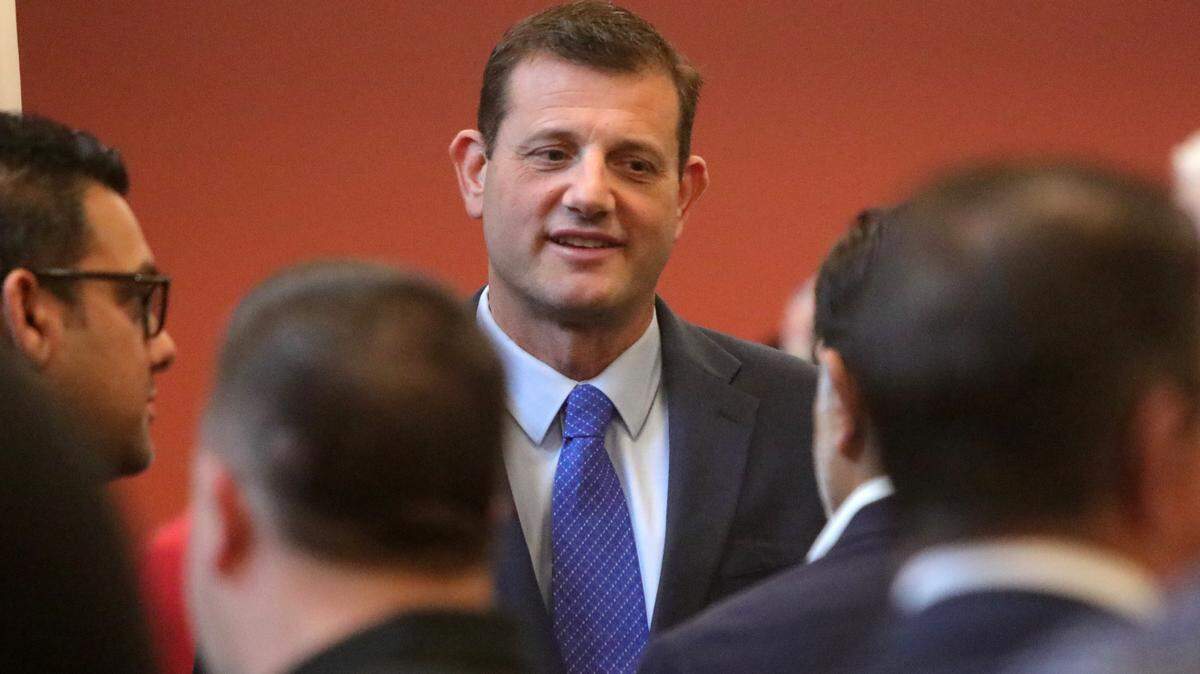
Valley Republican David Valadao has confounded the political experts by winning seven of eight races in the 22nd Congressional District where Democrats enjoy an almost 12-point registration edge.
Last year, Democratic challenger Rudy Salas and pro-Salas PACS spent $12.5 million in a losing effort. But Valadao, a Hanford dairyman, remains standing in a seat pivotal to the fortunes of President Donald Trump. That’s because Republicans barely maintain a razor-thin 219-212 edge over Democrats in the House. (There are currently four vacancies.)
Where would Trump’s agenda be without Valadao and a tiny handful other House Republicas?
But thanks to Texas Gov. Greg Abbott, who is following President Trump’s request to redistrict five more GOP seats, that could all change when voters head to the polls in 2026. That’s because Valadao could face a far different district next fall if California voters approve a Newsom plan to set aside the California Citizens Redistricting Commission in favor of maps that could be redrawn to create additional Democratic seats to stop Trump’s Texas gambit.
The new district maps released Friday show Valadao remaining in a “lean Democratic” district, but it could cede land west of Interstate 5 and take in a southwestern portion of Fresno County and yield a portion of Kings County to the neighboring district occupied by Republican Vince Fong. Valadao’s district is currently anchored in Kern County, where about two-thirds of the district voters live.
Friday’s released maps show a slight but greater percentage growth of Democratic registered voters in Valadao’s district: from 40.18% to 42%, while Republican registered voters shrink from 38.34% to 25%. Fong’s district, meanwhile, gets slightly redder by fractions. Democrat Adam Gray’s 13th Congressional District goes from 39.85% Democrat to 47% and drops Republican voters from 30.26% to 27%.
Potential challengers to Valadao could be Assemblymember Jasmeet Bains of Delano, Visalia school board member Randy Villegas, former Assemblymember Rudy Salas (who has twice lost to Valadao), and U.S. Marine veteran Eric García. Unlike Texas, candidates in California do not have to live in the congressional district they’re running in.
Valadao, the son of Portuguese immigrants, represents a district that is 73.2% Latino. Medicaid enrollment is 68%, the highest of any congressional district. Trump carried the district by 6 percentage points in 2024, after former President Joe Biden won it by 13 percentage points in 2020. The district has the smallest number of registered voters in California with around 318,000.
Fellow Californians Doug LaMalfa (1st Congressional District), Kevin Kiley (3rd), Ken Calvert (41st) and Darrell Issa (48th) didn’t fare as well. The districts for the first three went from being considered “safe Republican” to “safe Democrat.” Issa’s district went from “safe Republican” to “lean Democrat.”
Voters will be asked to approve the redistricted maps in a Nov. 4 special election. The new maps would then go into effect in 2026 and continue until 2032 when new districts are crafted using the 2030 Census.
GOP not happy with Newsom
Valadao, along with California’s eight other Republican House members, predictably went after Newsom instead of Trump, the root cause for gerrymandered districts that could result in five fewer GOP representatives in California.
“It’s a shame that Governor Newsom and the radical Left in Sacramento are willing to spend $200 million on a statewide special election, while running a deficit of $20 billion, in order to silence the opposition in our state,” the California delegation said in a July 25 statement. “As a delegation we will fight this disenfranchisement of California voters by whatever means necessary to ensure the will of the people continue to be reflected in redistricting and in our elections.”
Whining that Republicans won 38% of the Congressional vote in 2024, yet having only 9 of 52 seats (17.3%) is rich considering those nine votes are nothing but proxies for Trump’s plans. They’re representing Trump’s interests, not the interests of their district residents.
If Valadao and his colleagues are so concerned about Newsom’s mid-decade gerrymandering to gain five Democratic seats in Congress, they should also question Abbott’s efforts in Texas.
They should have also questioned how a $911 billion cut to Medicaid over 10 years would not eliminate health care for 14 million Americans. (Valadao foolishly parroted the words of the president when he said, “Medicare, Medicaid, none of that stuff is going to be touched. We won’t have to.”)
Last year, the Republican-led Senate bowed to Trump’s request to reject an immigration reform bill lest its passage harm his election plans.
The Republicans’ battle against Newsom should be against Trump, who has turned a 1.5 percentage win in his reelection into an oft-repeated line, “The American people have given us a mandate, a mandate like few people thought possible. We won in a big mandate. We won every swing state. We won by millions of votes.”
The lack of a spine among Congressional Republicans has allowed Trump to issue demands to governors, mayors and universities.
David Valadao, welcome to a new 22nd Congressional District, courtesy of Texas’ governor.