
They’re young and diverse. Central Valley’s Assemblymembers should deliver results | Opinion
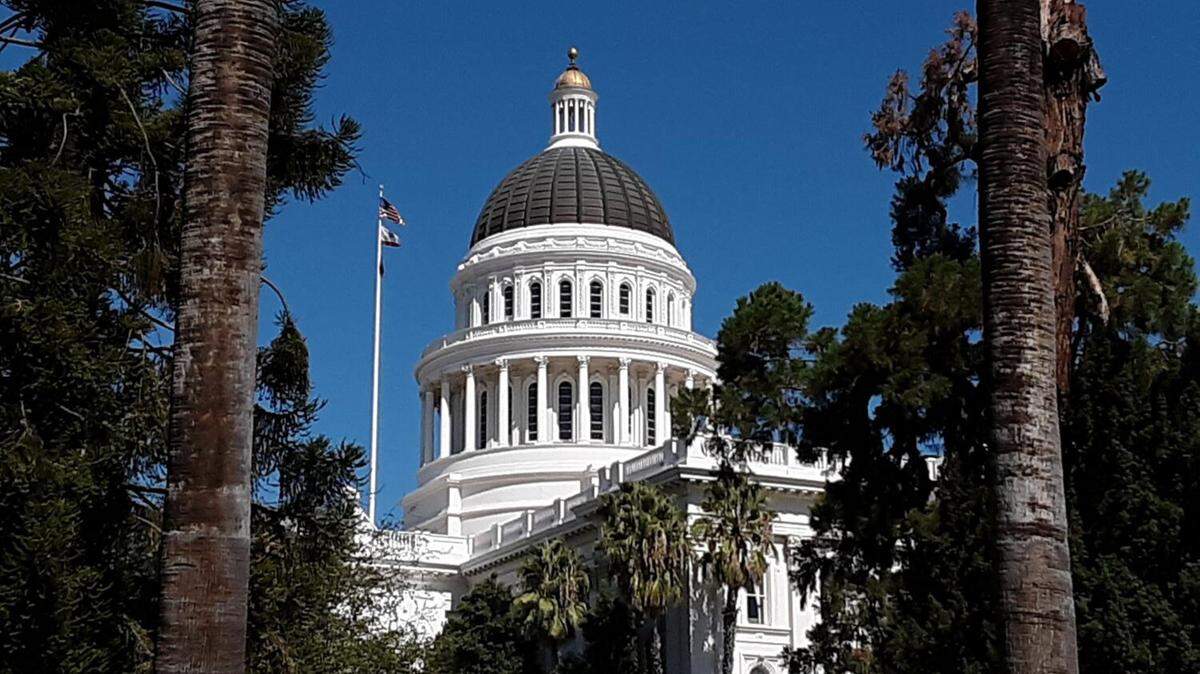
Residents in the heart of the nation’s agricultural breadbasket are blessed that they will be represented by a diverse and young group when three new members – along with five incumbents – of the state Assembly are sworn in on Monday.
The eight Assemblymembers representing the region between San Joaquin and Kern counties average 40.5 years of age. Their ethnicity includes Latino, Portuguese, Black, Sikh, white and American Samoan. Half are Democrats, the other half Republicans.
Their backgrounds range include medicine, firefighting, law enforcement, law, real estate and agricultural consulting.
Congratulations to new Republican Assembly members Alexandra Macedo of Tulare (District 33), and David Tangipa of Fresno (District 8). They join GOP representatives Juan Alanis of Modesto (District 22), and Heath Flora of Ripon (District 9). Tangipa is 29, and Macedo is 30.
Former Tracy City Councilmember Rhodesia Ransom (District 13) will start her first two-year term. She joins fellow Democrats Esmeralda Soria of Fresno (District 27), Joaquin Arambula of Fresno (District 31), and Jasmeet Bains of Delano (District 35).
The Bakersfield-based 32nd Assembly District that was represented by Republican Vince Fong, who has moved up to Congress, will be filled in a special election this spring. The frontrunner for that seat is 70-year-old Bakersfield City Councilmember Ken Weir.
The state Senate, not as diverse or as young, will welcome one new senator from the San Joaquin Valley. That is 70-year-old veteran politician Jerry McNerney of Stockton (District 5). The Valley’s other four state Senators (two Democrats and two Republicans) did not face reelection this year.
We are encouraged that lawmakers reflect the region’s diversity and are more evenly spread between Republicans and Democrats than the state’s overall makeup which heavily favors the Democrats.
Valley’s poverty rates are highest in California
The new year will bring special challenges to Californians, including rising housing costs, higher prices for food and other essentials, a Trump threat to deport an estimated 1.8 million undocumented residents, and an ailing state budget that won’t have the dollars to address fixes.
We encourage the Valley’s representatives to focus on the needs of the region’s unique challenges that include poverty, low educational attainment, and health access. The Valley’s eight counties have poverty rates that range from 25.4% to 27.1%, much higher than the state average of 15.1%.
Gov. Gavin Newsom recently visited Fresno and Bakersfield to help address some of those issues, pledging $120 million in competitive state grants to boost job-creating projects but offered few other specifics. The Valley and its 4.3 million residents should not be overlooked. The region’s representatives in Sacramento should work together to keep the governor’s attention on the Valley.
Here are areas we hope our Valley representatives will push for in Sacramento:
Housing: Although housing and rental costs in the Central Valley remain the lowest in California, those costs have increased by 100% in Merced, Madera, Fresno, Kings, Tulare and Kern counties in the last four years, according to the state Legislative Analyst’s Office.
Air quality: Bakersfield, Visalia and Fresno are the most-polluted cities in the state, according to the American Lung Association. Bad air is blamed for high rates of asthma among children, and impacts the quality of life for Valley residents.
Health: The region has 47 primary care physicians per 100,000 population, well short of the 60 to 80 primary care physicians recommended by the Council on Graduate Medical Education, according to a 2021 study by the UCSF School of Medicine.
Education: Less than 1 in 5 (19%) Central Valley residents have at least a bachelor’s degree. California’s rate is 40%, according to the California Public Policy Institute.
Water: Agriculture has taken steps to conserve water in light of recent droughts and scaled-back water delivery from state and federal water projects. Ag remains an economic engine in the Valley, and its water needs will have to be balanced with those of residential use and the environment.
Tangipa and Macedo outlined their top priorities during a recent meeting with The Fresno Bee Editorial Board. Tangipa, whose sprawling 8th Assembly District includes fire-prone forests along the Sierra, wants the state to improve its forest management to avert fires. Macedo wants to focus on the Valley’s water needs for ag and domestic use, and transparency from the California Air Resource Board on its plan to hike gas taxes that could add 65 cents a gallon to the cost of gasoline.
Those are admirable priorities. Both spoke of a willingness to work with Democrats. Macedo recently appeared alongside Democratic state Sen. Anna Caballero at the unveiling of a solar project in Visalia that will benefit low-income residents. Macedo signaled a willingness to work with other Valley Democratic legislators.
“I want to be the person who, as a Republican, has Democrat support because that’s the way it should be,” Tangipa told The Editorial Board. “We are all Californians first.”