
Homeless jam sidewalks at Fresno schools & shelters. Moving them is reasonable | Opinion
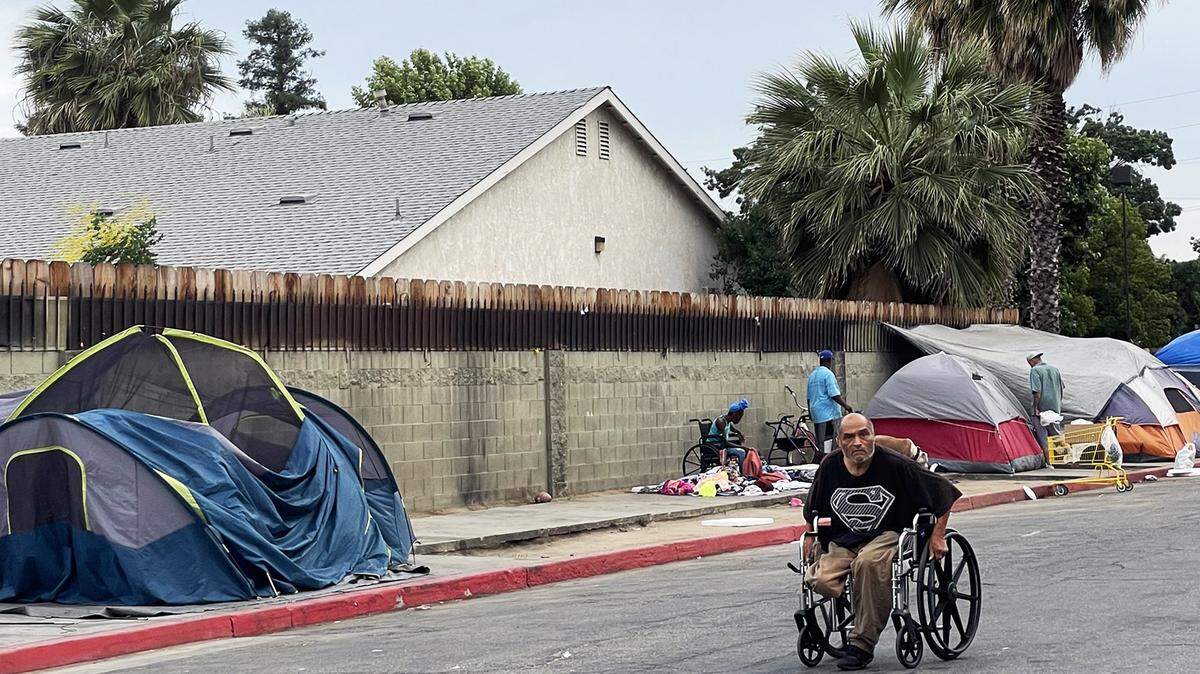
On a recent evening the sidewalk leading to the entrance of Fresno’s Poverello House was clogged with tents set up by unhoused people.
City Councilmember Miguel Arias, whose south Fresno district includes the downtown “Pov,” as it is commonly known, took a photo of a man sitting in a wheelchair at the entrance to the center for shelter and services to the homeless. One of the man’s legs is amputated at the knee.
In another photo, that man is shown wheeling himself down the adjoining street, where traffic would be, because there is no room on the sidewalk.
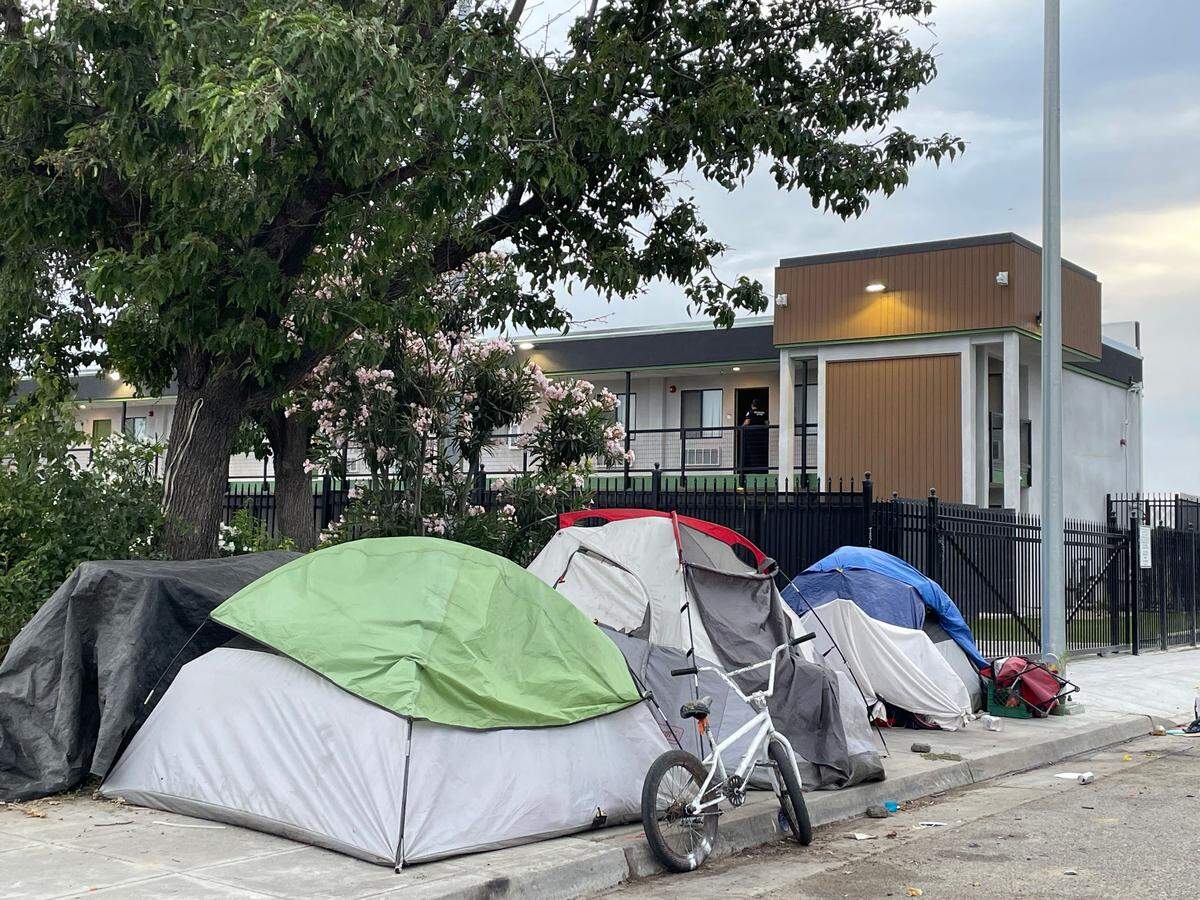
This situation is the focus of a new law sponsored by Arias and north Fresno Councilmember Garry Bredefeld. The two frequently spar over political and cultural issues. But they found common ground on this: The measure would prohibit encampments of unhoused people within 500 feet of “sensitive areas,” which are defined as schools, child-care facilities, parks, libraries, warming and cooling centers and city-permitted shelters like Poverello House.
Returning access to entrances and sidewalks at public places is the right thing to do, and the proposed law is reasonable in how that would be done. The council should support it when the measure returns for a final vote on Thursday.
Being homeless not a crime
The courts have ruled as unconstitutional any laws that make being homeless a crime. To thread that needle, the Fresno measure does not subject a camper to any fine or other penalty. If a person is found camping within 500 feet of a school or other sensitive area, city officials — police, code enforcement officers or homeless outreach workers — will simply ask the person to move. Arias expects good compliance.
The ordinance does not outlaw unhoused people from camping in public areas, a point of contention in the landmark court case known as Martin vs. Boise. That 2019 ruling says cities cannot punish homeless people for sleeping outside on public property in the absence of adequate alternatives, like shelters.
Fresno City Attorney Andrew Janz said the proposed law is a sidewalk-clearing measure meant to address the rights of disabled people who need open pathways to enter public places.
That aspect drew a sharp response at the May 25 council meeting from a disabled-rights activist who was once homeless. Rain Chamberlain accused the council of using disabled access as a way to clear out unhoused people.
“How dare you all use ADA (and use me) as an excuse to sit there and penalize people that are trying to survive,” Chamberlain said. The ADA is the federal Americans with Disabilities Act, which requires proper access for all.
Chamberlain said broken or nonexistent sidewalks are the real issue city leaders should address.
Greg Cramer, a senior legislative advocate with Disability Rights California, a nonprofit that supports the rights of disabled people, said clearing sidewalks masks another need. “What is missing with all of this is the dedicated housing and treatment services that are necessary for folks to stay off the street,” he said.
Taking steps to help
Like other California cities, Fresno has converted motels into transitional housing for those wanting to leave the streets. Arias said that Fresno has opened 10 shelters and kept operating warming centers for three months during the cold winter.
Fresno is not alone in addressing sidewalk access. According to the news site CalMatters, cities including Los Angeles, Sacramento, Elk Grove, Oakland, Santa Cruz and Milpitas have laws against setting up tents near schools and other buildings, blocking sidewalks or even camping when shelter is available.
Camping on sidewalks near entrances to public places used by children, adults and seniors violates a common-sense standard of decency. The council should adopt its reasonable measure so the public can once again use city sidewalks to their fullest extent.
BEHIND THE STORY
MOREWhat are editorials, and who writes them?
Editorials represent the collective opinion of the The Fresno Bee Editorial Board. They do not reflect the individual opinions of board members, or the views of Bee reporters in the news section. Bee reporters do not participate in editorial board deliberations or weigh in on board decisions.
The board includes Opinion Editor Juan Esparza Loera, opinion writer Tad Weber, McClatchy California Opinion Editor Marcos Bretón and Hannah Holzer, McClatchy California Opinion op-ed editor.
We base our opinions on reporting by our colleagues in the news section, and our own reporting and interviews. Our members attend public meetings, call sources and follow-up on story ideas from readers just as news reporters do. Unlike reporters, who are objective, we share our judgments and state clearly what we think should happen based on our knowledge.
Read more by clicking the arrow in the upper right.
Tell us what you think
You may or may not agree with our perspective. We believe disagreement is healthy and necessary for a functioning democracy. If you would like to share your own views on events important to the Fresno region, you may write a letter to the editor (220 words or less) or email an op-ed (600 words). Either can be sent to letters@fresnobee.com. Due to a high volume of submissions, we are not able to publish everything we receive.