
Fresno’s Bullard High wants to ban cellphone use on campus. That’s actually a good idea
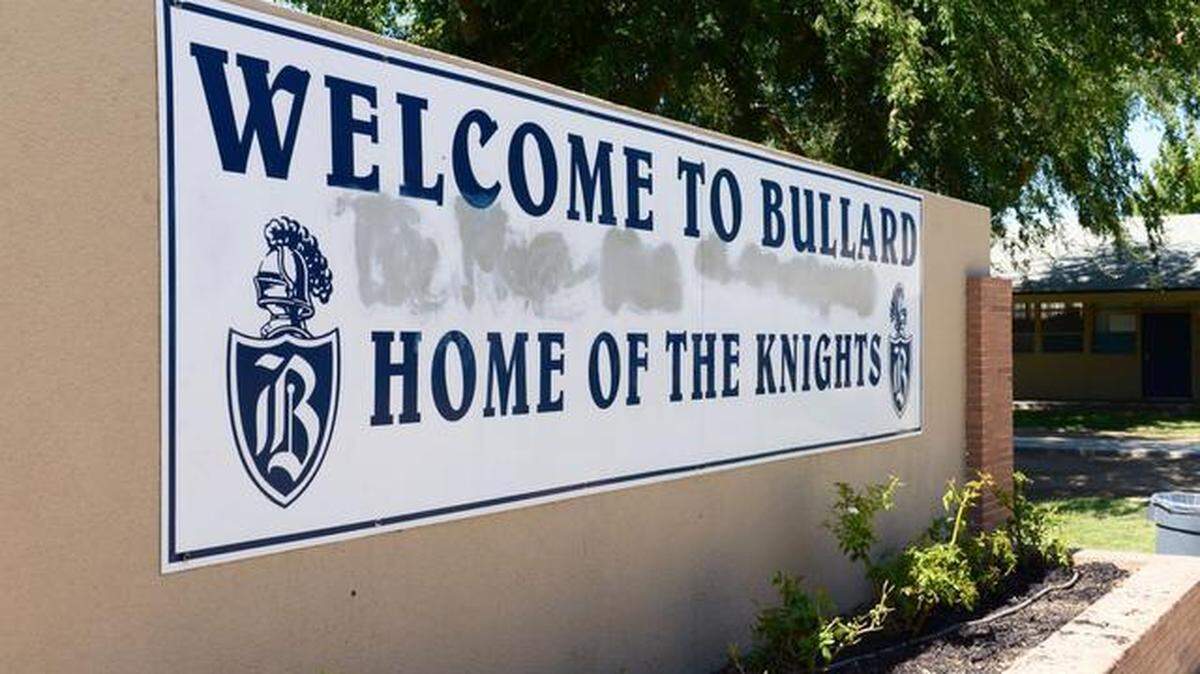
It seems counterintuitive that, in 2022, when our society is more connected through the internet and electronic devices than ever, a Fresno high school is set to ban students from using cellphones during the school day.
But that is precisely what Bullard High plans to do, and the school is onto something important, given the experiences of several Bay Area programs that took that very step.
There are good arguments on both sides of this debate.
Of those who believe students should have access to their phones, proponents say how the devices can extend learning by allowing students to access online to data, photos and other resources.
Other points in favor:
▪ Students can text teachers in real time if they are not grasping what is being taught, and the instructor can reply when there is a break or talk to the student at the end of class to make sure the concepts are being learned.
▪ Phones can help students stay organized via calendar, note and reminder apps.
▪ Information accessed online does not have to be printed out, which is good for the environment and a school’s budget.
The No. 1 reason in favor of letting students keep their phones is that they can communicate with their parents in case of an emergency, such as a shooting.
But actually, it’s not a great idea to have hundreds to thousands of students making calls at the moment when school staff are trying to get them to a safe location. Students need to follow instructions with total focus, not have their attention divided by the phone in their hand.
That is the takeaway of Adam Gelb, now assistant director of the Menlo School near San Francisco. Previously, he was assistant principal at San Mateo High, another Bay Area campus, and he helped it institute a no-phone policy. He stressed that nowhere in emergency procedures are staff or students instructed to jump on their phones first in an active-shooter emergency.
“Students are to think on their feet — run, hide, fight, get to a trusted adult,” he told The Bee Editorial Board.
Outside of those rare emergencies, there is a more basic reason for phones to be put aside during the school day, Gelb said: Kids learn better.
Cellphone dependence
Today’s connected teens are loathe to put their phones down for fear of missing a message or alert, no matter how unimportant it might be. Studies have shown how social media websites are addictive to young people.
At San Mateo High, by literally taking cellphones out of their students’ hands and putting them into special pouches for the school day, students were forced to pay attention to their teachers, Gelb said. And the instructors no longer had to be phone police.
“Without those distractions being present in the classroom, now we see more students engaged and focused on whatever the teacher is trying to do,” Gelb told the Palo Alto Online.
A survey he did of teachers after a year without phones showed 96% support for the policy. “They cannot imagine teaching in a space that allows cellphones,” Gelb said.
Give it a try
Bullard High starts the new school year Aug. 15, and students will be allowed to bring phones to campus that day. Exactly when the new policy is to start is still being worked out. A community meeting is planned for Aug. 18.
Bullard Principal Armen Torigian used this concept at his previous campus, Tenaya Middle School. To be sure, there are big differences between high schoolers and middle schoolers. Older teens are more likely to have after-school jobs that might require them to pick up texts or emails from work, for example.
That said, the Bullard students will learn to manage, just like their parents — or certainly their grandparents. Somehow those older adults survived going to high school without cellphones.
Gelb said one of the backers of no phones on campus at San Mateo High was the CEO of LinkedIn, the online career site. Ah, the irony.
Kids go to school to learn. Part of that is socializing, for sure, but main purpose is academic. Bullard High should launch its no-phone policy and see how it goes.
BEHIND THE STORY
MOREWhat are editorials, and who writes them?
Editorials represent the collective opinion of the The Fresno Bee Editorial Board. They do not reflect the individual opinions of board members, or the views of Bee reporters in the news section. Bee reporters do not participate in editorial board deliberations or weigh in on board decisions.
The board includes Opinion Editor Juan Esparza Loera, opinion writer Tad Weber, McClatchy California Opinion Editor Marcos Bretón and Hannah Holzer, McClatchy California Opinion op-ed editor.
We base our opinions on reporting by our colleagues in the news section, and our own reporting and interviews. Our members attend public meetings, call sources and follow-up on story ideas from readers just as news reporters do. Unlike reporters, who are objective, we share our judgments and state clearly what we think should happen based on our knowledge.
Read more by clicking the arrow in the upper right.
Tell us what you think
You may or may not agree with our perspective. We believe disagreement is healthy and necessary for a functioning democracy. If you would like to share your own views on events important to the Fresno region, you may write a letter to the editor (220 words or less) or email an op-ed (600 words). Either can be sent to letters@fresnobee.com. Due to a high volume of submissions, we are not able to publish everything we receive.
This story was originally published August 9, 2022 at 5:00 AM.