
California environmental group’s Yosemite tree-clearing lawsuit increases wildfire dangers
Yosemite National Park officials want to clear standing and dead trees from alongside 40 miles of roads and trails and across 2,000 acres to reduce the chance of wildfires.
But an environmental group has sued to stop the Park Service from conducting such work. Among the claims are that the federal government did not follow its own rules for sizing up impacts to plants and animals in the targeted areas.
The litigation represents the latest skirmish between federal scientists who believe forests in the Sierra Nevada can be properly thinned out, and environmentalists who contend tree removal does more harm than good.
Looming in the background of this debate, of course, is the specter of an inferno breaking out in Yosemite. A nightmare scenario of fire racing through beloved Yosemite Valley, scorching the forest and blackening the famous granite walls, is not what anyone wants.
But the ongoing drought, plus the ever-increasing impacts of climate change on native vegetation, makes the nightmare more plausible. As wildfires in California have shown in past years, anything is possible.
So is suing to stop to a tree-and-brush project meant to improve fire resilience really in the best interests of preserving Yosemite, a park that was drawing 4 million visitors a year before the COVID pandemic and is the major icon of Central California?
No, this ill-conceived opposition only heightens the dangers to the park, its visitors and adjacent communities.
Fire impacts
Fresno-area residents only have to think back to the 380,000-acre Creek Fire that started near Big Creek over Labor Day weekend in 2020. It was not contained until Christmas Eve. Overgrown forest, plus drought and climate change impacts, helped make it one of the biggest single fires in California’s history up to that point.
Eight hundred fifty-three structures were destroyed and another 64 were damaged. People saw their homes go up in flames. Valley residents who had owned mountain cabins for generations had beloved weekend getaways destroyed in mere hours, losing memories and prized mementos.
Today, environmentalists objecting to clearing in the national park believe wildlife and plants will be adversely harmed and that the work will forever alter the character of Yosemite.
But what of the countless animals and plants that could not escape in the Creek Fire? That blaze had an absolute adverse environmental impact. The burned areas today remain charred and lifeless. It will be decades before anything resembling a healthy forest returns.
Careful clearing
In its project notice, the Park Service says the thinning will be done to protect the Merced and Tuolumne groves of giant sequoia. Improved fire protection will also extend to Yosemite Valley and the developed areas of Yosemite West, Wawona, El Portal, Foresta and Yosemite Village.
Habitat for the great gray owl and Pacific fisher, a member of the weasel family, will be improved, the Park Service says.
To be cut down are conifers less than 20 inches in diameter and standing dead trees. Slated for removal are dead and downed trees that succumbed in the 2012-16 drought.
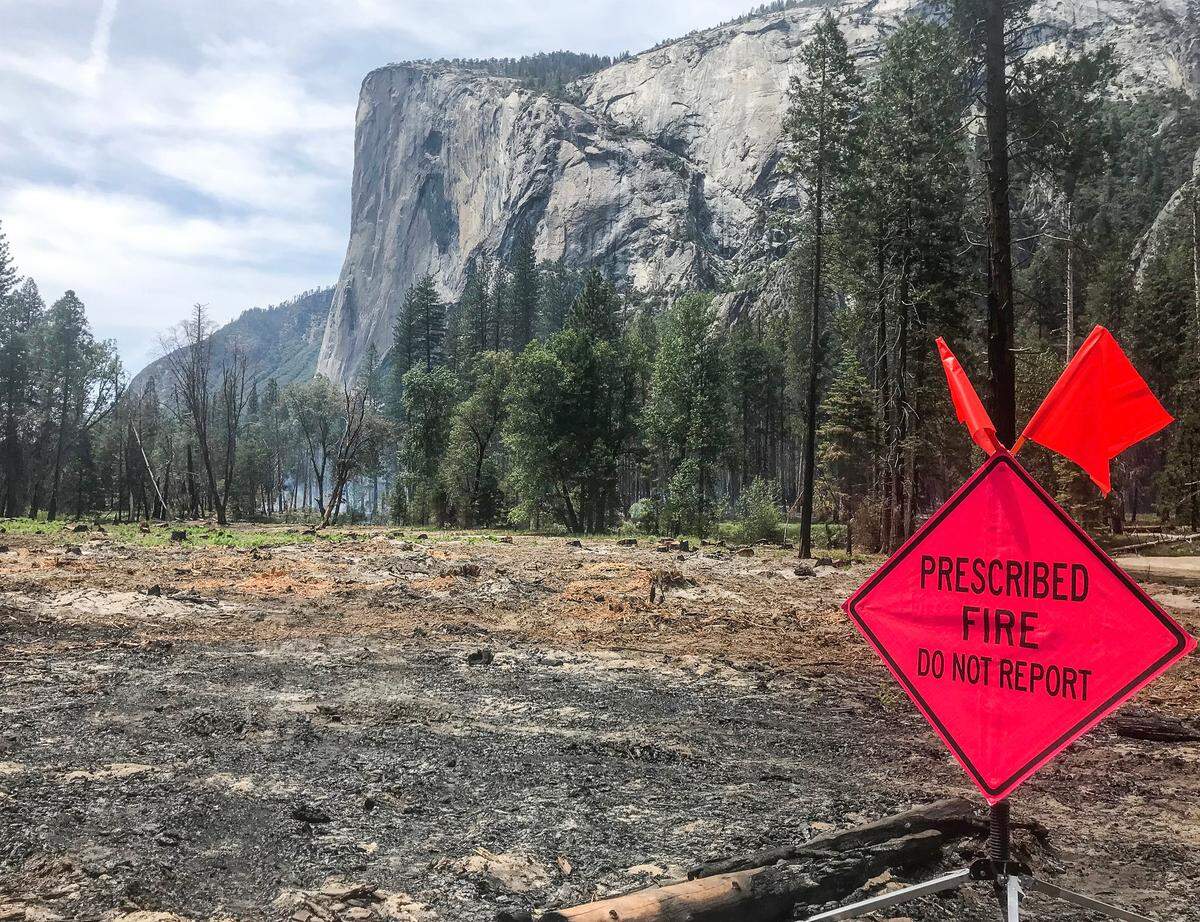
Opponents say that the scope of the work is unheard of for a national park. But so to are the drought and climate impacts now challenging not just Yosemite, but the entirety of the Sierra. The work proposed in the national park is similar to what has occurred elsewhere, by necessity, in California’s landmark mountain range.
An estimated 140 million trees died over those five years in the Sierra. The Sierra National Forest itself, located adjacent to Fresno, had 36 million trees die from drought and bark beetle infestation.
Can forests be cleared of dead trees and brush so that what remains can be a better habitat? That question is raging in the scientific and environmental community.
A team of UC Davis researchers authored a paper earlier this year that called for returning the Sierra and Stanislaus national forests to their condition of a century ago. To do that, the scientists propose cutting down 80% of trees and leaving the biggest, hardiest ones to continue. They said that is what the forest was like 100 years ago, when it was vigorous and not overgrown.
The Berkeley-based Earth Island Institute is against such clearing and is taking the lead to oppose Yosemite’s project.
It is important that the Park Service properly follow environmental rules for its projects. The government believes it has done so; the plaintiffs say Yosemite officials are relying on an outdated environmental assessment to justify the project. A federal judge will determine if that is true.
But California heads into its hottest season as summer officially arrives June 21. Fire dangers, already high thanks to a bone-dry winter, will be even more extreme as the heat arrives.
Without clearing work to thin out overgrown and dead sections of the forest, the most Yosemite’s managers can hope for are prayers and luck. That is not a management strategy. Is that really what environmentalists want?
BEHIND THE STORY
MOREWhat are editorials, and who writes them?
Editorials represent the collective opinion of the The Fresno Bee Editorial Board. They do not reflect the individual opinions of board members, or the views of Bee reporters in the news section. Bee reporters do not participate in editorial board deliberations or weigh in on board decisions.
The board includes Opinion Editor Juan Esparza Loera, opinion writer Tad Weber, McClatchy California Opinion Editor Marcos Bretón and Hannah Holzer, McClatchy California Opinion op-ed editor.
We base our opinions on reporting by our colleagues in the news section, and our own reporting and interviews. Our members attend public meetings, call sources and follow-up on story ideas from readers just as news reporters do. Unlike reporters, who are objective, we share our judgments and state clearly what we think should happen based on our knowledge.
Read more by clicking the arrow in the upper right.
Tell us what you think
You may or may not agree with our perspective. We believe disagreement is healthy and necessary for a functioning democracy. If you would like to share your own views on events important to the Fresno region, you may write a letter to the editor (220 words or less) or email an op-ed (600 words). Either can be sent to letters@fresnobee.com. Due to a high volume of submissions, we are not able to publish everything we receive.