How Fresno State’s new president reforms harassment claims process will define his career
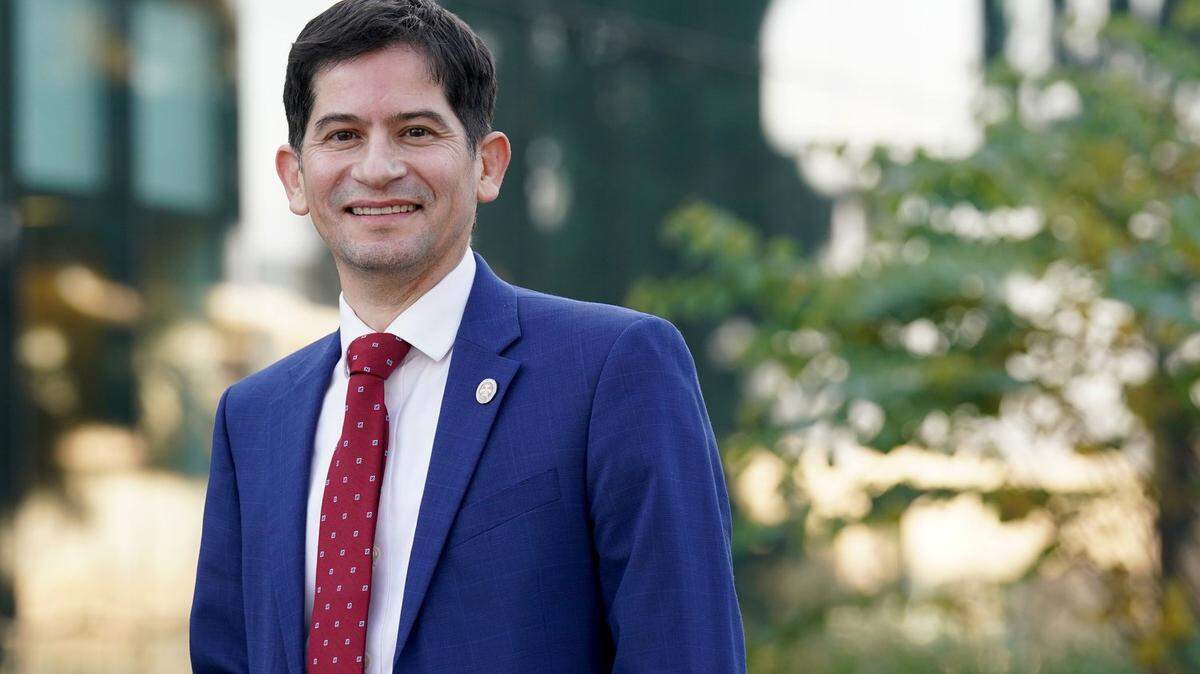
Saúl Jiménez-Sandoval became Fresno State’s ninth president just last May. But he already faces a career-defining challenge.
It has fallen to him to fix the university’s broken system for how sexual harassment complaints get handled. This comes in the wake of revelations about how Joseph I. Castro, his mentor and predecessor, quietly moved out Fresno State’s former vice president of student affairs after more than a dozen women complained about being sexually harassed by Frank Lamas.
A USA Today story broke the news about how the university’s human resources or Title IX offices received at least a dozen complaints against Lamas over a six-year period, including allegations that he stared at women’s breasts, touched them inappropriately, made sexist remarks, and created a hostile or abusive work environment. Lamas was never formally disciplined by the university.
Castro said he could only take action when a formal Title IX complaint was lodged; an employee under Lamas ultimately filed one. Previous incidents did not get formal attention.
Lamas denied any wrongdoing, but in his settlement in 2020, he agreed to never again seek employment in the CSU system. The settlement, finalized by Castro and university counsel Darryl Hamm, included paying Lamas a full year’s salary of $260,000. The settlement included that Fresno State would help him find work elsewhere, with future reference requests directed to the Fresno State president’s office and Castro.
Lamas left at the end of December 2020. The next month, Castro was named chancellor of the California State University and its 23 campuses.
Castro now works in Long Beach, where the CSU has its headquarters. Jiménez-Sandoval, meanwhile, occupies the president’s office at Fresno State, and is responsible for bringing something good out of this bad situation.
What he knew & when
But we must first address what Jiménez-Sandoval knew about the Lamas case. As it was happening, Jiménez-Sandoval was Fresno State’s provost, one of the highest positions at the university and a member of the president’s cabinet of officers.
In a phone interview, I asked Jiménez-Sandoval what he knew about the allegations against Lamas and when, and did Jiménez-Sandoval help develop the strategy for dealing with it?
Jiménez-Sandoval said Castro told him in the spring 2020 that an outside consultant was investigating complaints of sexual harassment in the student affairs office and that a report would be forthcoming.
“I had an inkling it was something serious, but I did not know specific details of what was happening,” Jiménez-Sandoval said.
He explained that the provost, by design, is kept out of personnel matters so that person can remain focused on maintaining quality academics and inspiring innovation.
“I did not advise or condone any element of mediation or the subsequent separation agreement or the details of that,” Jiménez-Sandoval said.
After the USA Today story was published earlier this month, Jiménez-Sandoval read the Lamas file and learned what the investigation had determined.
His goal now is straightforward: “My focus is very clear — no member of the (campus) community should work or live in fear of retaliation after reporting an incident. When we get to that place, we will be a stronger institution.”
He wants Fresno State to have the best process for handling harassment complaints of any university in the nation. Before he can achieve that, however, he will have to overcome deep skepticism on the part of many on the campus who wonder if Fresno State will properly deal with the aftermath of the Lamas case.
Reforming the process
Jiménez-Sandoval’s first step has been forming a task force that will study how the university currently handles complaints.
He expects it to have 15 to 20 members, who will be nominated by colleges and programs. Jiménez-Sandoval will ultimately pick the participants.
They will also recommend how to revamp the process. Helping the task force will be a national consulting firm with expertise in Title IX. That is the set of federal regulations outlawing sexual harassment and discrimination.
He promises to publicly announce the task force members, as well as their recommendations as they work. Jiménez-Sandoval expects an update within six months.
“This not my task force. These are not my objectives. The campus will come up with this,” he said.
His own man
That sounds good, but how will Jiménez-Sandoval deal with the perception by some that he is a Castro clone?
“Chancellor Castro is a mentor of mine,” he said. “He has been influential in my career. I was provost with him for over a year. That is one part.
“The other part is we are all different individuals. I have a different focus on what I want to do at Fresno State. My focus here is very clear. I have stayed at Fresno State for my entire career ... I am fully invested in the region and my students.”
He is right that no one should feel afraid to go to class or work at the university. Harassment of any kind has no place at Fresno State.
For the sake of the university’s thousands of female students, staff and faculty, Jiménez-Sandoval must now deliver on what he is promising.