
Over 300 Fresno City College students are homeless. A worthy effort aims to change that
At any given moment, there are more than 300 Fresno City College students who are homeless.
These people are actual students, meaning they attend classes, do research and take exams. But they lack the one thing most students can take for granted — warm shelter indoors. Or, maybe they are couch surfing at a friend’s home. They are under a roof, but without a place of their own. Either situation, technically, counts as being homeless.
Fresno City College President Carole Goldsmith, soon to be chancellor of State Center Community College District, wants to house any student who needs it. Her reasoning: A student can achieve an education if that person doesn’t have to sleep in a tent or on a floor or in a garage.
To that end, the college joined forces last year with Fresno Housing (formerly the Housing Authority) and a private developer to place students in apartments, with the college picking up most of the rental costs. The effort got about 70 homeless students into housing.
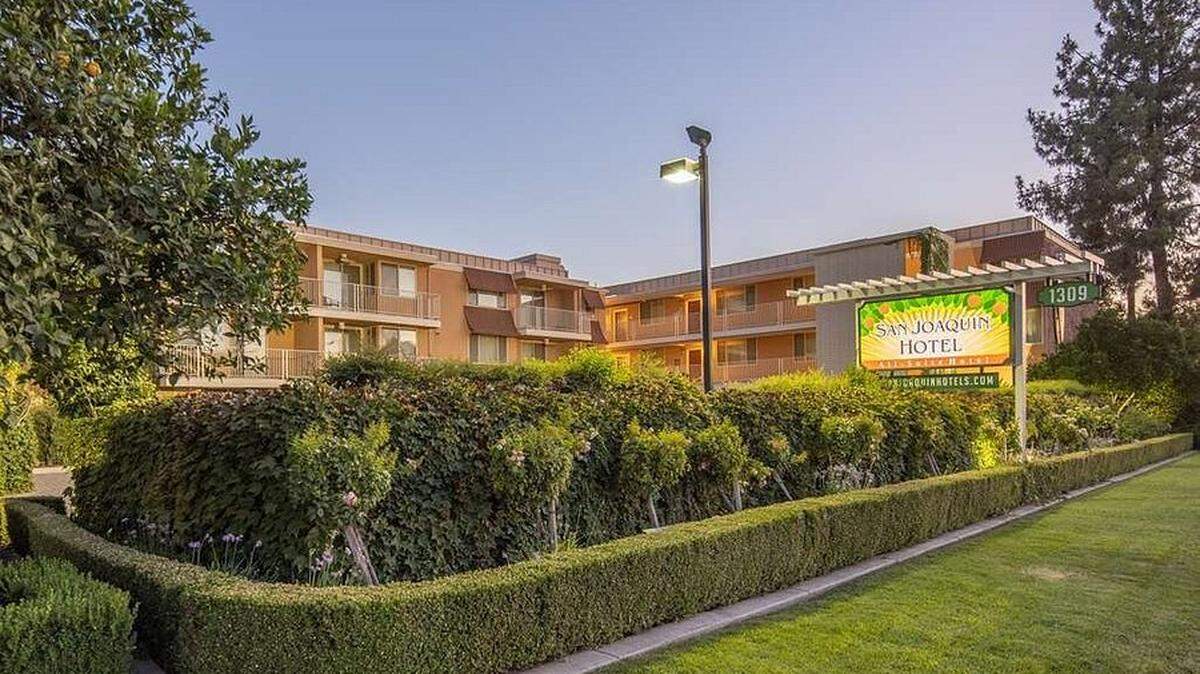
Now that developer, UPholdings, has joined forces with the city to apply for $13 million from the state to buy the San Joaquin Hotel on West Shaw Avenue and convert its 68 units into more apartments for Fresno City students.
That funding would come from state sources and the city would not be on the hook, said Jessica Hoff Berzac, the UPholdings executive in charge in projects in Fresno.
But the city would certainly benefit from the hotel project because UPholdings has pledged, in a formal covenant, to house only students at the San Joaquin for the next 55 years. Some of the units would be rented to single people, but others would become home for married students or those with children.
It would represent another positive step in Fresno’s campaign to move local residents out of homelessness and into permanent housing, not just shelters, which are intended as temporary solutions.
Pilot project
Fresno City is the first community college in the state with such a rental housing program for students. The college, through its Housing Opportunities Promote Education program, has more than $4 million in federal, state and county funding to launch the three-year effort.
The market rental rate for a studio apartment in Fresno is about $800 a month. At the San Joaquin Hotel, students who qualify for a unit would pay about $370. To cover that cost, the college will help them get government assistance or find jobs. Utilities and access to high-speed internet are included.
Students must be currently enrolled in at least nine units — full-time enrollment — and must show that they meet the federal definition of being homeless, such as living outdoors or in substandard housing, such as a garage.
Half of the units are the San Joaquin Hotel would be reserved for students between the ages of 18 and 24. That age group is in particular focus. Studies have shown that if young people can be kept from sliding into homelessness and can achieve an education, they are much more likely to develop self-sufficiency.
“Our hope is that we will be model for the entire community college system” in California, said Natalie Chavez, the HOPE director, who addressed the City Council recently.
Badly needed
Fresno’s rental market has had among the most dramatic cost increases in the nation over the past year. As of October, Fresno had an average rent of $1,472 per month. That was an increase of 19.8% year-over-year, and up 53.2% since January 2017.
Bee data journalist Tim Sheehan reports that more than 50,000 renter households in Fresno spend at least 30% of their household income on rent. Under federal standards, households that pay more than 30% of income are considered “rent-burdened.”
Homelessness will not be solved in one fell swoop. Success will come step by step, and requires involvement of all levels of government, as well as nonprofits, developers and community groups.
In this instance, Fresno City College has a worthy program that will make a significant difference for previously homeless students.