
The must-watch bill of the summer — if California Democrats don’t blow it | Opinion
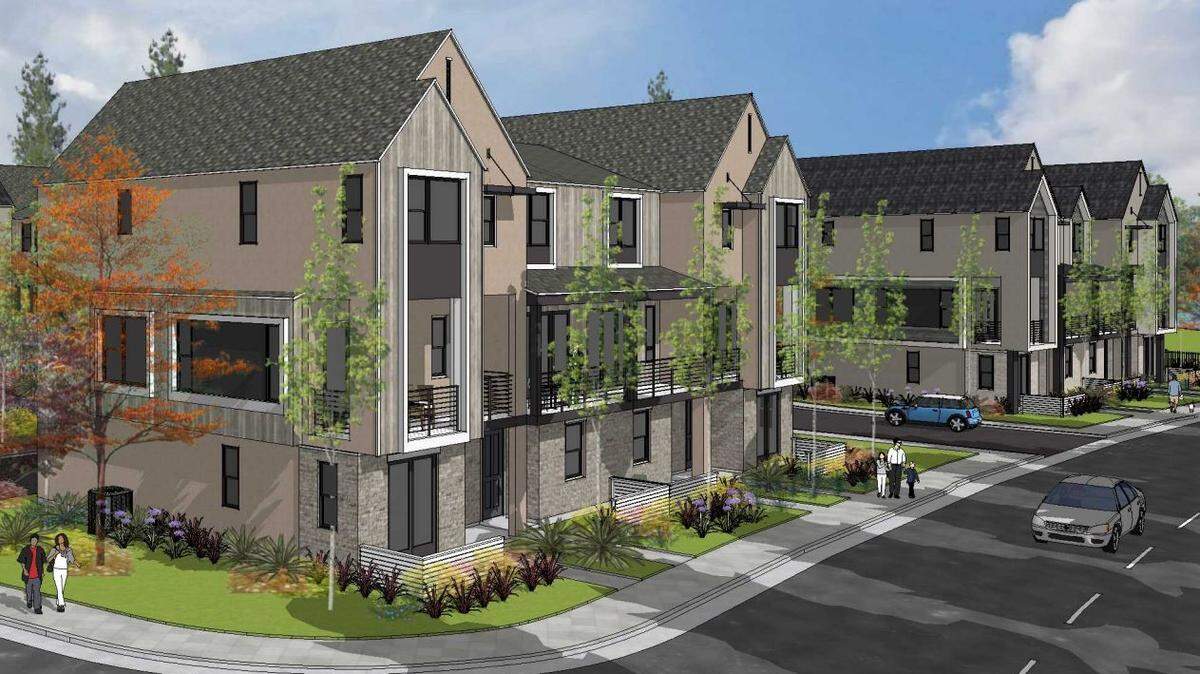
Sensing that the humble condominium could be the gateway to homeownership for countless Californians, a state Senate leader named John Burton passed legislation in 2002 seeking to incentivize its construction by giving builders a clear path to fixing any building defect without the need of lawyers.
Burton, it turns out, got it wrong, causing condominium construction to plummet as project lawsuits became the norm. The Legislature hasn’t come close to addressing this issue for nearly a quarter-century. Until now.
California Assemblymember Buffy Wicks, D-Oakland, has entered the breach with AB 1903, which tries yet again to fix condominium construction problems first, with litigation as the last resort.
If the Democrats can sort through their priorities and get out of their own way, a revival in condominium construction could help ease the housing crisis in California.
AB 1903 is a must-watch bill in Sacramento this summer
Yet Wicks recognizes that she is touching a sacred “third rail” of Democratic Party politics in California, a perilous political venture she hopes to survive. Fixing construction defects in a condominium pits two sacred values of the Democratic Party against one another. There is the drive to build more housing and new ownership opportunities for middle-class Californians. But there is also the affinity for protecting consumers against, in this case, the condominium building industry.
“It’s been on my radar for the eight years I’ve been here,” said Wicks. Outwardly, she seems unafraid to confront the most controversial of issues for Democrats, such as her leadership last year in streamlining state environmental laws for infill housing projects. But this condo issue, unaddressed for years, is next level. “I’ve always been a little nervous to touch it.”
A solution that prohibits a condo owner from suing the builder would favor the industry. One that maximizes a homeowner’s litigation options would frustrate builders from quickly fixing the problem and building new units.
Wicks is trying to find that delicate compromise.
AB 1903 would require condo owners to detail the specific problems and for all owners in a complex to participate in addressing them. The builder would get a clear shot at fixing all the known problems. If homeowners are still not satisfied, a lawsuit is an option.
AB 1903 would eliminate the prospect of a lawsuit if the builder satisfies the local building department during the construction phase and hires an expert third-party to certify the quality of the construction. If a defect still arises and a homeowner complains, the builder fixes the problem, the third-party inspector certifies the quality of the fix, and the case is closed.
Ironically, the late Burton thought this is basically what he was doing with his legislation back in 2003, Senate Bill 800. That’s why it was known at the time as the Right-to-Repair Act.
Instead, “it became a right to litigation,” said Michael Lane, state policy director for SPUR, the San Francisco Bay Area Planning and Urban Research Association.
Under SB 800, a condominium homeowners association, unbeknownst to most owners, can file a lawsuit for many units based on a sampling of construction defects. Insurance companies representing builders don’t have to quickly pay to make repairs because the lawsuit doesn’t go away. And others can be filed during the first 10 years of a project’s life.
As the cost of housing has skyrocketed in California, you would think that the construction market would respond by building more and more of the units that Californians could still afford, condominiums—yet the opposite has happened. In Santa Clara County, as one example, condo construction has fallen by an estimated 90% from its 2006 peak, according to one analysis.
Downtowns and neighborhoods surrounding urban cores would look entirely different in California if the market had met housing demand with new condominiums. But it didn’t happen. “Many architects and general contractors won’t even touch the product,” Lane said.
If there’s new housing construction in your downtown, chances are it’s an apartment. “New homeownership is happening in the suburbs and the exurbs,” Wicks said. “If you’re trying to buy, you’re kind of forced to go out.”
Wicks has a small army of city and pro-housing groups in support of her bill. The lobby for the consumer attorneys, however, remains opposed. One concern, among others, is the requirement to identify each defect in a condominium complex rather than to extrapolate how many likely exist.
Wicks is a political heavyweight in the Assembly, and the bill sailed out May 26, 2026, without a single dissenting vote. Bills tend to get tougher questions in the second house. And while lobbies for attorneys tend to focus on the Legislature’s judiciary committees, in the state Senate, Democrat Tom Umberg of Orange County runs the committee and is as fair a legislative arbiter as they come.
Many bills in the Legislature aren’t worth the paper they’re written on. Some can dramatically change the outside world. AB 1903 may be one of them.
“You’ll see a tremendous boost in condo production,” Lane predicts.
This story was originally published June 5, 2026 at 9:49 AM with the headline "The must-watch bill of the summer — if California Democrats don’t blow it | Opinion."