
Should the grizzly return to California? New legislation aims to find out | Opinion
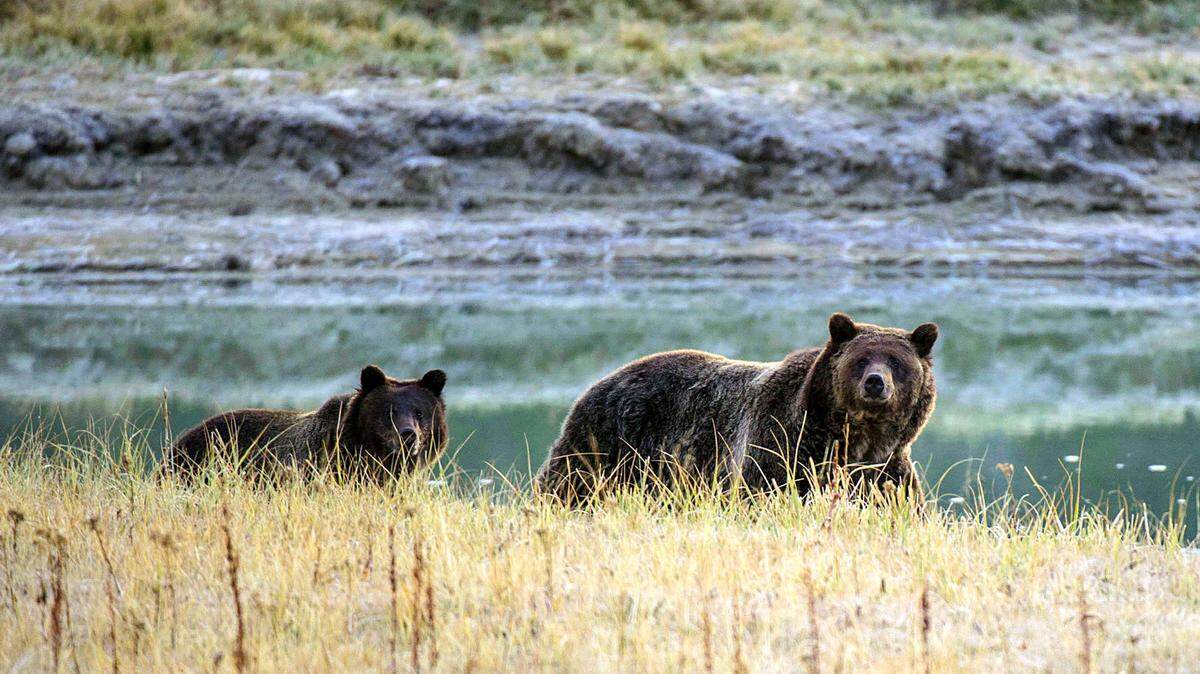
The grizzly bear appears bold on our state flag, adorns our state seal and stands guard in bronze directly outside the governor’s office. It is stitched into our identity, carried by the very institutions we trust to protect California’s lands. Yet, in reality, the grizzly no longer exists here.
That leaves us with an unanswered question: what has California lost along with the grizzly?
That is the purpose of Senate Bill 1305, the California Grizzly Bear Feasibility Study Act, authored by Sen. Laura Richardson, D-Inglewood. The bill, which is co-sponsored by the Tejon Indian Tribe and the Yurok Tribe, does not mandate reintroduction, but it does authorize the California Department of Fish and Wildlife to develop a public roadmap for whether grizzly bears could ever be responsibly reintroduced to the state by June 20, 2030.
SB 1305 directs California to evaluate, for the first time, the ecological importance of the grizzly; the impacts of its loss to California’s ecosystems; the biological feasibility of reintroduction within a place-based framework; local community support; and the practical steps, funding and commitments that would be required.
Once known as the “Great Bear State,” California was home to an estimated 10,000 grizzly bears. By 1924, the last confirmed sighting occurred in Sequoia National Park. Within a few generations of statehood, California had eliminated the very species it continues to celebrate.
For many native people, the grizzly — hunaǝt in the Tejon language and neek-wech in the Yurok’s — was not a symbol. It was recognized as a relative, a teacher of reciprocity and a fierce protector of our lands. For thousands of years, our ancestors lived alongside the grizzly, shaping and stewarding shared landscapes.
The grizzly helped define balance within the natural world and our place within it.
The paired extermination of the grizzly and the genocide of California’s Native people were not a coincidence. Historical records demonstrate they were part of the same campaign, carried out by the same hands — the result of deliberate policy and shared logic.
We survived. The grizzly did not.
Modern science increasingly affirms what our ancestors understood: The grizzly is a keystone species, shaping ecosystems in ways that ripple across landscapes. Its absence changed California in ways we still do not fully understand.
Should the grizzly ever return to California, it can only be through coordination with the people who would share the landscape with the species: tribes, local governments, rural communities, ranchers, law enforcement, land managers, conservation groups and others affected.
Current wildlife management has offered a useful lesson: When the return of a species is not anticipated and planned for, conflict becomes more likely. SB 1305 takes the opposite approach by asking the state to act proactively; identify coexistence challenges communities already face; identify support communities need now and into the future; and develop and invest in coexistence frameworks in advance, before they are needed, to ensure a potential mutually beneficial reintegration of the great bear into our homelands.
This legislation is not about symbolism, but substance. It is about building partnerships for restoration of our lands, however that may best be achieved.
It is not about bringing back the past. It is about contemplating our future.
A century ago, California lost the grizzly from its landscapes. But that did not erase the grizzly’s legacy or remove them from our hearts.
Today, SB 1305 gives Californians an opportunity to understand what was lost and to work together to determine whether there is a path to bring our relative, the grizzly, home.
Octavio Espinoza is chairman of the Tejon Indian Tribe. Tiana Williams-Claussen is director of the Yurok Tribe Wildlife Department.
This story was originally published May 4, 2026 at 6:00 AM with the headline "Should the grizzly return to California? New legislation aims to find out | Opinion."