
Tulare farmer: We must revive community solar in California | Opinion
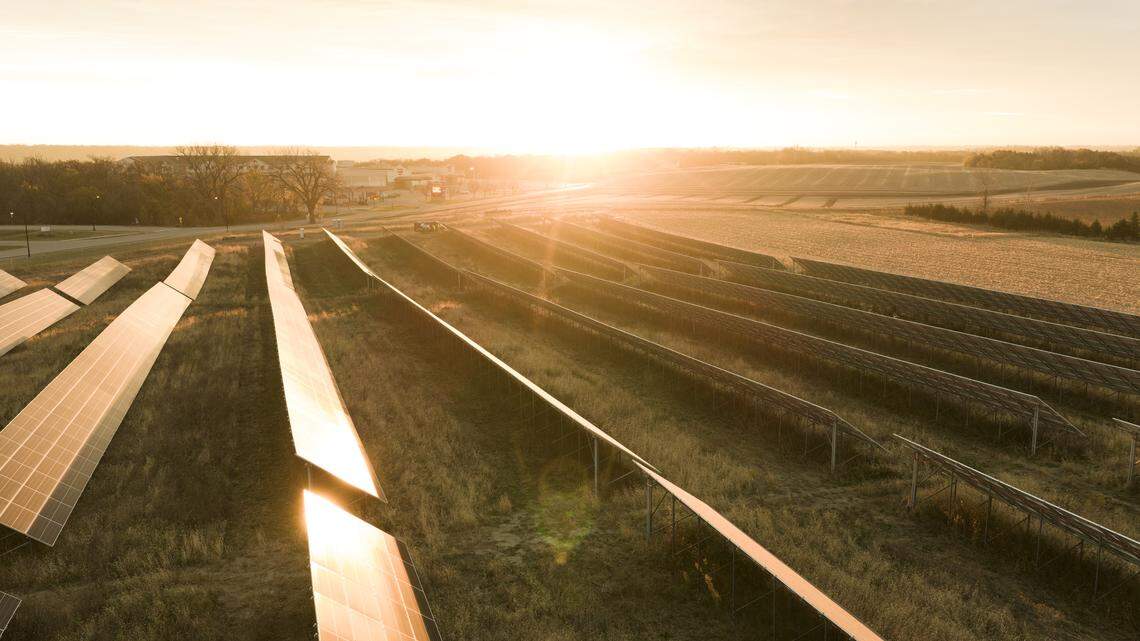
I started my family farm in Tulare County in 1971 with just 40 acres. Over the past 50 years, my wife, Diane, and I have raised a family on this farm and grew it into a 200-acre dairy facility. Today, we support the California dairy industry by raising heifers and growing feed crops. We’re hoping to add a community solar project to that list. But first, we need functioning community solar legislation.
For the past few years, it looked like hosting small community solar and storage projects would be the wisest pivot to care for our family, community and the natural resources on our farm. Unfortunately, efforts to establish a viable, robust community solar and storage program at the California Public Utilities Commission (CPUC) have stalled. This lack of progress is now harming all of the things we are trying to steward.
We need lawmakers to take a more aggressive role in making the CPUC do their job by passing new community solar plus storage legislation this session, so Californians can benefit from the promise of community solar. Community solar provides farmers like us the unique opportunity to continue to serve our neighbors and protect natural resources.
Right now, our hands are tied. And the potential benefits are not being realized.
The way community solar works for landowners like us is that we lease a plot of our farm to a developer. Then the developer installs and maintains a solar project on the land and we receive lease payments for the life of the project (around 20 years). If the math doesn’t work for developers to build, we don’t get compensated.
Community members who don’t have their own solar rooftops can participate in this program by subscribing to a share of the project. Subscribers receive a credit on their utility bill for a portion of the power produced. It’s a way to both invest in green power and reduce electricity costs.
In 2022, the legislature passed Assembly Bill 2316, authored by Assemblyman Chris Ward, D-San Diego, which tasked the CPUC with establishing a community renewable energy program. It included a number of criteria this new community solar plus storage program would have to include, such as ensuring that 51% of a project’s subscribers were low-income households, paying prevailing wages for jobs, providing bill credits to customers, being compliant with Title 24 building standard and evaluating and terminating our historically underperforming programs.
Over the last four years, the CPUC continued to disregard farmers, farmworkers and a broad array of other Central Valley stakeholders, instead implementing a program that has produced no new projects, no new jobs and no new bill savings.
The legislature is now back this year with Assembly Bill 1813, also authored by Ward. This new bill provides greater detail for the CPUC to follow, since nothing has been built since Gov. Gavin Newsom signed AB 2316 into law. In addition, AB 1813 contains a number of important safeguards to ensure these projects are at the distribution level, their subscribers are close to the projects and that all of this is done in a transparent and documented manner.
To use a sports analogy, AB 2316 set up the playing field for the program. The CPUC fumbled the ball. Now, AB 1813 is telling them the rules of the game that will help everyone win.
Community solar is a win for the environment, local residents and landowners. Small-scale projects are hosted at the intersection of farmland, communities and the power grid. Local residents can subscribe to community solar projects with no upfront costs or cancellation fees and save money on their monthly utility bills — meaning they get the benefits of solar even if they rent or can’t put panels on their own roofs.
Due to California’s lack of a functioning community solar program, we’ve been waiting for over three years to establish a community solar project on our farm. This was part of our decision-making when we wound down our dairy operations, and now the plan is not unfolding. If this doesn’t happen, we could lose what we have been working at for over 50 years.
The completion of a small-scale solar farm make it possible for us to keep our farm in the family, and the benefits of community solar are far-reaching: lowering electric bills for low-income subscribers by $20 a month, creating local jobs, improving grid reliability and generally supporting the surrounding community.
For 50 years, we provided quality food for our neighbors via our dairy farm, producing an average of 5,000 gallons of milk a day. Now, we want to shift our efforts to providing reliable electricity for our neighbors, harvesting the power of the sun on the same ground where we produced milk for so many years.
The legislature needs to pass workable community solar legislation which will bring energy bills down for millions of Californians and give family farmers like us a sustainable way to care for natural resources for years to come.
Pete Tiemersma is a Central Valley farmer located in Tulare County.
This story was originally published April 21, 2026 at 6:00 AM with the headline "Tulare farmer: We must revive community solar in California | Opinion."