
New federal change puts homeownership out of reach for low-income families | Opinion
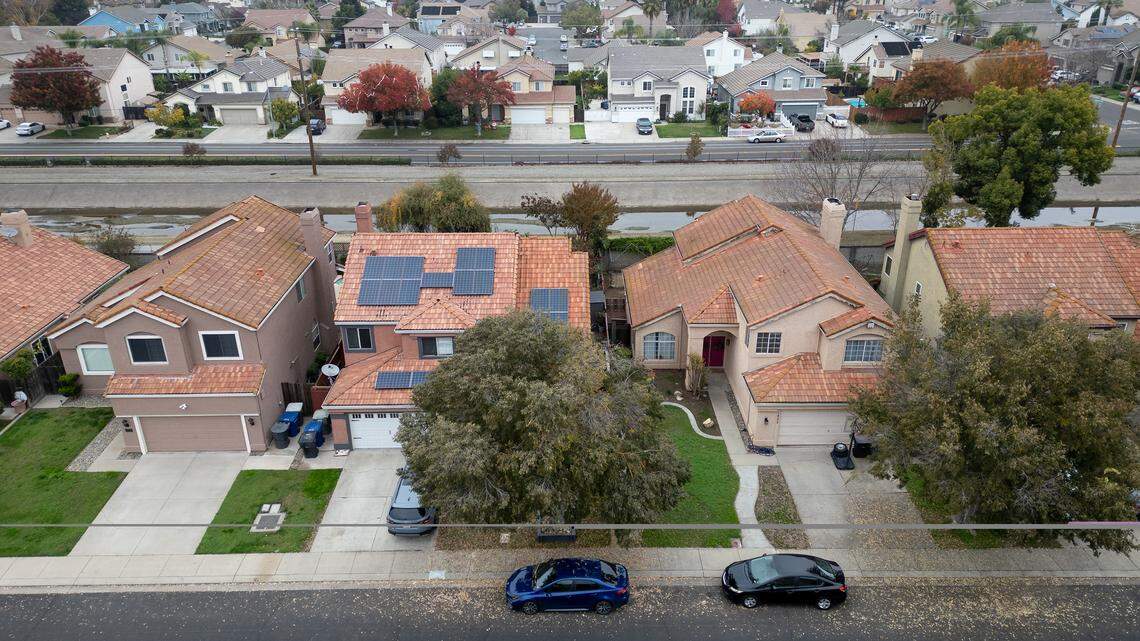
Recent changes to an important federal program that enabled thousands of people to achieve homeownership have made the program inaccessible to most Californians. The 502 Direct mortgage program is operated by the U.S. Department of Agriculture, which made a change in eligibility requirements that effectively redlines properties in Stanislaus County and much of California.
The 502 mortgage is generally available in cities and towns with a population less than 35,000 people and requires no down payment. It is a direct loan from USDA to borrowers — made at a market interest rate for 33 years — with a payment subsidy that varies dependent upon the borrower’s income, which can bring the effective interest rate down to 1%.
The subsidy amount is reviewed and adjusted annually and ultimately repaid when the property is sold or transferred down the line. This incremental direct interest subsidy makes the program unique in the world of mortgages, enabling families to purchase a home today that is tailored to their current and future needs over the life of the loan.
Most 502 recipients over time receive no subsidy assistance because their income improves. To be eligible, borrowers must have an income below 80% of area median income, which is currently $78,800 for a family of four in Stanislaus County.
This program has been a critical pathway to homeownership in California, financing newly constructed homes and enabling thousands of rural residents of limited income to achieve homeownership. In fact, California is regularly the leader in usage of 502 loans in the country, taking advantage each year of unused funds from other states in an annual pooling process.
The critical change to eligibility for the program is a new calculation of the area loan limit. Essentially, the loan limit in Stanislaus County has been reduced to $327,000 from $436,000. The area loan limit is how the program defines a “modest” home.
The main problem is that USDA implements this limit as a maximum sales price. This means that a builder would effectively have to set a sales price at $327,000 or less for a buyer to purchase that home using a 502 mortgage. In the current market, developers and builders will tell you that this is an impossible target in California for even the smallest of homes.
In our sweat equity program, which has assisted nearly 750 families in Stanislaus County to achieve the American dream of homeownership, three- and four-bedroom homes range in size between 1100 and 1400 square feet — modest by any measure. But they appraise for well over $327,000.
A recent pilot program has been established by USDA for homes that we build with homeowner labor that provides some exceptions for our borrowers. While appreciated, the pilot is temporary and does not solve the problems for market-rate builders who have utilized the 502 program in the past.
It is tempting to suspect that this change is targeted given the Trump administration’s dislike for California. Yet it is not just blue states that are affected. Developers in Idaho, Montana, Utah, Ohio, Maine and Florida have all reported similar challenges in utilizing the modified program.
If USDA had consulted with its broad stakeholder community before making this drastic change, they could have found other less disastrous changes to achieve their desired goal of reducing the cost of the program. Unfortunately, they chose to use the axe when a less blunt instrument would have been more effective.
The Trump administration purports to champion working people and is outwardly concerned about barriers to homeownership. Perhaps inadvertently, they have reduced access to rural homeownership at a time when the average age of first time homebuyers in America has passed the 40-year-old threshold for the first time.
We hope the administration will listen as we raise this issue at both USDA and with Congress and seek to reverse this debilitating change.
Tom Collishaw is president and CEO of Self-Help Enterprises, where he has worked since 1980, advancing affordable housing and infrastructure solutions for rural communities. He is a longtime leader in housing policy and development at both the state and national levels.
This story was originally published April 11, 2026 at 5:00 AM with the headline "New federal change puts homeownership out of reach for low-income families | Opinion."