
An urgent lesson for Black History Month from a Nobel Prize Winner | Opinion
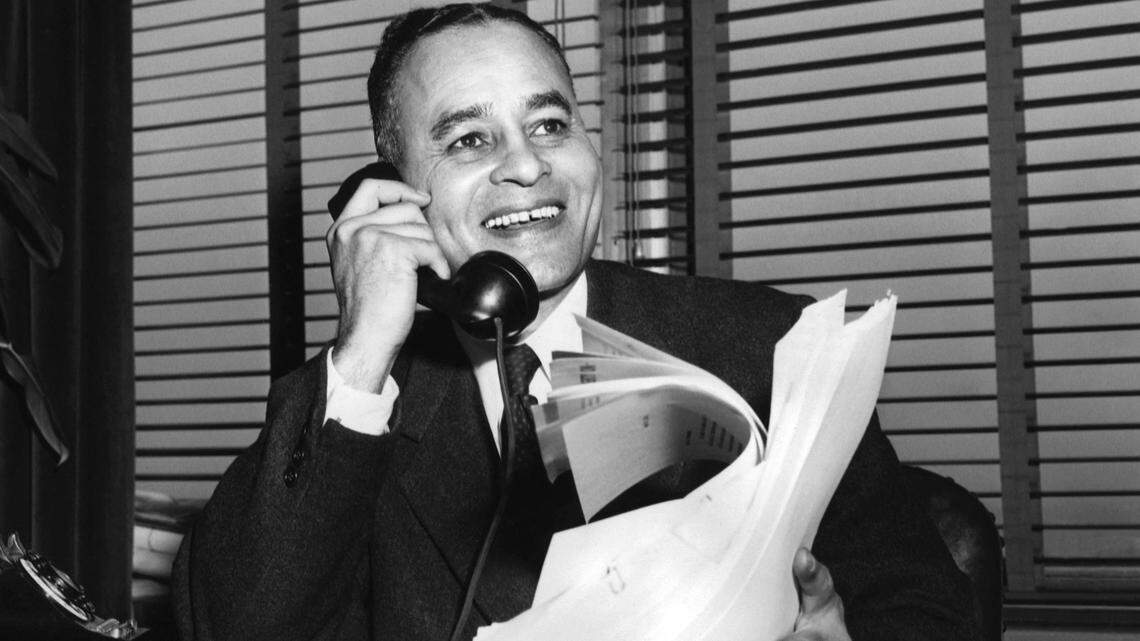
This Black History Month, we can learn something very timely about world peace from Dr. Ralph Bunche, the first African American to win the Nobel Peace Prize.
Bunche, the U.S. diplomat who led negotiations to end the Arab/Israeli War of 1948, said: ”If peace is to be secure, long-suffering and long-starved forgotten peoples of the world, the underprivileged and the undernourished, must begin to realize without delay the promise of a new day and a new life.”
The Arab/Israeli War of 1948 was a devastating conflict among Middle East nations. The war was ended by armistice agreements mediated by the United Nations in 1949. After the first armistice agreement between Israel and Egypt, a newspaper headline read: “Peace, it’s wonderful.”
Bunche, who was awarded the Nobel Peace Prize in 1950 for achieving the armistice agreements, realized the key to building lasting peace was lifting the poor out of hunger and poverty.
Backing up words with actions
In the sprit of Dr. Bunche, we need to be doing more today to help the millions of people suffering from hunger as we try to build peace in the Middle East, Africa and other regions afflicted by war.
“Peace must be paced by human progress,” Bunche said after being awarded the Nobel Peace Prize. “Peace is no mere matter of men fighting or not fighting. Peace, to have meaning for many who have known only suffering in both peace and war, must be translated into bread or rice, shelter, health and education, as well as freedom and human dignity — a steadily better life.”
Bunche backed up his words with action, working to stop malnutrition among war victims after the armistice agreements. Hunger and malnutrition do not cease because an armistice has been signed. When he was called upon to help the Congo end fighting in 1960, Bunche helped organize hunger relief.
We need more leaders like Bunche who take action to build peace and feed the hungry. There is no way we can achieve a stable and peaceful world today unless we address the hunger and poverty in many countries. Under such desperate conditions, peace cannot flourish.
War and hunger today
Tragically, in the Middle East and West Africa, terrorism thrives under the chaos of war and hunger. In war-torn Sudan and South Sudan, hunger has escalated as conflict has worsened. Numerous countries are seeing hunger emergencies. But if people have food and shelter, they have hope for a better life.
Where there is hope, peace can grow. Tragically, however, massive budget cuts last year to global humanitarian aid under the Trump administration undermined peace efforts. We need to realize that food, humanitarian aid and compassion are the foundations for a world at peace.
Budgets for food and other aid should be increased, especially during times of war and disasters. It’s sad that so many resources go toward weapons and wars while child feeding programs face low budgets. The UN World Food Program, the United Nations Children’s Fund and other aid organizations are facing funding shortfalls for many relief missions.
Bunche recognized that world peace cannot be built upon a foundation of starvation and poverty. Each of us can follow his example of being a peacemaker and helping those who suffer from hunger and poverty. If we do, we have the chance to build a world at peace.
William Lambers is the author of “The Road to Peace.” He partnered with the UN World Food Program on the book “Ending World Hunger.”
This story was originally published February 21, 2026 at 5:00 AM with the headline "An urgent lesson for Black History Month from a Nobel Prize Winner | Opinion."