
Prop. 50 in California is trivial compared to this U.S. Supreme Court case | Opinion
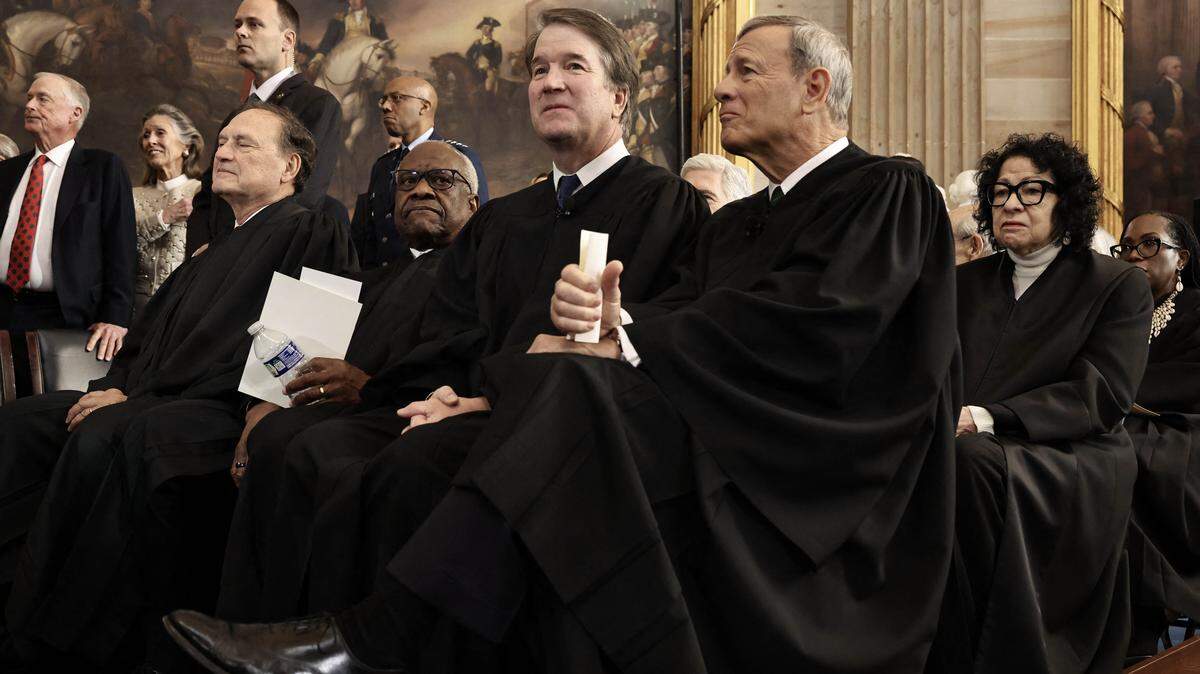
On Oct. 15, the Supreme Court heard oral arguments in Louisiana v. Callais, a redistricting case that threatens to fundamentally reshape American voting rights.
In a matter of months, a decision by the high court will have far greater implications than Proposition 50, the controversial initiative on the Nov. 4 ballot that would redraw California’s congressional district maps to favor Democrats if a majority of voters vote “yes.” At play in California is perhaps the future of five congressional seats. Many experts estimate close to 20 Congressional seats held safely by Democrats could be in play in this high court case.
At the heart of the Louisiana v. Callais case is a deceptively simple question posed repeatedly by Justice Brett Kavanaugh: How long should race-based remedies continue under Section 2 of the Voting Rights Act 1965? For context, this section “prohibits voting practices or procedures that discriminate on the basis of race, color or membership in one of the language minority groups identified (in the legislation).” These groups include, “American Indian, Asian American, Alaska Native, and citizens of Spanish heritage.”
This landmark legislation, hailed for 60 years a key milestone in the Civil Rights Movement, is now facing intense scrutiny from a conservative majority on a High Court that is noticing how “minorities” as defined in 1965 are no longer voting as they did in 1965. There is less daylight between how some “minority” groups have voted in recent elections and how white people have voted. But Black people in particular vote differently than whites in many parts of the country, particularly along party lines, and the current question before the courts is whether it’s legal to draw election maps that dilute Black voting patterns. Consequently, Kavanaugh is asking whether the definition of discrimination established in 1965 remains relevant today. Has America achieved the colorblind society the Civil Rights Act envisioned?
Louisiana case could change American voting
Louisiana’s congressional maps are at the center of this constitutional storm.
After the 2020 census, the state initially drew districts with only one majority-Black seat despite African Americans comprising nearly one-third of Louisiana’s population. Federal courts found this violated Section 2 of the Voting Rights Act and ordered a second majority-Black district.
When Louisiana complied, three white voters sued, arguing that deliberately creating a majority-minority district itself constitutes racial discrimination. The Supreme Court expanded the case to challenge whether Section 2 (the last robust provision of the Voting Rights Act still standing) violates the Constitution’s equal protection guarantees. Kavanaugh, a pivotal voice on the court, repeatedly emphasized that while race-based remedies might be permissible “for a period of time, sometimes for a long period of time, decades, in some cases,” they “should not be indefinite and should have an end point.”
Latinos changing the definition of “minority”
The Black voting experience has been the template for understanding how nonwhite voters behaved and how the law should protect them. But America’s demographic transformation has fundamentally complicated this understanding. Latinos surpassed Black Americans as the nation’s largest racial or ethnic minority group around 2020, and their voting patterns challenge core assumptions built into voting rights law. One of the most counterintuitive characteristics of the Trump Era is the fact that Republican voters are more racially and ethnically diverse than at any point in the last 60 years.
According to Pew Research Center’s analysis using validated voter data, Trump captured 48 percent of Latino voters in the 2024 election while former Vice President Kamala Harris won just 51 percent — a near-even split that represents a seismic shift from 2020, when Biden won Latino voters 61 percent to 36 percent.
Among Latino men specifically, Trump won a slim majority at 50 percent to 48 percent. If Latinos — who have now surpassed all other minority groups in number — divide their votes essentially equally between parties, what does it mean to protect “minority voting rights”? The traditional framework assumes minorities vote cohesively and, that cohesion is race based (even though Latinos are classified as racially white).
But when Latino voters split along class, gender, and ideology much like white voters, the premise that they constitute a unified political minority requiring special protection begins to fracture.
Are current voting rights laws unconstitutional?
Louisiana and the Trump administration seized on this complexity to argue that Section 2 has outlived its purpose. They contend that in an era when minorities participate fully in politics and pursue diverse political agendas, race-conscious districting is no longer a constitutionally protected exercise. Yet this argument fundamentally misunderstands both the persistence of racial discrimination and the diversity within minority communities. Black voters remain overwhelmingly Democratic, with 83 percent supporting Harris in 2024.
Black voters remain the most racially polarized voters in the country. This consistency reflects shared experiences of discrimination and assessments of which party better addresses their communities’ needs.
The fact that Black candidates in Louisiana have never won statewide office and only win congressional seats from majority-minority districts suggests racial polarization in voting persists. Section 2 was designed precisely for such circumstances—to ensure that where racially polarized voting exists, minority communities have fair opportunity to elect representatives of their choice.
The question of Latino political diversity actually strengthens rather than weakens the Voting Rights Act’s logic. Section 2 already contains its own sunset mechanism: it only applies where conditions warrant. As discrimination recedes, fewer maps violate Section 2. The law adapts automatically to changing circumstances.
Justice Kavanaugh is skeptical
Yet Justice Kavanaugh’s skepticism reflects a deeper challenge that cannot be dismissed.
As we move toward a more pluralistic society, it is not only legitimate but required of us to ask: At what point are our old assumptions about race and partisanship outdated and simply wrong? What does being a minority even mean in a nation where the largest minority group votes like the majority?
These are not questions designed to dismantle civil rights protections but to ensure they remain effective and constitutional in a transformed America.
The Supreme Court’s decision in Callais will reveal whether the justices believe our voting rights framework can evolve to meet this complexity, or whether they will use that complexity as justification to abandon protections that remain desperately needed for some communities, even if not all.
Mike Madrid is a political analyst and a special correspondent for McClatchy Media.
This story was originally published October 23, 2025 at 11:03 AM with the headline "Prop. 50 in California is trivial compared to this U.S. Supreme Court case | Opinion."