‘South Park’ slams Trump. Great, but the show helped make him president | Opinion
The creators of “South Park” see themselves as champions against dishonesty, duplicity and hypocrisy. Trey Parker and Matt Stone have used their long-running, anything-goes cartoon to skewer public figures for decades, from JonBenet Ramsey’s parents to Caitlyn Jenner. That’s often a fine enough thing.
They’re grabbing attention again this week with the premiere to their 27th season, which takes no-holds-barred aim at Donald Trump and their series’s new parent company, Paramount. The plot sees the president strong-arming the show’s namesake small Colorado town to financially settle a threatened lawsuit over (literally) putting Jesus in public classrooms. It’s an unsubtle jab at Paramount paying Trump $16 million to drop his frivolous suit over a “60 Minutes” interview with Kamala Harris, as well as its cancellation of “The Late Show,” hosted by pointed Trump critic Stephen Colbert.
Even by “South Park” standards, this episode’s satire is pretty ferocious. I’ve never had any patience for the argument that it’s Trump’s critics who need to turn down the temperature, because it’s impossible to overstate the corrosive impact of the most powerful man in the world attacking his perceived enemies with constant violent, profane and demeaning rhetoric. You can’t out-gross our president.
But Donald Trump didn’t happen in a vacuum. And “South Park” played more than a small role in how we got here.
Let’s go back to the mid-1990s. I remember vividly my friend Wesley inviting a bunch of us at an afternoon house party to huddle around the TV, where he screened a grainy VHS of a short cartoon called “The Spirit of Christmas,” also known as “Jesus vs. Santa.” It was fast-paced, wildly violent and darkly absurdist, animated crudely with construction paper cut-outs. Its attitude was unique, savage and genuinely shocking — willing to “go there” in ways that even the ever-edgy “Simpsons” would never dare.
By 1997, Hollywood had turned that short into “South Park,” where it has remained a Comedy Central staple ever since. Its “did they really just do that?” approach stayed pretty much intact from the source material. It was an immense, instant hit — and sure enough, many on the right immediately denounced it as the work of the hedonist left.
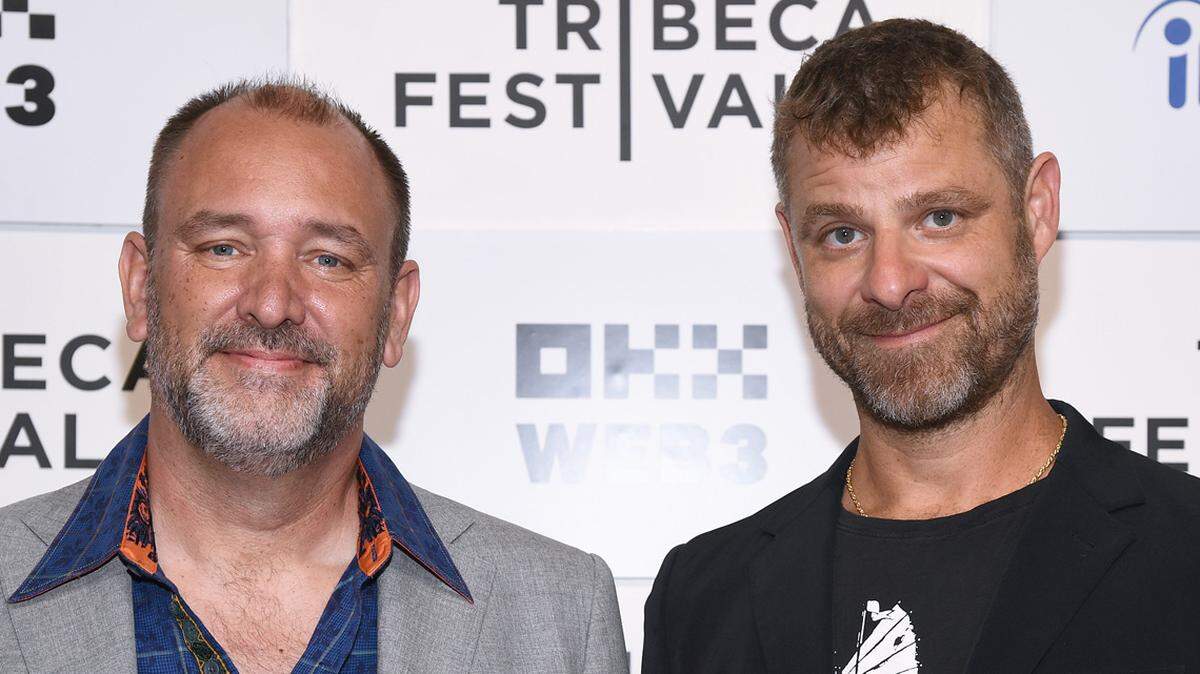
Mocks people for gender, race, disabilities
But Parker and Stone are anything but partisan lefties. “I hate conservatives,” Stone famously said in 2005, “but I really (expletive) hate liberals.” Their episode on the 2004 George W. Bush-John Kerry election cast the candidates as “Giant Douche” and “Turd Sandwich,” and I believe it both reflected and helped solidify the both-sidesism that infects way too many of my contemporaries.
And now, gentle readers, here I regret I have to inform you about edgelords. “South Park” took off at the same time as user-generated internet content, and their general sensibilities mirror each other. The show is unafraid to make jokes at the expense of those outside the norm: It constantly ridicules people for their gender, race, sexual orientation, gender identity, religion and even their disabilities.
That boundary-pushing is also common all over the internet, whose algorithms reward cruel behavior by pushing it into our timelines, where the social media masters hope we’ll spend more time furiously arguing with the trolls. That’s generally what it means to be an edgelord — someone who takes delight in making other people mad by being offensive. It’s a big part of Trump’s appeal to people who’ve grown up on the internet — and watching “South Park.”
Of course, I’m not saying the show is responsible alone for the rising tide of nastiness in our culture. Plenty of others, from Eddie Murphy to Howard Stern, have helped push us that way. But I struggle to think of any bit of entertainment that’s moved the Overton window — the range of ideas the public is willing to discuss openly — further than “South Park,” and especially its central character of Eric Cartman. He spews bigoted diatribes on virtually every episode, and his frequent antisemitism is particularly vile. We’re wink-wink supposed to understand this is transgressive, unacceptable behavior we should condemn, of course.
But audiences just don’t necessarily understand that. Way too many people take Cartman’s bad boy act at face value, not getting that it’s wrong. Dave Chappelle walked away from his own lucrative Comedy Central show partly because he realized that the racial caricatures he mocked were actually mainstreaming ugly stereotypes. It gave frat boys permission to say the N-word. There’s a term for it: irony poisoning.
So sure, if you don’t like Trump, “South Park” making such ruthless fun of him might be cathartic. But if the minds behind the series are so concerned about hypocrisy and truth-telling, they should turn their colorful paper and magnifying glasses inward — and maybe come up with a new episode where they’re the target of their own X-Acto knives.
This story was originally published July 25, 2025 at 5:02 AM with the headline "‘South Park’ slams Trump. Great, but the show helped make him president | Opinion."