
Trump’s new budget supercharges the US deficit. Here’s how we dig out | Opinion
In 1968, Congress enacted a 10% surtax on income taxes paid by taxpayers earning above $5,000 — equivalent to approximately $38,000 today. The goal was to eliminate a federal budget deficit of $29.2 billion, roughly 2.8% of the gross domestic product. The additional revenue eliminated the deficit and created a modest surplus the next year.
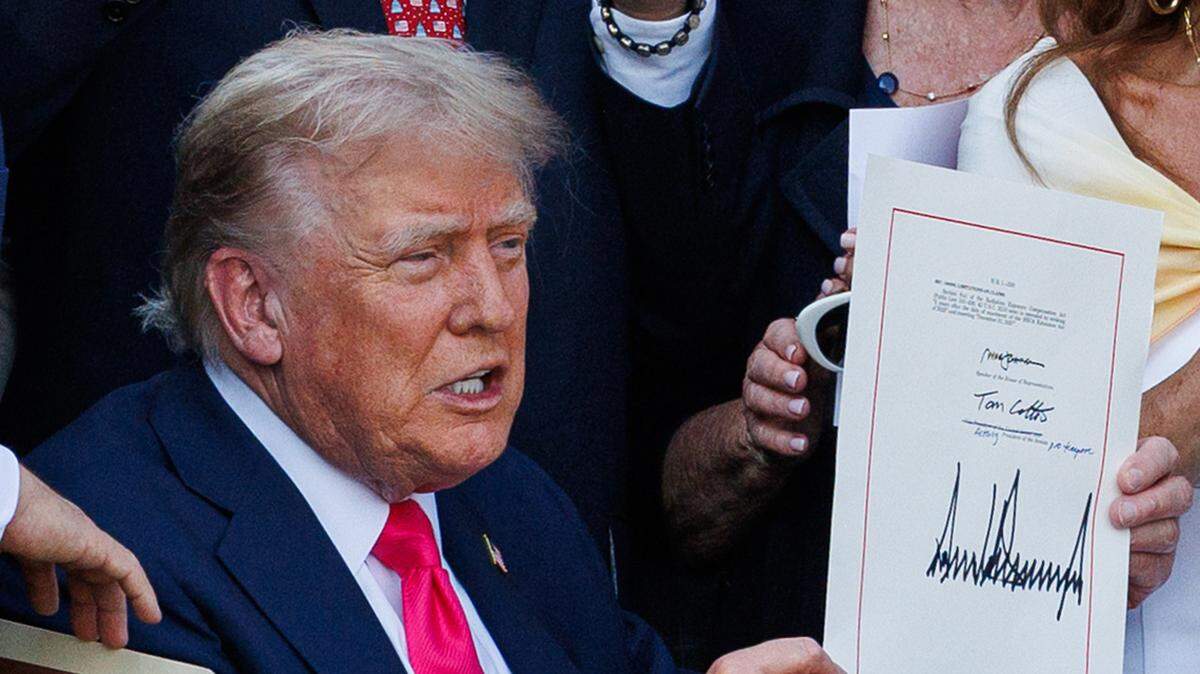
If there ever were a time for history to be repeated, it’s now. Last year’s deficit reached $1.8 trillion, about 6.4% of GDP. This year’s deficit is projected to rise to $2 trillion. But instead of acting to increase revenue, Congress did the opposite by enacting President Donald Trump’s One Big Beautiful Bill.
Before adoption of this omnibus bill, the Congressional Budget Office had projected that in 10 years, the publicly held debt would reach $52 trillion — an alarming amount, implying that interest costs could rise to $2 trillion per year. Enactment of the One Big Beautiful Bill raised the CBO projection an additional $3.4 trillion.
Republicans have argued that CBO projections are overly pessimistic, but they may not be pessimistic enough. In any case, there’s absolutely no risk that Congress might reduce the deficit too much.
A dozen years ago, the Bipartisan Policy Center appointed a deficit study task force. A second task force was appointed by President Barack Obama. Both concluded that because the U.S. debt trajectory was unsustainable and threatened economic stability even back then, policymakers must make difficult decisions to restore fiscal order, meaning that structural reforms to government benefits programs will be necessary, along with fundamental tax reform that raises significant new revenue.
But Congress did not simply ignore the task forces’ recommendations. In 2017 after the election of Trump, revenue was reduced via tax cuts. Two years later, income tax revenue plummeted to 9.2% of GDP, a record post-World War II low during a period of economic growth. The deficit in that year exploded to nearly $1 trillion.
Interest rates, Social Security, Medicare
Last year, the deficit was nearly double the 2019 shortfall, due mainly to an increase of $500 billion in interest cost and a $700 billion increase in Social Security and Medicare spending. For real progress, those categories need to be addressed. Dismissing every federal employee would not have offset even half the increase in Social Security and Medicare spending.
In addition to more revenue and less spending, low interest rates are an essential component of any deficit reduction plan. Low rates not only reduce the deficit by lowering the Treasury’s interest cost, but they also benefit the private sector by increasing the value of investment assets and promoting economic growth. Capital gains and a growing economy, in turn, result in increased tax receipts for the Treasury.
As evidenced by the recent downgrades of U.S. debt by major rating agencies, bond investors are becoming wary of the ability of our lawmakers to enact a responsible fiscal plan. If nothing is done to allay their concerns, they could demand higher rates.
A comprehensive bipartisan plan to avert the pending crisis seems an impossible dream in today’s politicized environment. But a temporary surtax, continuing until such a dream comes to fruition, would be at least a start toward a solution and could reduce the risk of a bond market meltdown. The surtax would need to raise sufficient revenue to offset however much Trump’s bill adds to the deficit, plus an additional amount to achieve at least some reduction.
Differences in wealth distribution and effective tax rates between now and 1968 could affect the rates to be applied. Currently, the richest 1% of Americans hold $49 trillion in wealth, 31%, of the total. In 1968, that percentage was about 20%. Yet in 1968, the top 1% paid an effective tax rate of 31%, compared to 26.1% today. A 25% surtax on the top 1% would be needed to approach the total rate that the top 1% paid in 1968 after a 10% surtax. Consequently, a progressive surtax would seem to make sense.
With polls indicating widespread dislike of the One Big Beautiful Bill, concern about the deficit and support of higher taxes on the wealthy, perhaps there could be hope for action if voters make their concerns known to Congress. There’s sufficient wealth and economic strength in America to right the ship without extraordinary sacrifice. For the sake of America’s future, we need to get started.
This story was originally published July 23, 2025 at 5:05 AM with the headline "Trump’s new budget supercharges the US deficit. Here’s how we dig out | Opinion."