
Why is your California electricity bill so high? It may be your neighbor | Opinion
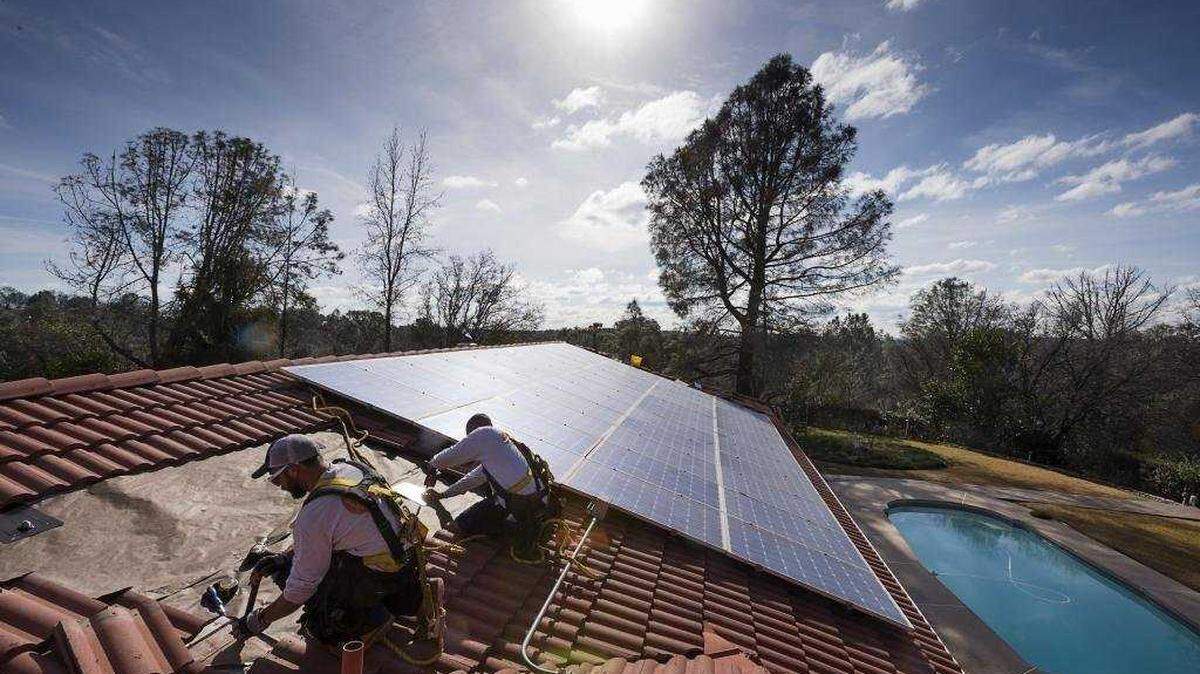
The California Chamber of Commerce has taken an expert look at why electricity in this state costs so much and come to a surprising conclusion. The largest reason may be right next door.
The 1.8 million solar installations on California rooftops are the largest driver of rate increases for the rest of the customers of Pacific Gas & Electric, Southern California Edison and San Diego Gas & Electric. Of all the regulations and laws governing the state’s utility industry, the state’s largest business organization has concluded that solar rooftop incentives account for 14% of the cost of a typical ratepayer bill.
This solar program is even more costly than undergrounding transmission lines throughout fire country to prevent future devastating blazes, according to the chamber’s study by Blue Sky Consulting.
No doubt, the Chamber’s study will hardly be the last word on solar rooftops. That’s because it seems that for every study that says solar rooftops are costing the other ratepayers, there is an analysis that says the opposite.
One respected stable of economists and resource specialists at M.Cubed, for example, concluded earlier this year that the solar rooftop programs are saving Californians $1.5 billion by reducing demand on the grid.
But a trend on these findings is emerging that is impossible to ignore. The studies defending the solar incentives tend to come from those that have been underwritten by the industry. The California chamber’s conclusion is consistent with other independent reviews by public advocates and a researcher at the University of California, Berkeley.
Meanwhile, the Democrats who run the California Legislature are supposedly vowing to advance legislation to make the state more affordable to its residents, most notably embattled Assembly Speaker Robert Rivas of Hollister. Electricity is among the most painful bills of the month for so many state residents. Where will the Democrats land on this issue?
The legislation to watch is Assembly Bill 942 by Lisa Calderon, D-Whittier. She’s trying to make solar rooftops less lucrative for those who have them, and is taking heat along the way. Adding to the political drama is how her own professional background includes 25 years working inside the utility industry.
Solar rooftop owners are subsidized by how their panels can produce more power than used within the home. The unused power then heads onto the grid. The utilities pay them for that power through a calculation known as “net energy metering.”
The rub is that these payments are regulated to be way beyond the market price for power, akin to being forced to buy gasoline at $20 a gallon. Lowering these rooftop solar power payments would lower the costs to the utilities, and in turns, the bills to ratepayers.
That’s the goal of AB 942. The details are complicated because different rooftop owners are getting different prices for the power they sell, the sweetest deals for the oldest solar rooftops.
AB 942 has put the party in spectacular conflict with itself.
The Democrats have been fans of the solar rooftop industry, for years a small but important success story until the industry exploded. Then there are the diehard devotees to environmental groups who love this solar power. And there are precious few allies of investor-owned utilities who are conveniently portrayed as the villains for all electricity problems.
With all these traditional party alliances, now the party’s leaders are vowing to make California more affordable. And when even the business chamber rants about the cost of a private sector energy program such as rooftop solar, the mounting evidence is becoming impossible to ignore.
There is a silver lining in the chamber’s new study. Going green, California’s transition to buying more renewable sources of power and less from fossil fuels, isn’t breaking the bank. So far the renewables mandate is costing customers less than 3% a month in their bills.
Numbers verified by multiple independent sources tend not to lie. We can make this renewable electricity transition in the cheapest way possible, or pay through the nose. Only in Sacramento is this choice not obvious.
This story was originally published July 7, 2025 at 5:00 AM with the headline "Why is your California electricity bill so high? It may be your neighbor | Opinion."