At graduation ceremonies, national divisions over Gaza and Trump are vocalized | Opinion
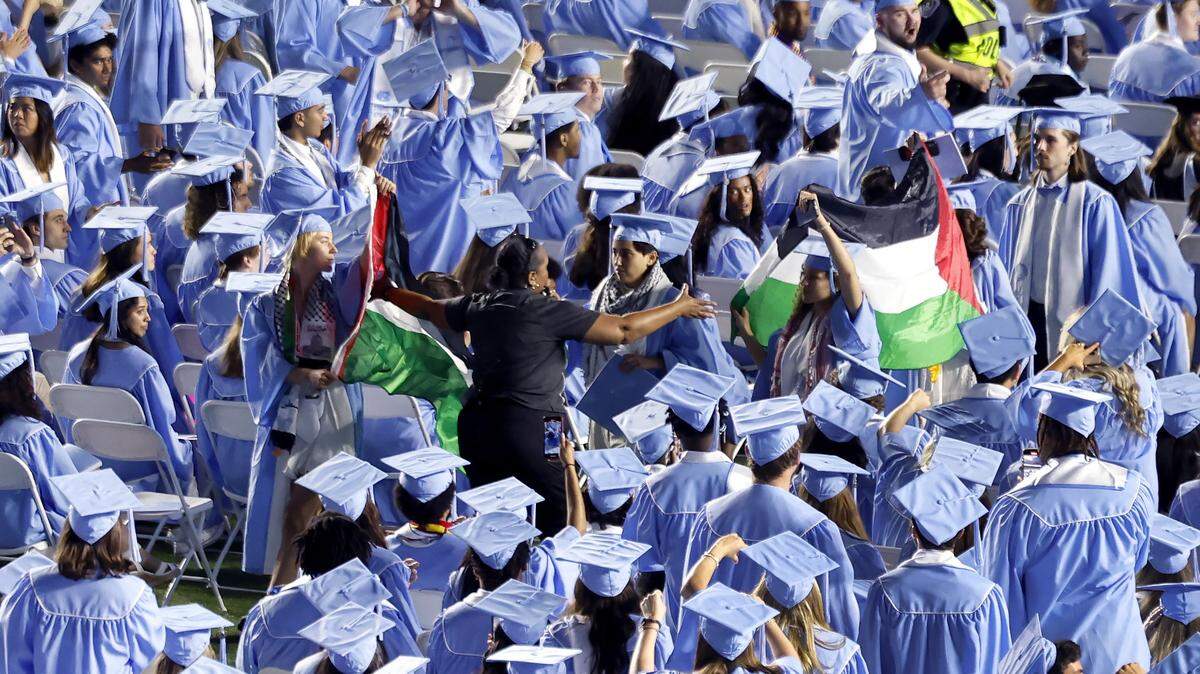
About two-thirds of the way through my daughter’s commencement last week on a vast lawn at the Massachusetts Institute of Technology, undergraduate student body president Megha Vemuri went off script. She brought up the ongoing one-sided war in Gaza and criticized MIT for not doing more. And she used the word that divides the proverbial room — “genocide.”
A staid ceremony suddenly turned acrimonious. Jewish students left their seats in search of their parents. Some turned their backs, yelling “shame!” Supporters of Vemuri waved Palestinian flags. And then Vemuri returned to the approved script. She congratulated her fellow graduates and relinquished the podium to President Sally Kornbluth, who calmly tried to restore order.
“Listen, folks. At MIT, we value freedom of expression, but today’s about the graduates,” Kornbluth told the gathering. She would later ban Vemuri from attending her school-specific commencement ceremony the next day.
Kornbluth, in one respect, was fundamentally right: Commencement is one of our culture’s most celebrated rites of passage. But our country is so deeply divided this commencement season, some in support of our president (whose name was not uttered at MIT), others not, with ongoing conflicts such as the one in Gaza producing such divergent perspectives.
If commencement is truly about graduates, how should this event honor what is in their heads?
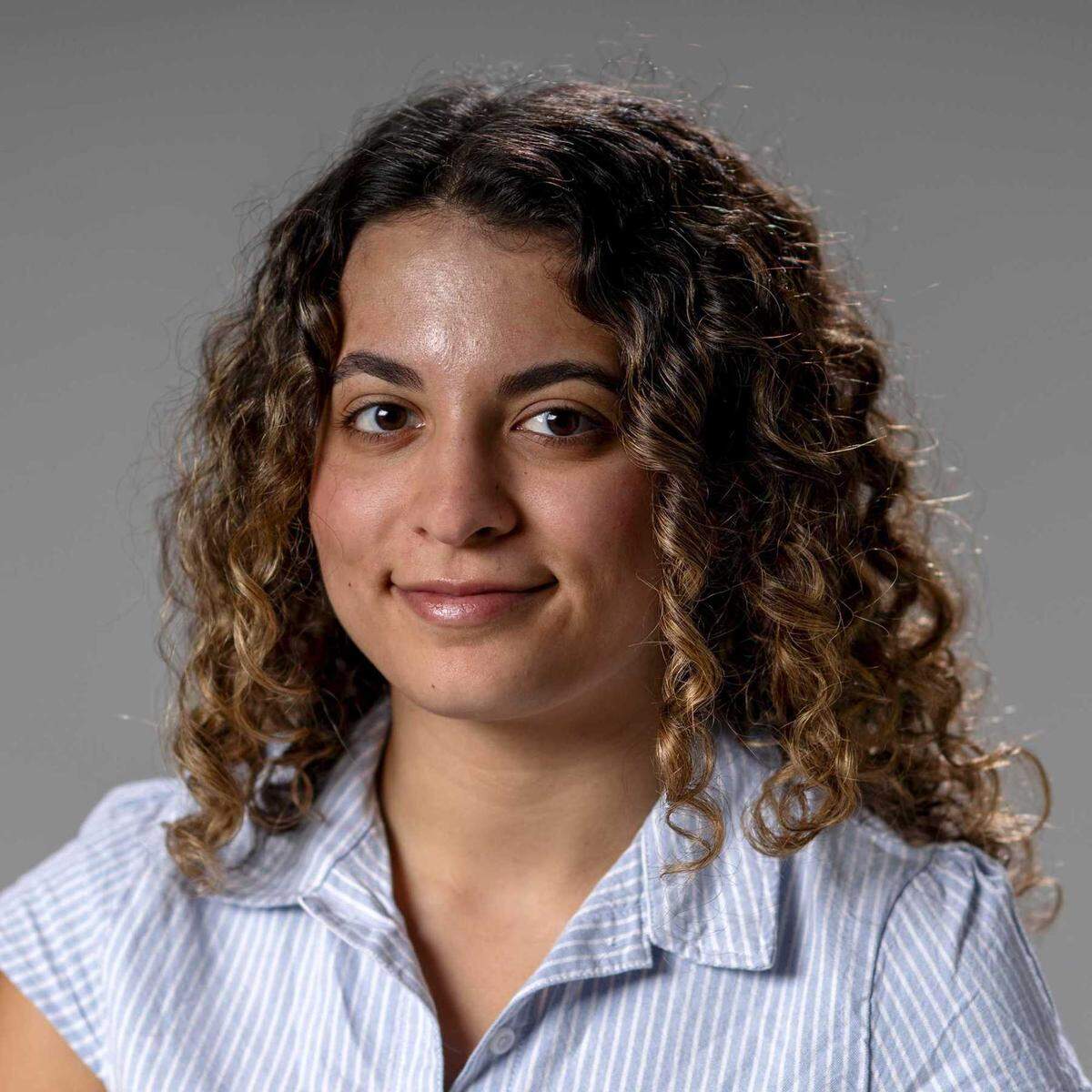
As a Baby Boomer parent fast approaching Medicare eligibility, I find myself with conflicting thoughts. So I wanted to get the perspective of a recent graduate here at The Sacramento Bee; our opinion staff is fortunate to have an intern here for the summer, Tania Azhang, who recently graduated with a bachelor’s degree in American studies from Southern California’s Pitzer College.
What do today’s graduates want out of their commencement?
Tom Philp: There is basically some unwritten rule about American commencements to promote a universally positive experience. In today’s world, however, that requires suspension of mentioning the unprecedented attacks on academic freedom by President Donald Trump or mentions of just about any conflict. We’re in uncharted times. Convention has been thrown to the winds.
Tania Azhang: Commencement is supposed to be the capstone of our undergraduate experience. Seeing as the war in Gaza has become a major fixture of the 2025 graduating class’s time in college. During my school’s commencement ceremony, the class speaker touched on the conflict in Gaza and many students proudly donned keffiyeh stoles as they walked across the stage. The protests and encampments were a crucial part of their time in college, not mentioning it would be like ignoring the elephant in the room.
Does dissent cross a commencement line?
Philp: I’m a fan of respectful dissent in a setting like this. When Vemuri said there is no longer a university standing in Gaza, that was her most powerful line. It is something we all should think about, regardless of our position about this conflict. But she didn’t stop there. “We are watching Israel try to wipe Palestine off the face of the earth, and it is a shame that MIT is a part of it,” she said.
Azhang: I watched Vemuri’s speech on YouTube, and I found it to be much more in protest of the institution with a clear call to action. MIT issued a statement that the speech “was not the one provided by the speaker in advance.” I understand how condemning the university might feel like crossing a line, but I have to admire Vemuri’s courage to protest knowing the consequences. Her line about how there isn’t a university standing in Gaza is a burden many in the graduating class carry with them.
Have universities lost the capacity of dialogue?
Philp: I was on the campus of my alma mater, Northwestern University, in Illinois, the week prior. I was struck by the Cook County Sheriff’s deputies patrolling campus, something I had never seen before in more than 40 years visiting Evanston. To me, this was a very visible show of force to students against protest. We’ve reached the point where there is no longer debate. There is crowd management — and, in the case of commencement, attempts at ceremony management. This is a dark period for higher education in the United States.
Azhang: I have to agree that the relationship between students and the administration has broken down severely, especially in light of the events on Oct. 7, 2023. While working at the college newspaper, I witnessed Pomona College’s response to the student-led Palestine protests, including one incident in which the college president authorized local police to arrest 20 students. Punitive actions taken against students doesn’t de-escalate the situation, it forces protesters take more desperate measures.
Is commencement really just about the graduates?
Philp: At MIT, a giant canvas protected the top administrators and faculty from a summer squall. The graduates and parents, meanwhile, were fully exposed to the elements, in the open air next to the Charles River. (The forecasted rain did not materialize.) Commencement is the most carefully choreographed two hours in the annual life of any university, a moment to showcase its very best to the world. Commencement is about all of us. And at the moment, we’re all pretty screwed up.
Azhang: Commencement is indeed one of the most important ceremonies for a university (and its board of trustees). That makes protests like Vemuri’s incredibly disruptive and ultimately effective. Vemuri might have ruined the day for many administrators and parents, but she was giving voice to student discontent about the administration’s treatment of protesters.
This story was originally published June 6, 2025 at 5:00 AM with the headline "At graduation ceremonies, national divisions over Gaza and Trump are vocalized | Opinion."