A California Democrat wants more nuclear energy. Our power hungry AI is why | Opinion
A Fresno Democrat wants to expand the use of nuclear power in California.
His reasoning? To lower bills for consumers, and power artificial intelligence data centers, which demand huge amounts of electricity.
California Assemblymember Joaquin Arambula has introduced AB 305, a measure to amend parts of the state Public Resources Code and add a section to the Public Utilities Code.
The bill would outlaw any new nuclear power plants in California unless reprocessing facilities for spent fuel are found to be feasible, and disposal of nuclear waste can be verified as safe.
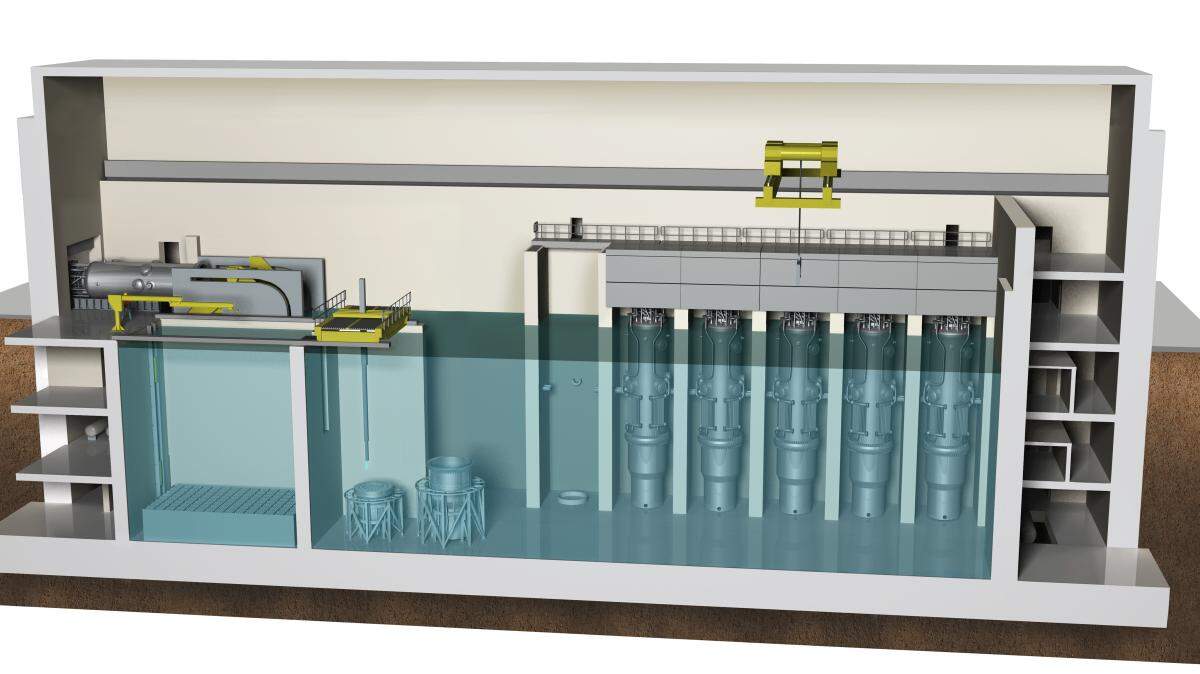
However, the bill would exempt from such regulations the construction and operation of any “small modular reactor,” which produces up to 300 megawatts per unit.
The bill also requires the Public Utilities Commission to develop a plan by January 2028 for increasing the supply of electricity generated by nuclear power, with a corresponding phase out of power created by natural gas plants.
Small reactors are an emerging trend in the nuclear industry, largely because getting them up and running is much easier than a full-scale nuclear plant like Diablo Canyon, which is located on the San Luis Obispo County coast and is owned by Pacific Gas and Electric Co.
PG&E says Diablo Canyon’s two reactors produce 18,000 gigawatt hours of energy per year, or about 18 million megawatts.
Given the giant-sized hunger of data centers for power to run artificial intelligence, the nuclear industry argues that its energy, produced without any air pollution, is clearly needed. Arambula sounds a similar theme.
“Here in the state of California, we should be looking to all avenues to make sure we are allowing electricity to be affordable for our household families,” he told Fox 26 KMPH recently.
Arambula noted the link between California’s tech industry and its need for power. “One of the major economic drivers for us has been technology, and in particular, AI (artificial intelligence). We should look for solutions that will allow those industries to continue to produce and create jobs here in our great state.”
Joining Arambula in championing the bill are Republican Assemblymembers Josh Hoover of Folsom and Diane Dixon of Huntington Beach.
Water use highlighted
The Sierra Club remains steadfastly opposed to expanding nuclear power. The club cites dangers of a radiation leak from operating such facilities, the problem of getting rid of highly radioactive spent fuel, and how used fuel could be stolen and made into a weapon.
But tech companies are pushing ahead at lightning speed to make artificial intelligence a reality for Americans, and that computing will need energy that does not today exist.
By next year, the energy needs of data centers worldwide will be equal to what Japan uses in a year, said a report by the Yale School of the Environment.
That same report raised another concern of particular relevance to California. Data centers utilize water for cooling — lots of water. “Google’s data centers consumed about 5 billion gallons (nearly 20 billion liters) of fresh water for cooling” in 2022, the Yale report says.
The Dalles, a city in Oregon, is home to three Google data centers. Those centers consume more than a quarter of the city’s water, the Yale report says.
Scrutinize small reactors
Energy and water are elements that California can never have enough of. Arambula seeks to address the former with his bill. He expects tech companies would pay to build small modular reactors. He said those facilities “generate minimal spent fuel.”
Travels to Europe showed Arambula the benefits of nuclear power. “During trips to France and Spain several years ago, we learned how France and Spain have been able to use nuclear energy to make energy more affordable and reliable,” he told me in an email..
There is still much that needs to be answered, however, with any plan for small modular reactors. Among them are where would the waste go that the plants create, even if it is a small amount.
Creating radioactive waste and needing precious California water are worrisome impacts of supporting artificial intelligence. The Legislature must put Arambula’s bill under due scrutiny, and the PUC must give its full attention to proposals for powering data centers.