
Assemblymember Dawn Addis: Climate justice hinges on community-centered clean energy | Opinion

The recent fire at Vistra Energy’s battery energy storage facility in Moss Landing is a wake-up call. It is more than just an isolated incident and a stark reminder of the risks tied to lithium-ion battery energy storage. It highlights the urgent need to rethink not just how we build lithium-ion battery energy storage, but where we build it — and whether local communities should have a say in the process.
That’s why I introduced Assembly Bill 303, the Battery Energy Safety & Accountability Act, to improve safety standards and restore local oversight for energy storage facilities in California.
Opponents of common-sense guardrails say that any kind of regulation is an irrational over-reaction. Their arguments, that thoughtful regulation and siting requirements will be catastrophic to California’s energy goals, are an age-old method of leveraging the fear we all have about our changing climate.
The truth couldn’t be more different.
Loophole lets companies bypass local government
Climate action hinges on solutions that prioritize public health, environmental safety and community input. Yet, California’s current system allows large energy companies to bypass local oversight, siting battery energy storage projects in ways that may put communities and ecosystems at risk. We cannot repeat the mistakes of the past that caused harm to human and environmental health and sidelined the voices of millions of Californians.
On Jan. 16, 2025, the Vistra battery energy storage facility at Moss Landing erupted in flames, burning for six days. Lithium-ion battery fires cannot be extinguished with water; instead water makes the fire spread or explode. During the fire, over 1,200 residents were evacuated with fear of the unknown, Highway 1 was shut down and local businesses lost tens of thousands of dollars.
Moss Landing Marine Lab Scientists have found dangerous levels of heavy metals in the soil near the Elkhorn Slough Reserve, and University of California Santa Cruz scientists are concerned the endangered sea otters who live in the Slough may be ingesting these metals. We have yet to understand the effects on nearby prime agricultural land, our community, or the Monterey Bay National Marine Sanctuary. We continue to receive reports of health problems related to the fire.
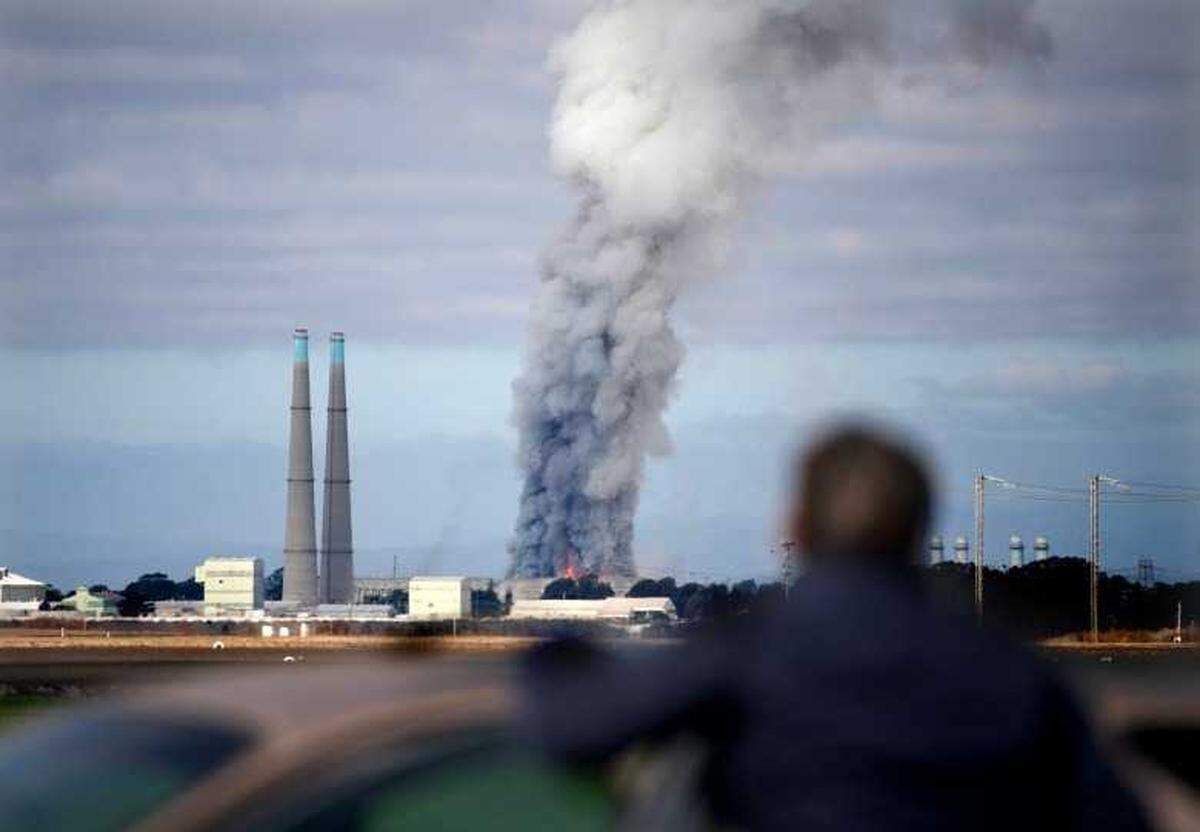
Unfortunately, this is not the first lithium battery fire in California, or even at Moss Landing. The California Energy Commission (CEC) and the California Public Utilities Commission (CPUC) cite at least ten major incidents in the last five years.
According to the CEC, “California is a world-leader in energy storage with the largest fleet of batteries.” Battery energy storage capacity has increased over 3000% between 2018 and 2025 via the local permitting processes, showing that local permitting works.
Meanwhile, a 2022 budget trailer bill, AB 205, gave developers a loophole to bypass local processes and instead seek state approval. Developers are opting-in to CEC streamlining in Fresno, Imperial, San Bernardino, Orange and Alameda counties — areas with underserved communities who deserve a voice in their clean energy future.
3-pronged solution
To ensure battery energy storage projects are safe and sustainable, we must do three things:
- Restore local oversight to the permitting process
- Establish appropriate zoning to protect homes, schools, hospitals, farmland, and sensitive ecosystems
- Improve safety and oversight
While the California Public Utilities Commission (CPUC) is already improving safety, the Legislature must restore the voice of local Californians and ensure proper siting of battery energy storage.
Opponents claim local permitting and appropriate siting will eradicate clean energy progress. That is a false, reactionary, scare-tactic. These claims ignore two important realities: 1) The purpose of battery energy storage is to create climate solutions that improve public and environmental health and safety; and 2) Any clean energy future requires trust from the public.
As an international climate leader, California must get both the technology and processes right if others are going to follow. This is essential when the federal government is rebuking environmental protections and regulations at every turn. We cannot let fear force us to repeat mistakes of the past by imposing potentially dangerous and polluting battery energy storage on communities without their input and real protections.
I urge my colleagues in local and state government and climate and environmental champions everywhere to stand with California’s communities. We need climate solutions that uphold justice, safety and sustainability.
Dawn Addis (D-Morro Bay) represents District 30, which includes parts of Santa Cruz, Monterey and San Luis Obispo counties.
This story was originally published February 4, 2025 at 2:15 PM with the headline "Assemblymember Dawn Addis: Climate justice hinges on community-centered clean energy | Opinion."