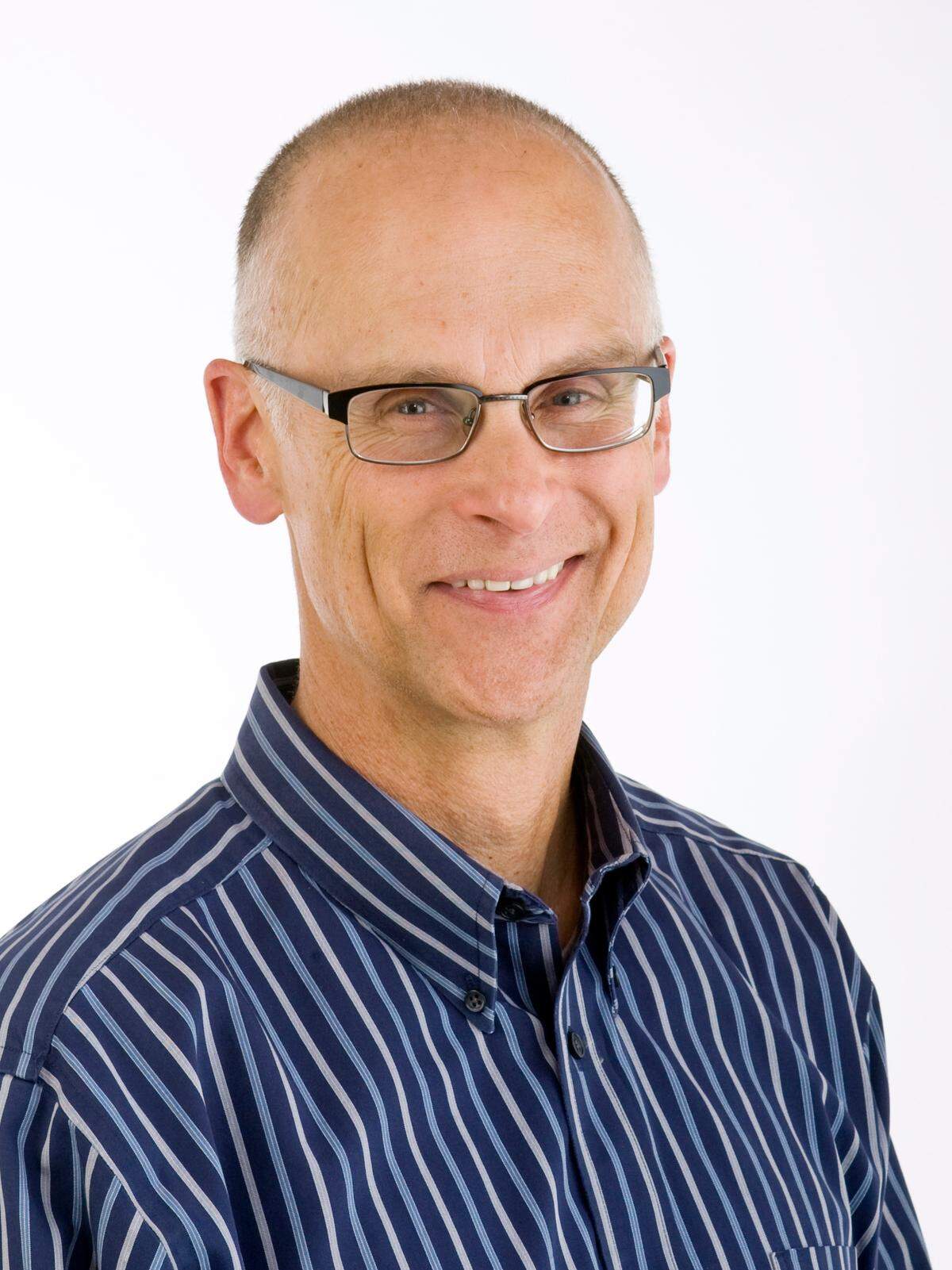
Joe Rosato, last of the ‘Bee Four,’ dies. He went to jail to protect a confidential source
Joe Rosato Sr. was the kind of reporter who could walk into a bar and, soon enough, find a news story that had yet to be told. Personable and gifted with the ability to ask good questions, Rosato was an old-school journalist who told readers everything they needed to know.
In fact, he was in a bar when a summons was issued for him to report to Fresno County Jail. His crime? Refusing to divulge the identity of a confidential source.
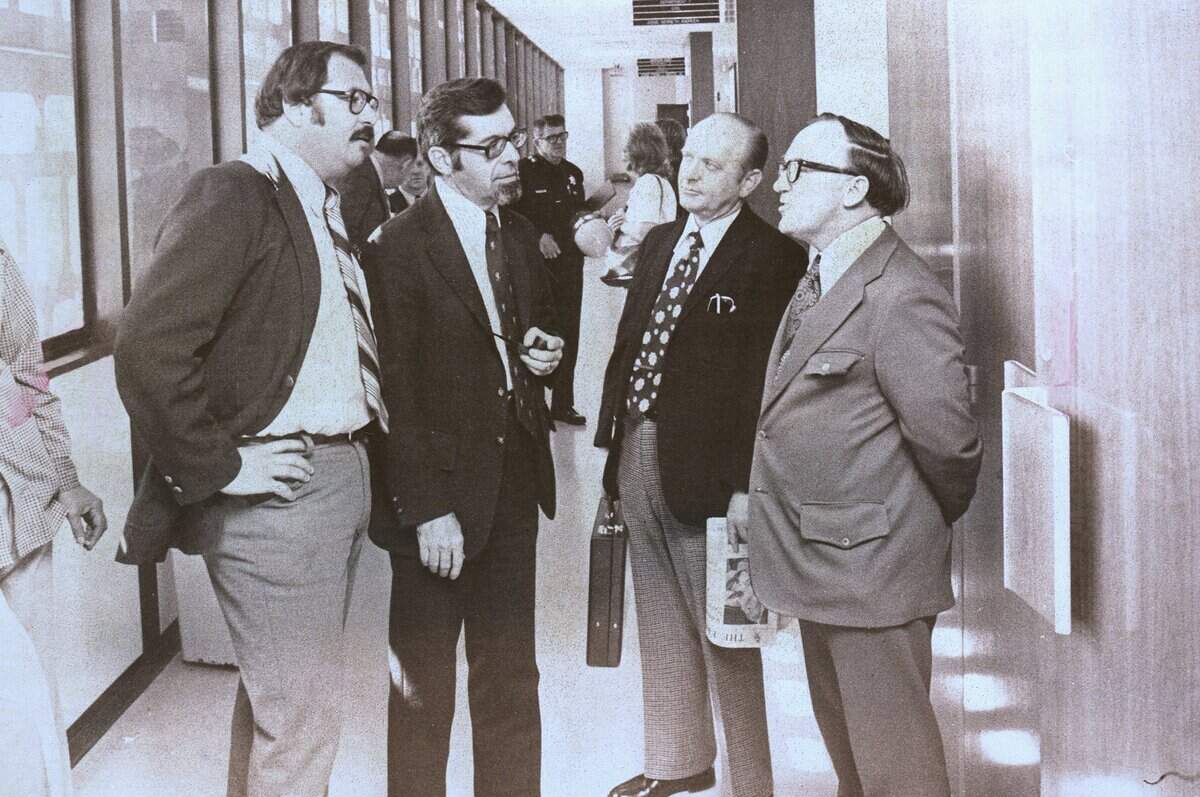
Sept. 3, 1976 was the fateful day that jail orders were posted for Rosato and three other Fresno Bee colleagues: then Bee Executive Editor George Gruner, City Editor James Bort Jr. and reporter William Patterson.
The Bee Four, as the quartet became known, had refused a demand by Superior Court Judge Denver Peckinpah to give up their source of grand jury transcripts, which they used for several stories about a trash company paying bribes to a Fresno City Council member. For their refusal, the four were held in contempt of court, and went to jail for 15 days.
A second judge then released them when it became clear they were not going to budge off their stand.
Their case drew national media attention and wound up energizing efforts to strengthen California’s shield law for reporters — and was one of Rosato’s proudest moments as a reporter.
“My career, at the age of 34, was cemented,” Rosato said in a 2016 interview with Bee staff writer Rory Appleton. “People knew I could be given information and not reveal my sources. So I was tested and I passed. It was a tremendous experience.”
Rosato was the last of the Bee Four. He died Monday at Clovis Community Medical Center at the age of 82. Bort died in 2010 and Patterson passed away in 2018. Gruner died this past August at the age of 99.
I never got to meet Rosato, but my colleagues and I are indebted to him and the other Bee Four members for their principled stand nearly 50 years ago.
Protecting a confidential source
In today’s digital world, a lot of unverified information gets spread through social media. But The Bee relies on time-tested principles upheld by the Bee Four. Rosato and Patterson were able to report on the bribery scheme because actual transcripts of grand jury testimony were leaked to them. That is what upset the judge.
Would Bee journalists do the same today? Absolutely, if the information was important enough.
Once Rosato and Patterson verified the authenticity of the transcripts, they wrote their stories, which Bort edited and Gruner published.
Rosato and his colleagues would not divulge who gave them the transcripts. In fact, Gruner said he never asked the reporters for the identity, and thus never knew the source.
Why is it important to protect sources? Sometimes a pledge of confidentiality is the only way to get information that is otherwise being kept secret by a government agency, itself elected and funded by the public.
Former Bee Executive Editor Jim Boren, now the head of the Institute for Media and Public Trust at Fresno State, said Fresno City Hall was a rough-and-tumble place when Rosato covered it in 1976.
“There were people who made threats against our reporters and editors for exposing important information,” Boren told me.
He teamed with Rosato to cover two Democratic national conventions and a Republican national convention in the 1980s. “Joe Rosato was one of The Bee’s most distinguished reporters, celebrated for his exceptional, in-depth coverage of government and political issues over several decades,” Boren recalled.
Public’s right to know
Rosato was born May 31, 1942 in New Providence, New Jersey. He came to Fresno in 1962 to visit his grandparents, and ended up staying, said his son, Joe Rosato Jr.
Rosato worked at The Bee until the early 1990s, when he left to be press secretary for a congressman. Rosato began his newspaper career at the Times-Delta in Visalia.
I asked his son about his father’s legacy: “He stood up for the public’s right to know and was willing to sacrifice everything to protect that right,” Rosato Jr. said.
“He gave up his freedom to go to jail to protect his sources and the public’s right to know.”
Memorial service
A memorial service is still being arranged. Donations in Joe Rosato’s name can be made to the Institute for Media and Public Trust at Fresno State.
This story was originally published December 23, 2024 at 2:03 PM.