
Corporate greed is what’s making our fries and guac more expensive — not employee wages | Opinion
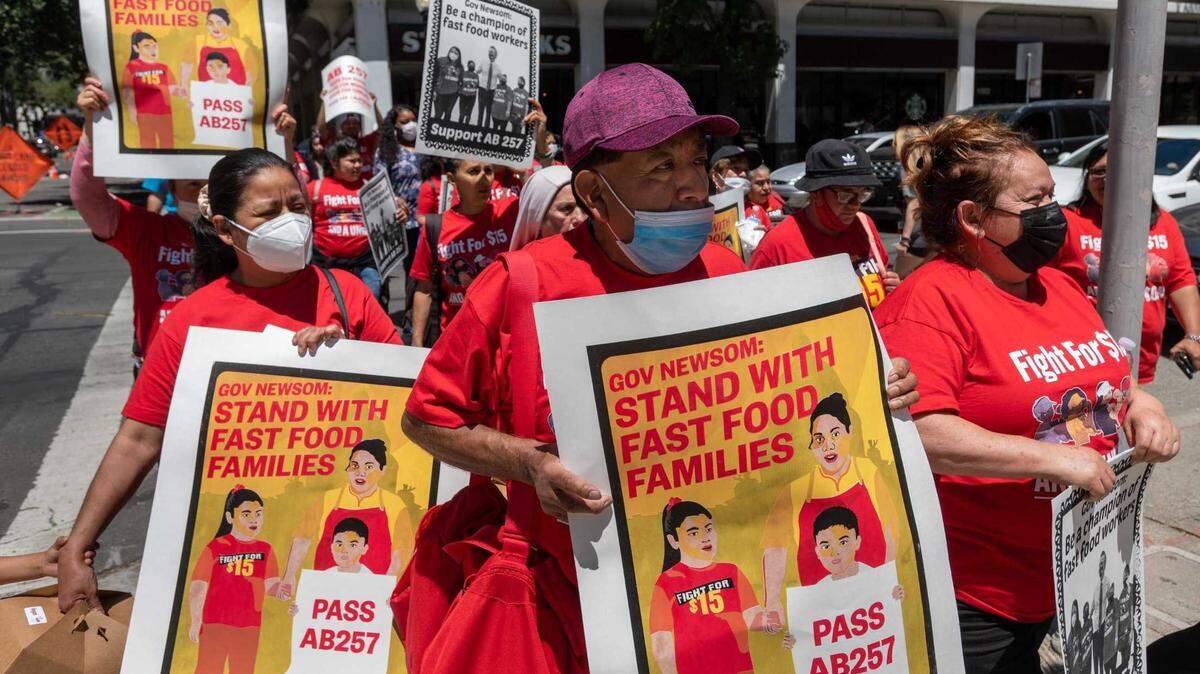
After over a decade of fast food workers and their allies sounding the alarm on poverty pay and abuses in the workplace, California has finally lifted the wage floor for cashiers, cooks and baristas to $20 an hour. Between working long hours at multiple jobs, surviving a pandemic and more, exhausted and exploited workers found strength in each other to keep pushing for higher wages and the long-overdue respect they deserve.
It’s a movement that other sectors and low-wage industries across California and the nation can learn from. But if you listen to fast-food corporations, they’d have you believe the legislation is going to harm the public.
Don’t buy it.
Ever since fast-food workers and their allies started organizing to demand a dignified wage, fast food corporations have used scare tactics and spread misinformation in an attempt to trick the public into thinking a wage increase was bad for them all while pocketing more of consumers’ money. These corporations claim the new wage law is forcing them to pass price hikes onto consumers.
But that’s not true. Corporate greed is what’s making our fries and guacamole more expensive, not employee wages. McDonald’s and Chipotle raised prices by 20% in the last two years — prior to the new law taking effect. Overall, fast food price hikes averaged 15% in the last two years, according to government statistics.
Pizza Hut franchisees threatened to lay off 1,200 drivers due to the wage increase. But as the Los Angeles Times reported, the company began outsourcing deliveries to Uber Eats and other delivery services in 2022. Pizza Hut made that move because they couldn’t find enough drivers. In fact, the Wall Street Journal reported that because of the driver shortage, Pizza Hut and other chains might “expand perks and benefits, including time off and, in some cases, the use of company-owned cars.”
Raising prices has only fattened corporate pocketbooks, exacerbating a 21st Century trend in our country to place profits over people and fuel even more poverty and economic inequality. As Jack in the Box bragged to investors, “restaurant-level margin expanded year-over-year … from 16.2% up to 20.7%, driven by menu price increases.”
McDonald’s, Chipotle, Domino’s Pizza and all but one of the nine big publicly traded fast food corporations have seen double digit operating profit increases from 2019 to 2023.
When corporations try to tell us that pro-worker policies are bad for the economy, what they’re really saying is that our poorest neighbors deserve to live in poverty while the rich grow richer and the American dream falls out of reach for so many of us.
Higher pay benefits the industry: It means fast-food workers quit less often, reducing turnover and vacancies. Lower turnover also raises productivity and lowers costs for recruitment and training. And this doesn’t just have to apply to the fast food industry, the new law sets the standard for industry across the state and country.
I grew up in poverty, and after touring the state and listening to people living beneath the poverty line, I know that we can take policy action to level the playing field in our state.
It’s time to look at the facts: $20 an hour is good for California’s fast food workers and employers; it’s good for our state’s economy; and it’s a historic bargaining model to set for the nation.
Most importantly, lifting a half million workers out of poverty offers hope that we can follow the lead of fast food workers to take even greater strides toward a just future for all Californians and the workers in our state: one with quality jobs that pay family-supporting wages; a focus on poverty abolition; and a stronger, equitable economy that benefits all of us.
This story was originally published May 30, 2024 at 5:00 AM with the headline "Corporate greed is what’s making our fries and guac more expensive — not employee wages | Opinion."