
Amazon, Trader Joe’s and SpaceX are attempting to fundamentally change the government | Opinion
On February 15, Amazon followed the lead of two other major companies and made a radical argument: The National Labor Relations Board, which has existed for 88 years, is unconstitutional. If this argument is ultimately accepted by the Supreme Court, it will make virtually every federal administrative agency unconstitutional. At a time when the Supreme Court is already cutting back on the administrative state, major companies are seeing an opportunity to go much further and fundamentally change the nature of the federal government.
In early January, the National Labor Relations Board (NLRB) filed a complaint against SpaceX, alleging that it illegally fired eight employees who circulated a letter critical of their working conditions. The next day, SpaceX filed a lawsuit in federal court arguing that the NLRB was unconstitutional. SpaceX raised several claims, but the most stunning was that the NLRB is unconstitutional because it violates the separation of powers by mixing executive, judicial and legislative functions.
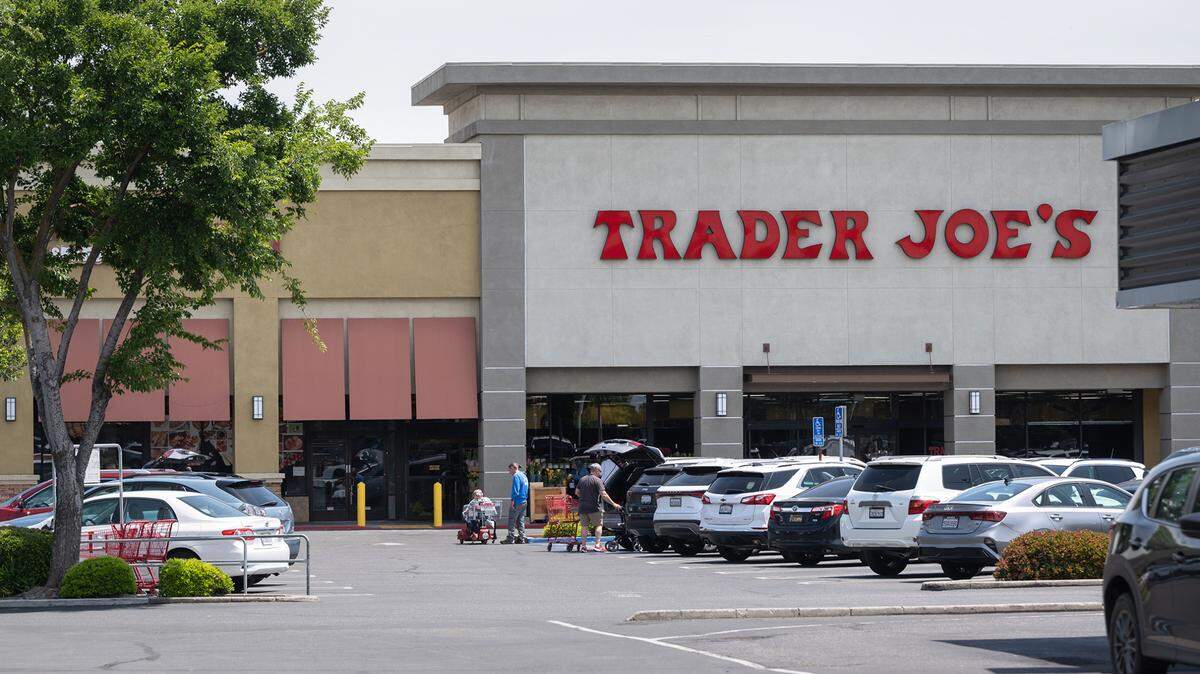
In mid-January, at an NLRB hearing about whether Trader Joe’s illegally retaliated against union activism, the grocery chain announced that it planned to argue that “the structure and organization of the National Labor Relations Board and the agency’s administrative law judges is unconstitutional.”
Now, Amazon, faced with a charge that it illegally retaliated against workers at a Staten Island warehouse, has argued in an administrative proceeding against it that “the structure of the NLRB violates separation of powers.”
It would be extraordinary for courts to declare unconstitutional a federal agency that has existed since 1935 and whose constitutionality was upheld by the Supreme Court in 1937. It certainly would cause chaos in labor law, as the NLRB would no longer exist and perhaps everything it has ever done would be called into question.
But the implications are far greater than even this one important federal agency. If the NLRB is unconstitutional, then so is every federal administrative agency because all possess some combination of executive, judicial and legislative functions.
Consider the Securities and Exchange Commission, which promulgates rules that have the force of law pursuant to delegations of authority from Congress. It brings enforcement actions against those accused of violating the law, which can be heard either before administrative law judges within the agency or in federal court.
Consider another agency that affects so many people’s lives: the Social Security Administration. Several sections of of the Social Security Act give the Social Security Commissioner broad statutory authority to issue regulations. The Social Security Administration also implements and enforces the law, and it has more than 1,700 administrative law judges and issues more than half a million hearing and appeal dispositions each year.
Indeed, the implication of these challenges to the NLRB is that the federal Administrative Procedures Act, which covers virtually all federal agencies, is unconstitutional because it provides for an agency being able to engage in both rule-making, which is legislative in nature, and adjudications, which is judicial.
The argument being made by SpaceX, Trader Joe’s and Amazon has no basis in constitutional law or in practical reality. Nothing in the Constitution precludes an agency from possessing executive, legislative and judicial functions. Although the Constitution makes no mention of administrative agencies, they have existed since the time of George Washington and grew in number and role as the economy grew in size and complexity.
Moreover, all agencies are structured to separate their legislative, executive and judicial functions. The NLRB, for example, has a prosecutorial arm, which issues complaints against those accused of violating federal labor law, administrative judges who hear complaints and a board to which decisions can be appealed. Quite importantly, federal courts are empowered to review the actions of agencies, whether they take the form of rules or adjudications.
Why are these companies now bringing challenges to the constitutionality of an agency that has existed for almost 90 years? They perceive a Supreme Court that is hostile to the administrative state. In the last two years, the court has created a significant new limit on agency power: the major questions doctrine which says that a federal agency cannot act on a major question of economic or political significance without clear authorization from Congress.
In January, the Supreme Court heard oral arguments as to whether to overrule the principle (called Chevron Deference) which requires the court to defer to federal agencies when they are interpreting statutes they operate under.
But SpaceX, Trader Joe’s and Amazon are obviously not satisfied with new limits on agency powers; they want the agencies declared unconstitutional. Hopefully, this argument will be quickly and emphatically rejected. But there is every reason to worry about the implications of an argument that would invalidate virtually every federal administrative agency.
This story was originally published March 7, 2024 at 5:00 AM with the headline "Amazon, Trader Joe’s and SpaceX are attempting to fundamentally change the government | Opinion."