
This year is the 115th anniversary of William Saroyan’s birth, and Armenia remembers
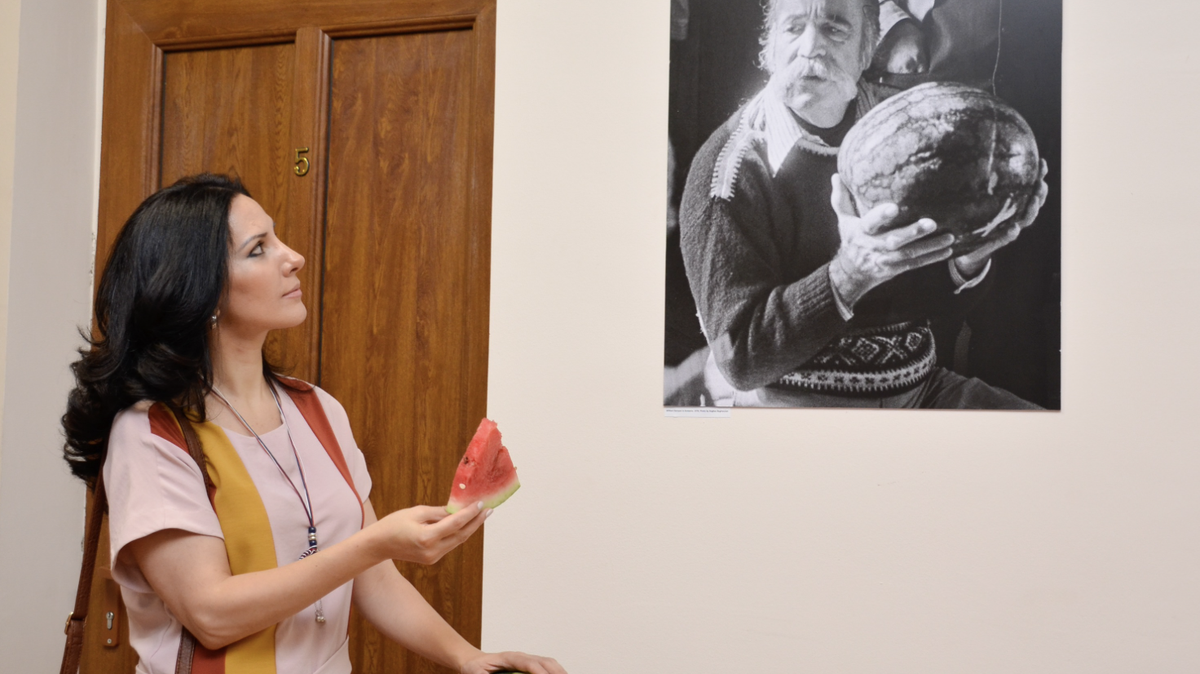
If nowadays the most recognized Armenian American is Kim Kardashian, for nearly half of the 20th century this would most likely have been the Californian playwright and novelist William Saroyan. A bit forgotten in the United States now, this Fresno-born-and-raised author, however, is highly acclaimed and remembered in his ancestral homeland: the Republic of Armenia.
Saroyan’s monument stands in the downtown of Yerevan, the capital city of Armenia; his image exists on Armenia’s 5,000 currency banknotes; and his plays are often staged in Armenia. More so this year, as 2023 marks the 115th anniversary of Saroyan’s birth (1908-1981).
The Sundukian theater of Armenia staged his “The Slaughter of the Innocents” last month. “This is one of Saroyan’s least often staged plays, perhaps because of its sad and intense subject,” Yerevan-based Anush Aslibekian-Artsruni said in an email. In 2017, Anush defended her doctorate thesis on William Saroyan. Per the Forever Saroyan website, “The Slaughter of the Innocents,” first published in November 1952, did “not appear on the West Coast of the U.S. until 2008 when the William Saroyan Festival staged a version in Fresno.”
Yerevan’s Hamazkayin theater included “Tracy’s Tiger” in its fall 2023 repertoire. Another studio in Armenia’s Vanadzor town will perform “The Oyster and the Pearl.” In the rural town of Yegvard, a group is working on staging “The Human Comedy,” which in 1958 Saroyan published as a novel, not a play. However, in 1972, one of the theaters in then-Soviet Armenia adapted this novel into a play. Vigen Tadevosian, an actor and director from Yerevan, has recently discovered this play-version of Saroyan’s work in the archives and is currently working on staging it.
On Friday, Nov. 17, an international academic panel dedicated to the great Californian playwright is scheduled. Anush Aslibekian-Artsruni is in charge of it.
“The Institute of Art, where I work, is very excited to organize this project. Our director, and I are convinced not only should we not forget Saroyan, but publicize his literature and artwork more and more,” she said.
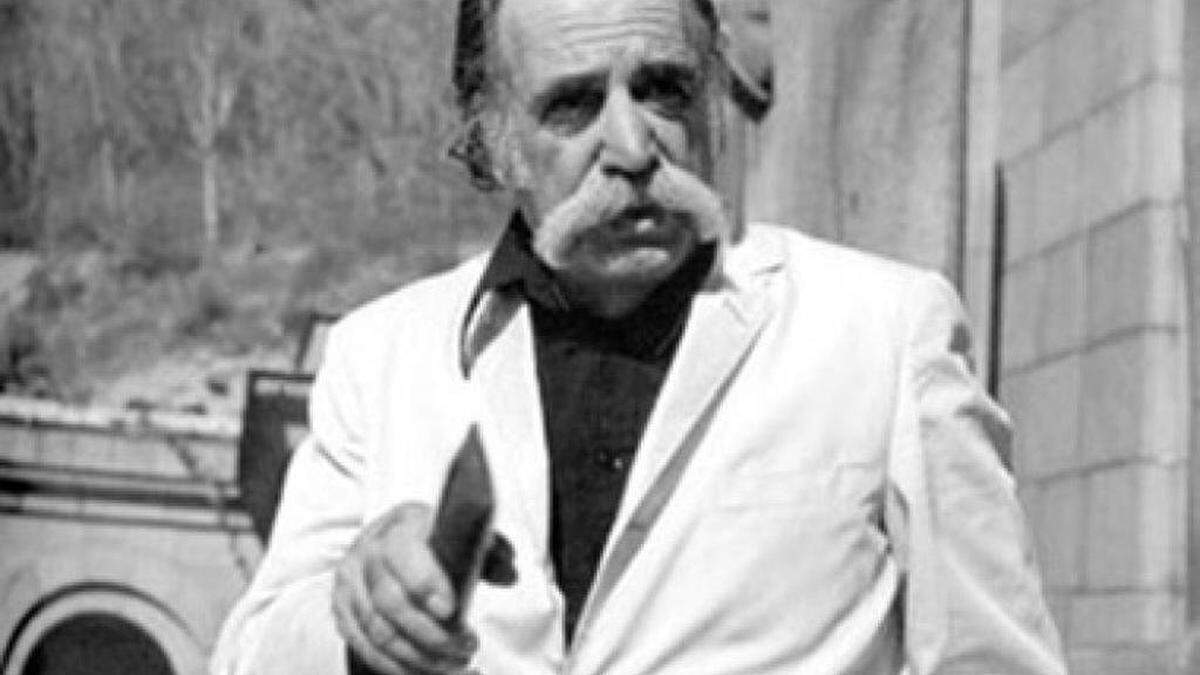
A number of participants from the United States, France, Russia, and Iceland have already committed to this event. The San Francisco-based William Saroyan Foundation, founded by the playwright himself, will also participate remotely. The conference will not be limited to Saroyan’s literary heritage, but will explore the links between Saroyan and music, Saroyan and his drawings.
Parallel to this, the Armenian Museum of America of Watertown, Massachusetts, has launched an exhibition of two watercolors of William Saroyan’s drawings and two of his son, Aram Saroyan. Watertown’s local TV station reported this, noting that the “works are now on display in the new exhibit “My Name Is Saroyan.” The title clearly imitates one of the author’s famous books, “My Name Is Aram,” first published in 1940.
One of Saroyan’s watercolors is a drawing on the back of a menu from the Ararat restaurant in New York that existed in the 1960s. “The exhibit will be running at least through the New Year and maybe a little beyond,” replied Jason Sohigian, the director of the museum, when I asked him about the plans.
The museum’s website reminds us that “The Pulitzer Prize-winning author has artworks in the collections of the Museum of Fine Arts, Boston, the Birmingham Museum of Art, and the Weisman Art Museum of Minneapolis, among others.”