
California Propositions 26, 27 fight over sports gambling. Here’s the best bet for voters
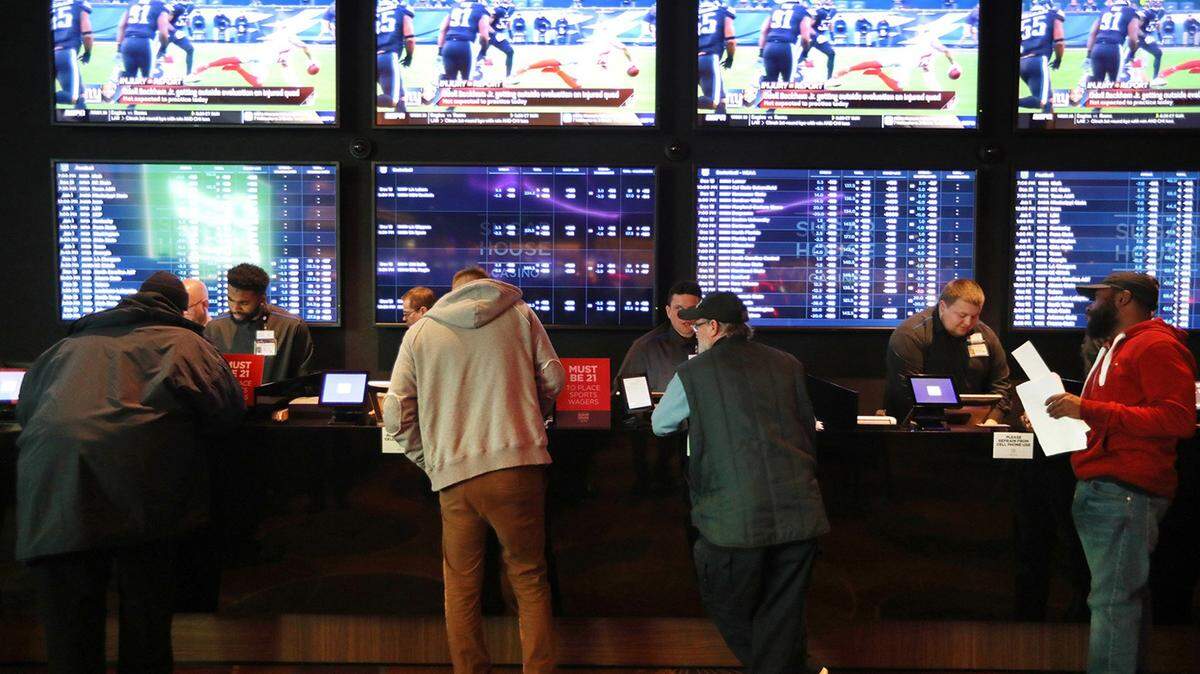
With just seven initiatives on the statewide ballot this fall, the fewest in over a century, Californians got a relative break from the crush of confusing and disingenuous propositions typically pushed by one over-financed interest or another. That said, two of this year’s measures — Propositions 26 and 27, both concerning sports gambling — involve enough warring lobbies, filthy lucre and sheer confusion to make up for a whole ballot’s worth of California-style direct democracy.
The dueling propositions reflect not just the shortcomings of the state’s special-interest-dominated initiative process but also the failure of legislators to sort through the mess and arrive at a coherent, balanced, public-spirited proposal. Voters should demand that they do so by rejecting both.
In the simplest analysis, Props. 26 and 27 are in chaotic contention over the valuable market for sports betting, which is expanding across the country under a 2018 U.S. Supreme Court decision but has yet to be legalized in California. Proposition 26 would allow Native American tribes to run the market by legalizing in-person sports betting at their casinos; Proposition 27 would enable online gambling companies such as FanDuel and DraftKings to dominate by allowing internet bets.
But it’s not that simple. Prop. 26 would also prop up horse racing by allowing sports gambling at select racetracks. And it places a side bet on shutting down a nemesis of Native American gambling, card rooms, which allow gambling on a variety of games in cities across the state, some of which rely heavily on them for revenue. Prop. 27, meanwhile, would dedicate a stream of tax proceeds to one of the state’s most intractable and pressing problems, homelessness, drawing more local governments into the campaign.
Wait, there’s more: While a substantial coalition of California tribes supports Prop. 26, a few were persuaded to get behind 27. And yet another large bloc hoped to propose a third sports betting measure in a future election. The majority of the state’s tribes, meanwhile, aren’t backing 26 or 27.
Of the pair, Prop. 27 is the more repugnant. It would dramatically expand the opportunities for and accessibility of gambling, and its attendant ills, to the benefit of big online profiteers. Meanwhile, it would generally undermine tribal control of gambling, which provides a small measure of recompense for a long history of atrocities against the first Americans.
Worse, the measure’s backers attempted to coat it with a veneer of social consciousness by striking deals with a few tribes and promising a relatively insignificant stream of funding for homelessness services. California doesn’t need more money to address homelessness; it needs policies that require the construction of enough housing and emergency shelter to bring tens of thousands of people indoors.
Prop. 26 would enable a more defensible and limited expansion of gambling on tribal lands. But it muddies its argument with an overreaching attempt to litigate the tribes’ long-running and somewhat arcane dispute with urban card clubs. Its lifeline for racetracks, moreover, associates the measure with a dying industry plagued by horse drugging and deaths. And the divisions among the state’s tribes raise further doubts about the proposal.
Gambling is a constitutional question in California, so sports betting has to go to the voters one way or another. This, however, is exactly the wrong way.
With hundreds of millions of dollars in state revenue likely at stake and sports gambling already proceeding by unsanctioned, unregulated and untaxed means in California, legislators must redouble their efforts to present an orderly solution to the electorate. They should ensure that the result respects the state’s agreements with and debt to Native Americans, strikes a balance among other competing interests, maximizes the benefits to the public and minimizes the propensity to exacerbate gambling by people who can’t control or afford the habit.
In other words, they should do their jobs.
In the meantime, the job before voters is to reject Propositions 26 and 27.
This story was originally published September 25, 2022 at 5:00 AM with the headline "California Propositions 26, 27 fight over sports gambling. Here’s the best bet for voters."