
California’s recall process is dangerously flawed. Here’s what needs to change
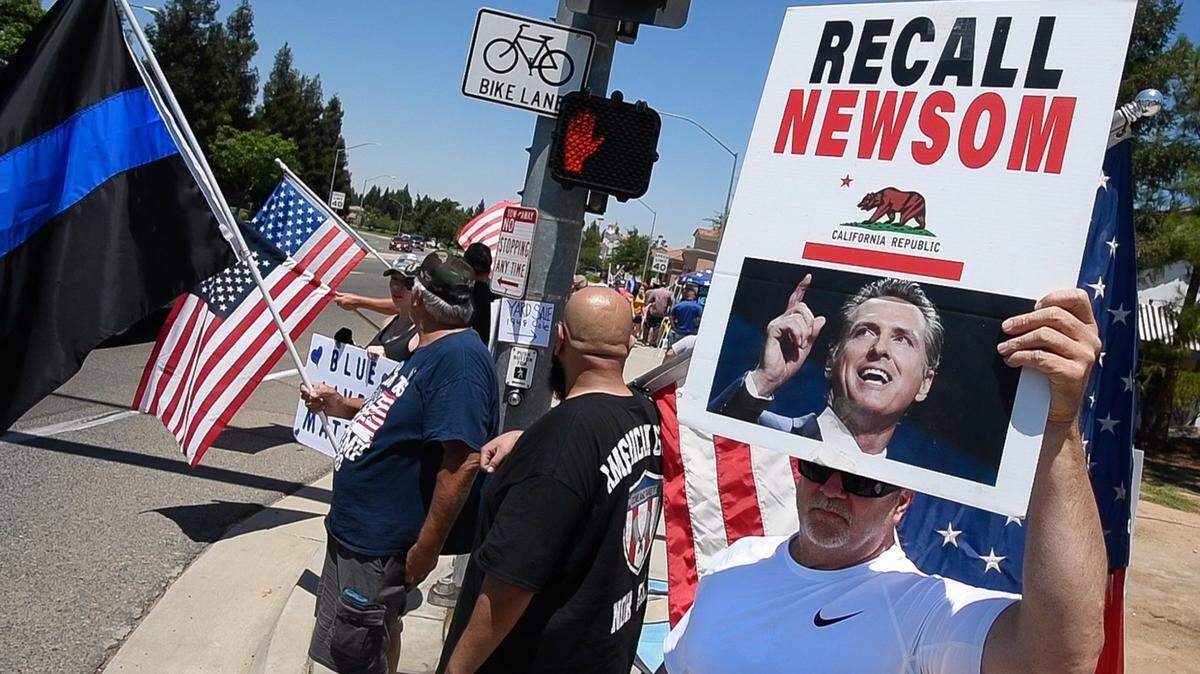
No matter what happens in the recall election on Sept. 14, the recall system prescribed by the California Constitution makes no sense and needs to be fixed.
Although the authority for recalls was created in 1911, it was not used to remove a governor until 2003. Now, less than two decades after, there’s another gubernatorial recall election.
There’s much that’s disturbing about this recall. It’s not based on any complaints of misconduct in office by Gov. Gavin Newsom, but seems instead to be a calculated effort by Republicans — a minority in the state — to take over the governorship through a back door.
Newsom faces reelection in November 2022. If voters are dissatisfied, they can vote him out of office then. The recall is unnecessary and has real costs: an economic cost to taxpayers and in diverting Newsom’s attention from the tasks of governing amid an ongoing pandemic.
My fear is that we’re entering an era where those who lose elections will increasingly turn to recalls as a way to undo them. We’re seeing this throughout the state. In Los Angeles County, District Attorney Geoge Gascón, who won in a close election last November, has been targeted for a recall by those who disagree with the very policies that were the cornerstone of his campaign.
An alternative to recall elections would be to create an impeachment process like the one that exists for the president. The California Legislature could remove the governor for misconduct. But it’s unlikely California voters would approve a change in the Constitution that takes away from them the power to remove a governor.
Therefore, here are several suggestions to reform the recall process:
▪ Increase the signatures to get a recall on the ballot. Under California law, it takes signatures from 12% of voters to require a recall election for governor. That means only about 1.5 million signatures were needed in a state of roughly 40 million people. Nineteen states allow recall elections for governors, but almost all require more signatures than that. One state requires signatures of 40% of the voters who voted in the last election, while another requires 33.3%.
▪ Require bipartisan support. Recall elections allow the losing party to easily get a recall on the ballot. Of the signatures recall proponents collected, 64% of signers were Republicans. Only 9% were Democrats. That means only about .018% of the 10.7 million registered Democrats in the state signed the petitions to have a recall election.
▪ Hold the recall election on the next regularly scheduled election date, not in a special election as will occur on Sept. 14. Special elections have much lower turnout than regularly scheduled elections. In a state whose voters are over 65% Democratic, the upcoming recall election of Newsom is in doubt because low turnout is expected.
▪ Eliminate the possibility of electing a governor who’s preferred by far few voters than the incumbent. If Newsom loses and the recall succeeds, he’s likely to end up with 48% or 49% of the votes. The leading challenger, according to polls, will get about 18% of the votes. It’s absurd that the candidate preferred by a small percentage of the voters could become governor.
▪ Make it more difficult for a candidate to get on the ballot. A candidate can get on the ballot by paying a $4,000 fee and obtaining 100 signatures. This year, there are 46 candidates.
These changes will not eliminate all of the problems with recall elections, but they will greatly improve the process for the future.
This story was originally published September 1, 2021 at 6:00 AM with the headline "California’s recall process is dangerously flawed. Here’s what needs to change."