What to do in a thunderstorm. Safety tips from meteorologists after fatal lightning strike
A recent lightning strike in the Sierra Nevada that killed a 37-year-old Fresno man is prompting some to think more about how to stay safe during thunderstorms.
“I don’t think this poor hiker who died was at fault at all,” said Stacy Corless, but his death has still become a “serious reminder” to “do all I can to be safe in the mountains.”
Corless was within a mile of where Nicholas Torchia was struck and killed by lightning on July 30 while he was backpacking in the John Muir Wilderness of eastern Fresno County. A tree beside Torchia was also hit by lightning. Family said Torchia was only near the tree briefly. Trees are among the most frequently-struck objects by lightning.
Several hikers said they didn’t see other lightning in that area that day. A search and rescue leader involved in responding to the call said the fatal strike could have been the first of the storm that afternoon.
“It causes you to reflect,” said Andy Cornett, a pastor who was the first to come upon Torchia on the trail after he was hit.
How many people are hit by lightning in U.S. and California?
There has been only 14 other fatalities and 72 injuries from lightning in California since 1950, according to data through this spring from the National Oceanic and Atmospheric Administration’s National Centers for Environmental Information.
The National Weather Service reported an average of 43 lightning deaths in the U.S. per year from 1989 to 2018, but just 17 lightning deaths nationwide in 2020.
There were 418 people struck and killed by lightning across the country from 2006 to 2019, the National Lightning Safety Council reported last year. More than 70% of those deaths were in the months of June, July and August – described as “peak months” for lightning activity and outdoor recreation. Almost two-thirds were “enjoying outdoor leisure activities” before they were struck, including 20 campers.
NWS data shows the odds of being struck by lightning in a given year are one in 1.2 million, but drops to one in 15,300 for the chance of being struck within an 80-year lifetime. Only about 10% of people struck by lightning die from the voltage.
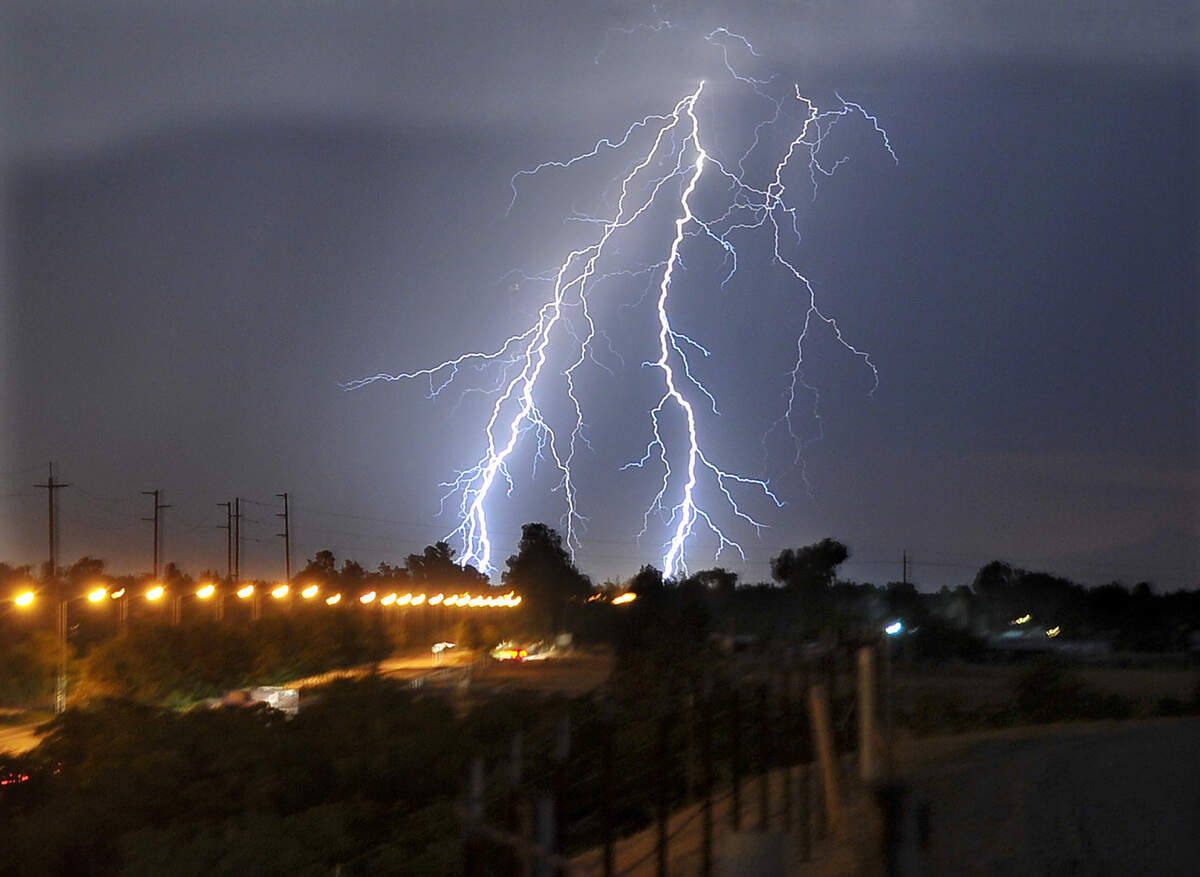
While lightning injuries are relatively rare, lightning is still one of the top three storm-related killers in the U.S. It’s important to take the threat of lightning seriously and seek the safest shelter available.
“Each year, thunderstorms produce an estimated 20 to 25 million cloud-to-ground lightning flashes in the United States,” NWS reported in an article about lightning safety and outdoor sports activities. “Each one of those flashes is a potential killer. Some of those flashes strike directly under the storm where it is raining, but some of the flashes reach out away from the storm where people perceive the lightning threat to be low or nonexistent, and catch people by surprise.”
Danger zones during lightning: Trees, fields, high places, water
The National Weather Service said generally, there’s a significant lightning threat within six to 10 miles of the base of a thundercloud. However, “bolts from the blue” can strike 10 to 15 miles from a thunderstorm. “If you hear thunder, lightning is close enough to strike you.”
Cumulonimbus clouds that can produce lightning are described as dense, towering, vertical clouds, often with a puffy top.
“Most likely, the most significant lightning is prior to the onset of the rainfall,” said Colin McKellar, a meteorologist with the National Weather Service at Hanford
McKellar also shared tips to stay safe during a thunderstorm, including, “We highly suggest never going under a tree. Don’t do it.”
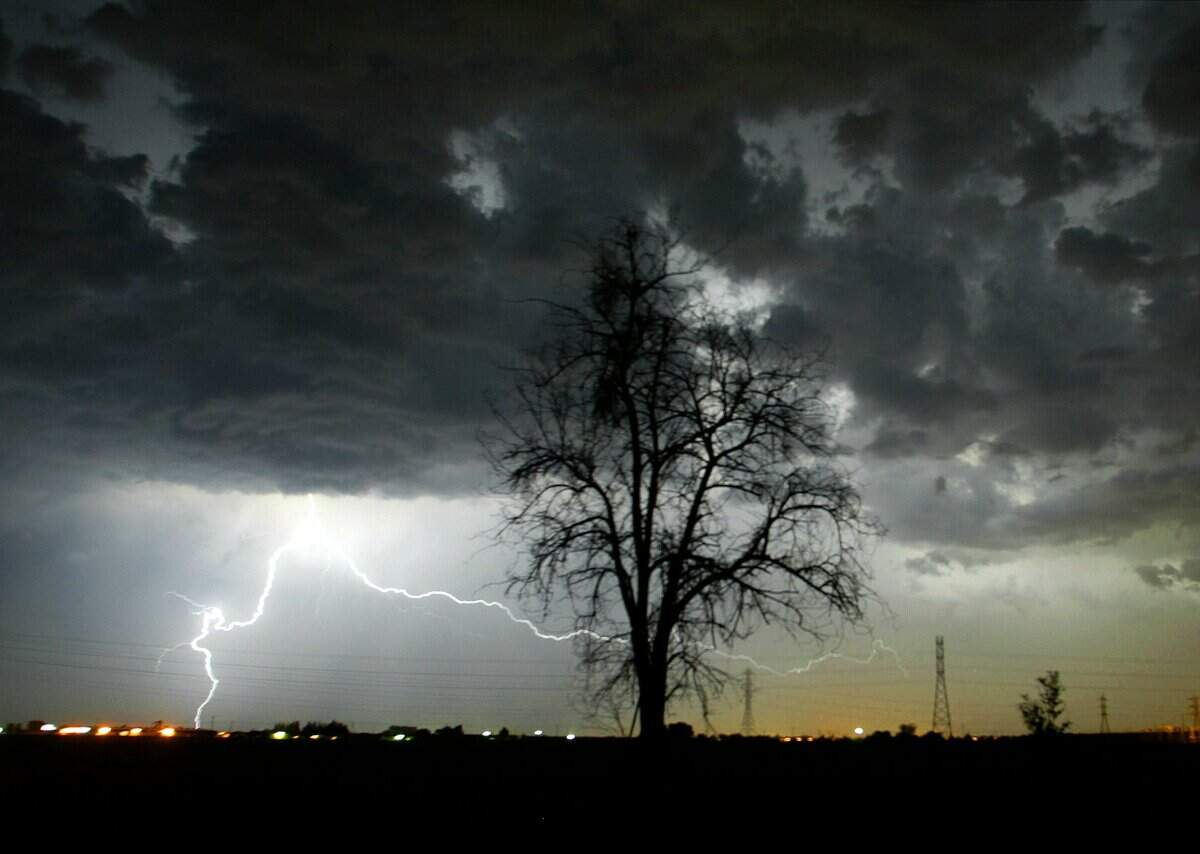
People should avoid tall things when lightning is present, along with walking into an open space, like a field, or a body of water.
“You’re the only thing around to really hit at that point,” McKellar said.
“Height, pointy shape, and isolation are the dominant factors controlling where a lightning bolt will strike,” NWS reported.
Being in higher ground, including on a mountaintop or ridge, are “extremely dangerous” places to be when lightning is near, along with swimming or boating.
When thunder roars, go indoors or inside a vehicle
Experts say the safest place to be in a thunderstorm is indoors within a substantial building, or a vehicle with a metal roof.
“Small outdoor buildings including dugouts, rain shelters, sheds, etc., are NOT SAFE,” NWS said. “In the absence of a substantial building, a hard-topped metal vehicle with the windows closed provides good protection.”
Metal doesn’t attract lightning, NWS said, but it is a conductor of electricity, which means it acts as a medium for conveying it elsewhere.
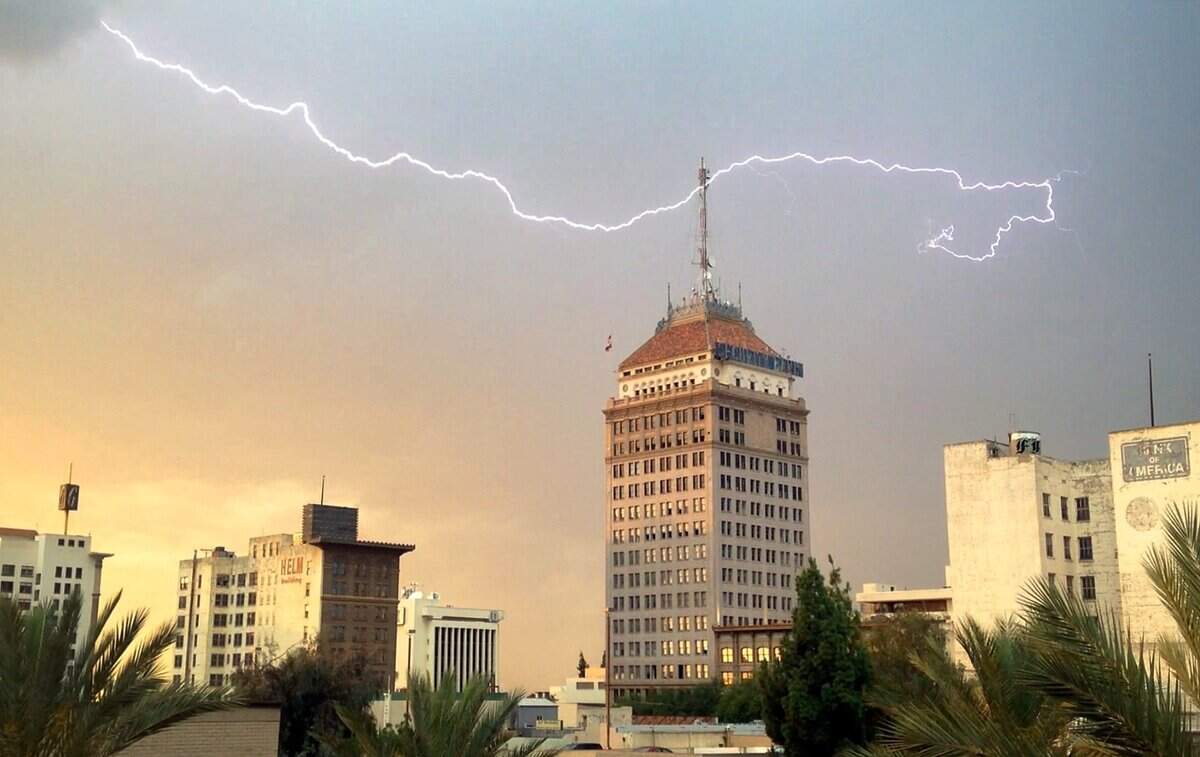
If lightning strikes a vehicle, meteorologists said it often first strikes the antenna or along the roofline. “The lightning will then pass through the vehicle’s outer metal shell, then through the tires to the ground.”
For this reason, motorists should avoid touching or leaning against doors of their vehicle during a thunderstorm.
Outside of a metal-topped car or building, stay away from metal, and also water.
“Water and metal do not attract lightning but they are excellent conductors of electricity,” NWS said. “The current from a lightning flash will easily travel for long distances.”
What should I do if hiking far away from buildings or cars?
McKellar grew up hiking in the Rockies further east, where he said afternoon thunderstorms are a much more regular occurrence because there’s more moisture in the air. Still, afternoon thunderstorms are not unusual in California’s Sierra Nevada, especially at high elevations.
Inclement weather can occur “out of nowhere,” going from sunny to storms by 1 p.m., he said, adding that it’s important to be aware of the latest weather forecasts and have a plan about what to do if caught outside when storms roll in.
McKellar advises people setting out to hike a mountain peak to leave before sunrise and get to a summit before noon so they can start hiking down before afternoon thunderstorms develop.
“If you have a choice, descend a mountain on the side that has no clouds over it, since strikes tend to be less frequent on that side until the clouds move over it,” NWS shared in a document about risk management for hikers in the backcountry near lightning.
If unable to move indoors or into a vehicle, NWS said hikers taking shelter outside in lower terrain should put their feet together to “significantly reduce” the effect of being hit by ground current. Crouching or sitting can also help slightly, including sitting on a foam pad or backpack if available.
“Look for a dry ravine or other significant depression to reduce risk,” NWS continued, adding that members of a group can also spread out and walk 20 feet away from each other to reduce the risk of multiple injuries.
If hiking in a forest, stay near a lower stand of trees and away from tall, isolated objects.