
Details emerge on US-Iran ceasefire deal; permanent truce still awaits negotiation
EVIAN-LES-BAINS, France/DUBAI - Details began to emerge on Tuesday of the U.S. and Iran’s interim agreement to end the war in the Middle East, with President Donald Trump saying it will rule out a nuclear weapon for Tehran and a U.S. official saying it allows Iran to sell oil upon signing.
The memorandum of understanding signed this week, though yet to be made public, extends a tenuous ceasefire announced in April by another 60 days to allow the warring countries to negotiate a permanent truce.
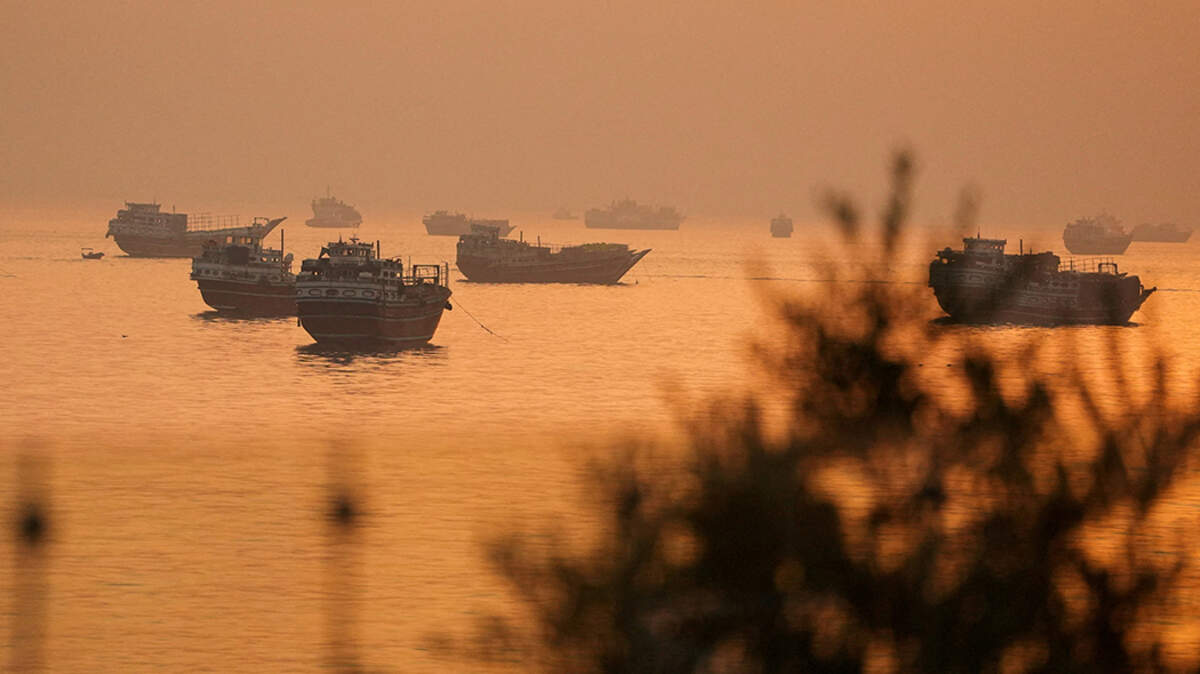
Under the deal, the U.S. will end its blockade of Iran’s ports while Tehran will restore the passage of oil tankers and other maritime traffic through the Strait of Hormuz, which it has effectively blocked since the U.S. and Israel launched strikes on February 28.
The U.S. president said the agreement states clearly that Tehran will not have a nuclear weapon, and that the full text would be made public in a formal setting in a few days.
Iran has long said that it will not develop a nuclear weapon and that its nuclear program is for peaceful purposes only.
Trump has given shifting rationales for attacking Iran, but appears to have achieved little of what he has said he wanted: Iran’s theocratic government remains in place, its ballistic missile program has not been dismantled, and it has not ended its support for anti-Israel militias like Hezbollah.
The accord exposes Trump, a Republican, to criticism from within his own party ahead of the midterm elections in November. Meanwhile, Iran’s leaders could face renewed protests if they fail to ease economic pressures after a destructive war.
Israel has not directly participated in the negotiations and has distanced itself from both the April ceasefire and the latest U.S.-Iran agreement, adding uncertainty to whether the new ceasefire will hold.
The war has affected most countries in the region, killing more than 7,000 people, mostly in Iran and Lebanon, which Israel invaded in March after Iran-allied Hezbollah joined the fighting.
Vice President JD Vance said that the agreement included Israel and Lebanon, contradicting Israeli Prime Minister Benjamin Netanyahu, who said on Monday that Israel is not bound by it and will not withdraw from southern Lebanon. A Hezbollah spokesperson told Reuters the group believed Iran would not agree to a permanent truce if the Israeli occupation was not ended.
Iran’s military command, Khatam al-Anbiya Central Headquarters, warned that Israel should expect a hard response if it did not stop its attacks on southern Lebanon.
A senior U.S. official said the agreement allows Iran to immediately begin selling oil and fuel, and includes banking, transportation and insurance services to facilitate the sales.
U.S. and Iranian officials say the deal could eventually deliver substantial economic benefits to Iran by lifting sanctions and unfreezing foreign assets.
Reconstruction fund
The agreement could also set up a $300 billion reconstruction fund, paid for by neighboring Gulf states that host U.S. military bases and were hit by Iranian attacks during the war, if Iran complies with other terms.
The new fund, called the Reconstruction and Development Fund, is a private investment vehicle, with projects spanning energy, logistics, manufacturing and transport.
A senior Iranian source told Reuters that Tehran had originally sought $400 billion as compensation for war damages from the U.S. but Washington had said it would not provide it.
The mechanism envisages regional countries contributing in various ways, the Iranian source said. These include securing loans, establishing credit lines or directly financing the reconstruction of sites damaged in the war, including facilities such as the Mobarakeh Steel complex, refineries, airports and, more broadly, infrastructure affected by the conflict.
Iran, one of the Middle East’s largest economies, has attracted almost no significant foreign direct investment in the past four decades, frozen out of global capital markets by successive waves of U.S. and international sanctions.
The country has the world’s second-largest proven natural gas reserves and the fourth-largest proven oil reserves.
It also has a young, educated population of more than 92 million people, a diversified industrial base and significant untapped potential in sectors ranging from petrochemicals and mining to tourism and agriculture.
The source would not say how the fund will be administered or by whom, noting that key details were still to be worked out.
The source named companies from South Korea, Japan, Singapore, Malaysia and the United States among those that had made commitments, but declined to provide a comprehensive list.
Difficult talks pending
In the coming 60 days, negotiators will return to difficult issues like the future of Iran’s nuclear program, which Tehran was discussing with Trump officials in February until those negotiations were interrupted by the U.S. decision to launch the war.
Two other issues that Trump and Netanyahu used to justify the war appear not to be on the agenda: ending Iran’s support for regional armed militia groups and curbing its missile program.
Trump has publicly criticized Netanyahu and expressed frustration at Israel’s military campaign, saying on Tuesday he was “not happy” with the way Israel had handled itself.
“Iran wants to get it done,” Trump told reporters about the next phase of negotiations with Iran, a sentiment he has repeated since the war’s earliest days. “They have to get back to business, and the relationship is now normalized, so I think it’s going to go pretty quickly.” Earlier, he described the deal as “a wall to a nuclear weapon” for Iran.
Iran signed an agreement to sharply curtail its uranium enrichment efforts in 2015 with the U.S. and other countries, but the agreement fell apart after Trump unilaterally withdrew the U.S. in his first term. That led to Iran creating a stockpile of highly enriched uranium that Trump says he wants removed or destroyed.
Speaking at the G7 meetings in France, Trump said he liked the idea of sending the Iran agreement to lawmakers in the U.S. Congress for review after some of his fellow Republicans complained they were being left in the dark. Trump has faced criticism from some lawmakers for not getting authorization from Congress for the war, which is broadly unpopular among Americans.
Caution over shipping
Both sides say the Strait of Hormuz, which normally carries about one-fifth of the world’s trade in oil and liquefied natural gas, will be open from Friday, but shipping companies say they will wait to see if peace holds.
On Tuesday, Iranian state television reported operations to lift its maritime blockade, while stressing that vessels must still coordinate with Iran’s Revolutionary Guards.
The U.S. said the strait would be open toll-free for 60 days and it would expect that provision to be part of a final agreement. Iran has suggested it will retain control with Oman over the strait.
Other developments
▪ The U.S. Senate on Tuesday narrowly blocked the latest Democratic-led effort to end the Iran war until it is authorized by Congress, the ninth by Democrats since Israel and the United States began their air attacks on Iran in February.
The Senate voted by 48-47 to block the resolution under the war powers law. The vote was largely along party lines, as Republicans Bill Cassidy of Louisiana, Susan Collins of Maine, Lisa Murkowski of Alaska and Rand Paul of Kentucky voted with most Democrats in favor, and Democratic Senator John Fetterman of Pennsylvania voted no along with most Republicans.
Five senators - Republicans Mitch McConnell of Kentucky and Josh Hawley of Missouri, Democrats Michael Bennet of Colorado and Cory Booker of New Jersey and independent Bernie Sanders of Vermont - did not vote.
Trump’s Republicans hold slim majorities in both the Senate and House of Representatives. The House also recently backed a resolution that would end the Iran war.
The resolution blocked in the Senate procedural vote on Tuesday was sponsored by Senator Raphael Warnock of Georgia.
▪ After rallying sharply on Monday on optimism about a U.S.-Iran peace deal, investors in the S&P 500 and Nasdaq took a breather even as oil prices fell to their lowest levels since early March.
The Dow Jones Industrial Average rose 328.64 points, or 0.64%, to 51,999.67, the S&P 500 lost 42.94 points, or 0.57%, to 7,511.35 and the Nasdaq Composite lost 307.60 points, or 1.15%, to 26,376.34.
The price of Brent crude, the global benchmark for oil, fell roughly 4% to about $80 a barrel, the lowest level since early March. West Texas Intermediate crude, the U.S. benchmark, fell by more than 4.5% to $77 a barrel.
U.S. gas prices fell 3 cents Tuesday to a national average of $4.04 a gallon, according to the AAA motor club. The cost for drivers is 36% more since the war began. The average price of diesel dipped 1 cent to $5.19 Tuesday, but is up 38% since the start of the war.
▪ Trump has invoked the Defense Production Act to address constraints in weapons supply and development for munitions production and supply chains, according to a memo made public on Tuesday.
The move comes amid growing concern in Washington about the capacity of U.S. weapons manufacturers to meet demand, with supplies cut to worrying levels in the conflict with Iran.
Solid rocket motors, igniters and guidance systems are among the most critical and capacity-constrained sub-systems needed for weapons production, both for legacy systems and future modernization programs.
Trump cited “limited production capacity, fragile supply chains, long-lead dependencies, and related production bottlenecks.”
The memo to the defense secretary delegates authority to pursue voluntary agreements with private industry aimed at shoring up the defense industrial base.
The Defense Production Act allows the president or those granted authority to consult with representatives of industry, business, and other interests to establish voluntary agreements to help provide for the national defense, but only when conditions exist that may pose a direct threat.
Copyright Reuters or USA Today Network via Reuters Connect.