
In a first, one python documented eating another python, study says. It took 2 hours
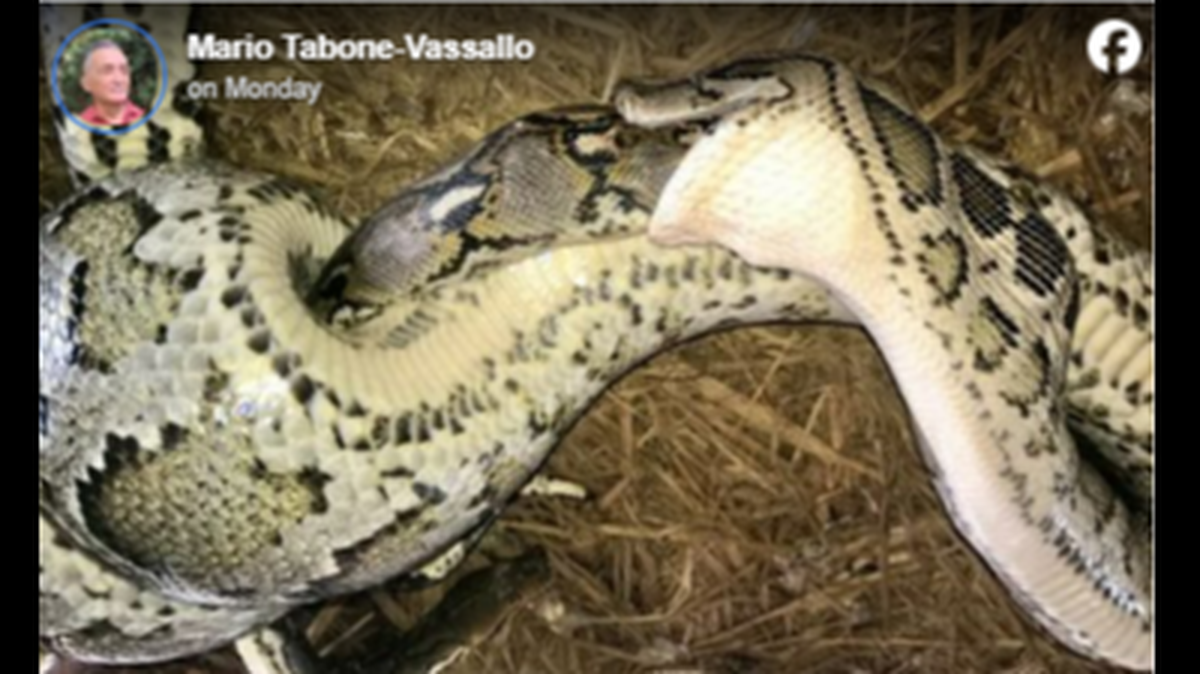
An instance of one python swallowing another one has been documented and it involved a 10-foot Burmese python — the same species spreading in South Florida.
The observation is being called a “first” for scientists.
Details of the excruciating meal, which happened in southeastern Bangladesh, are recounted in the Aug. 20 issue of Reptiles and Amphibians.
“We encountered a Burmese python ... that had caught a reticulated python by the tail and coiled tightly around its prey before swallowing it tail-first,” the team of scientists report.
“The reticulated python tried to defend itself by constricting the Burmese python but loosened its grip after being subjugated. From the initial strike to complete ingestion took about two hours.”
It happened in October 2020 at the Akiz Wildlife Farm in the Chittagon Division of Bangladesh, which borders Myanmar (formerly Burma).
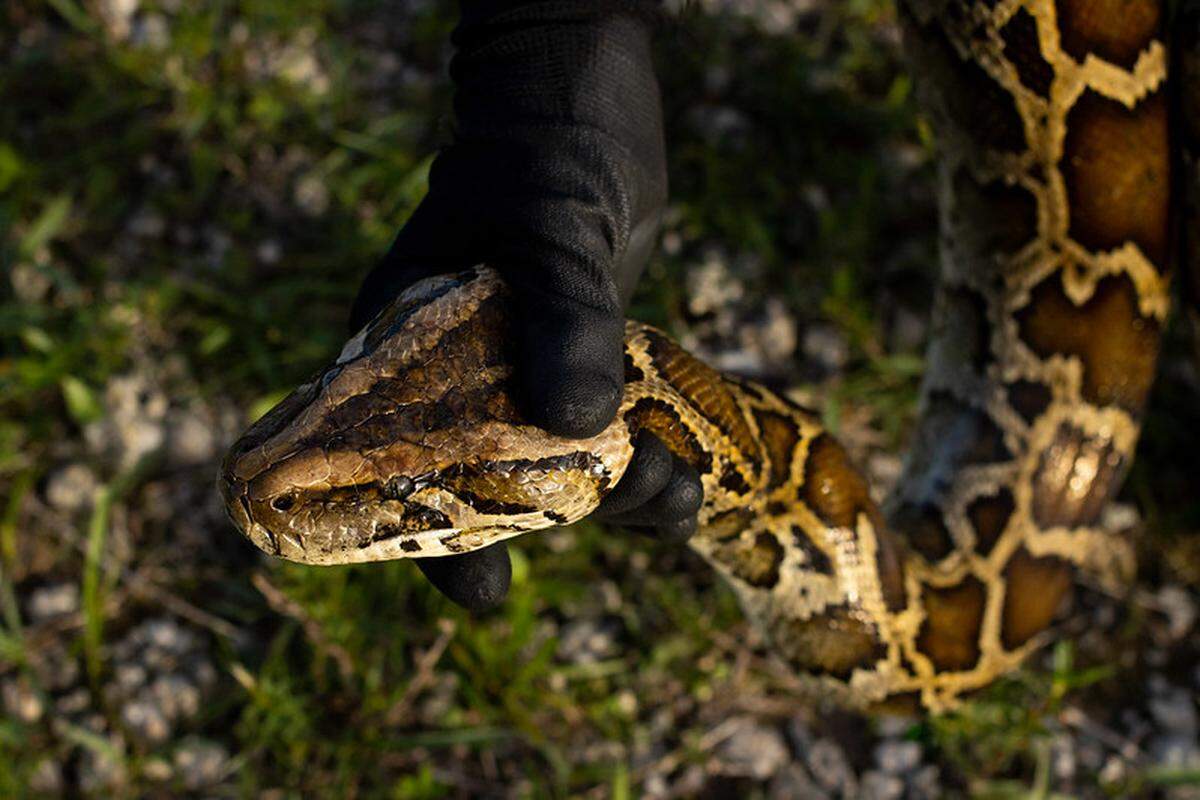
Pythons are native to the region and are known to prey on a wide variety of reptiles and mammals, including monkeys, deer, wild boar “and domesticated species,” the study notes.
Chickens were at the farm and would have been easier to swallow. However, the researchers “counted the chickens on the farm and concluded that none had been eaten by either snake,” the report notes.
“To the best of our knowledge, this observation represents the first documented predation” involving the two species, the study says.
Burmese pythons can “exceed 22 feet,” according to the Smithsonian’s National Zoo and Conservation Biology Institute. Meanwhile, the largest reticulated python on record was 32 feet, the National History Museum in the United Kingdom reports.
Burmese pythons are spreading in the Florida Everglades due to the exotic pet trade. The snakes have no natural enemies in the wetlands and are creating havoc by feeding on native species, including deer and alligator, experts say. The state is in an ongoing battle to stop the spread of the snakes to the north.
This story was originally published September 4, 2024 at 4:42 AM with the headline "In a first, one python documented eating another python, study says. It took 2 hours."