
Bald eagles were poisoned with banned pesticide in Colorado. A rancher explained why
Fed up with coyotes that he claimed were killing his sheep, a 77-year-old rancher covered sheep parts with a “thick yellow liquid” and placed them near a ditch, Colorado Parks and Wildlife said in a news release.
An investigation into the rancher started when a man found “parts of a domestic sheep” and several dead magpies in a culvert in the San Luis Valley, the Aug. 31 news release states. The sheep parts “appeared to be slathered with poison,” and the man called wildlife officer Jeremy Gallegos. That was on Jan. 13, 2017.
When Gallegos responded to the area, he found that the sheep carcass was covered with a “thick yellow liquid.”
“It was obvious that this was an intentional act,” Gallegos said in the release.
And it didn’t stop there.
The next day Gallegos returned to the culvert — and he found more “dead sheep freshly placed in the area” and another dead magpie. He also noticed tire tracks near the ditch.
“He decided that the site needed to be monitored around-the-clock so he set up a game camera nearby,” the release states.
Then again, the next day, Gallegos went back to the ditch and found fresh tire tracks — the same track print as the day before — and a sheep liver coated with the liquid. There was another dead magpie.
“Gallegos retrieved the capture card from the camera and suspected that the images would break the case open,” Colorado Parks and Wildlife said in the release. “The photos showed a white pick-up truck at the site and a man carrying what looked like the sheep’s liver.”
The man has since been identified as John L. Divine.
One week after the first report, on Jan. 21, Gallegos and another officer drove to Divine’s house when they saw the white truck that was in the photos, the release states. They pulled the truck over and Divine was inside.
When questioned, Divine told the officers he was trying to stop the coyotes that were killing his sheep, the release states. The rancher said he put anti-freeze on the sheep parts and only baited one spot. But when officers asked Divine to lead them to that spot, it was not the same location that they had already been investigating, according to the release.
“When they arrived Gallegos told Divine, ‘You’re not telling the truth,’” the release states. Divine was cited and paid a $362.50 fine on Feb. 7, according to the release.
Residents can hunt, trap or take coyotes and other nuisance wildlife animals if they are causing damage to livestock or crops, according to the Nuisance Wildlife Laws in Colorado.
Poisons can be used on some nuisance animals as long as label instructions are followed and if the poison is only used for species that are listed on the box.
“Regardless of whether a poison or toxicant is legal by statute, it is your responsibility to check with local authorities about restrictions on specific poisons and toxicants at your location,” the document states.
“I told him that the poison could kill more wildlife, including raptors,” Gallegos said in the news release.
And it did kill more wildlife, the department said.
On Feb. 3, 2017 another wildlife officer received a report about a sick bald eagle that was found about one mile away from one of the bait sites.
“The officer spotted the eagle and captured it; and while he was there he found carcasses of two more eagles, a coyote and a red fox,” the release states. “A third dead eagle was later found in the area.”
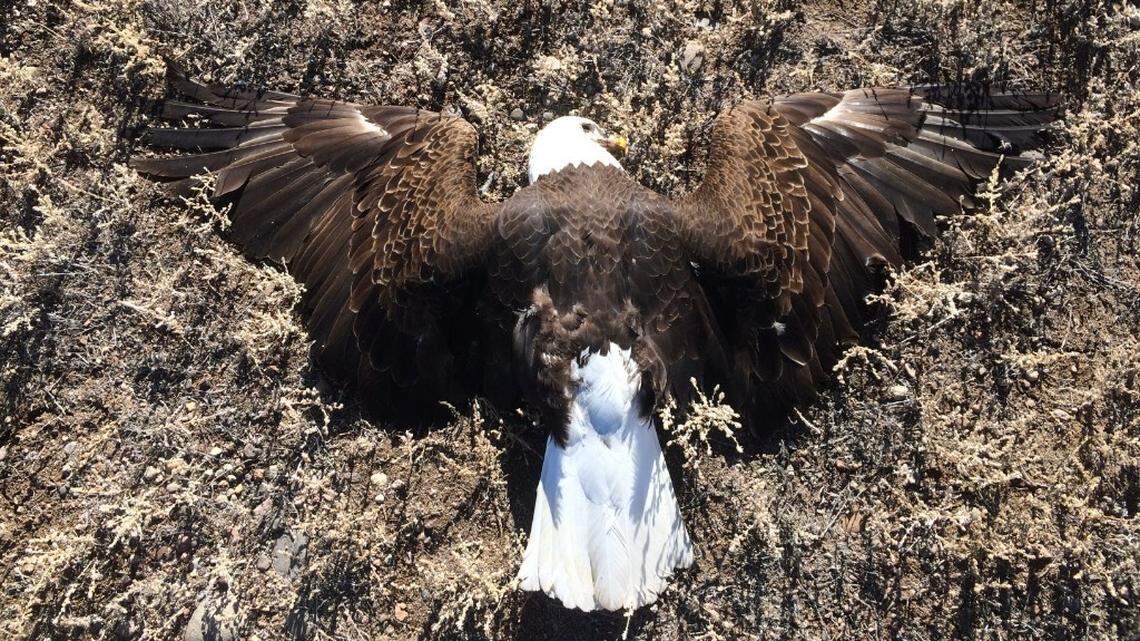
The injured eagle was nursed back to health and released on March 3, but two other bald eagles were found dead that same month.
The bald eagles and the bait were sent for lab testing, the release states. But it wasn’t anti-freeze that killed these animals like Divine had said he used.
Rather, it was Furadan, which is “a pesticide that had been banned by the EPA in 2009 because it caused unacceptable health risks,” Colorado Parks and Wildlife said. “The chemical had been used to control insects, but was also found to be killing migratory birds and posed a serious danger to humans.”
“The evidence clearly showed that all these animals were killed by the pesticide put out by Mr. Divine,” Gallegos said in the release.
Divine paid $8,283.50 in fines in April, the release states, and has since pleaded guilty to “10 misdemeanors of illegal take of wildlife and using poisons to kill wildlife.”
Colorado Parks and Wildlife said five bald eagles, a coyote, a fox, magpies, crows and ravens were poisoned by Divine.
A U.S. Fish and Wildlife Service representative said one of the top five causes of eagle deaths across the U.S. is poison, according to the release.
This story was originally published September 4, 2018 at 9:27 AM with the headline "Bald eagles were poisoned with banned pesticide in Colorado. A rancher explained why."