2020 school closures forced remote learning. Many Fresno students now prefer it
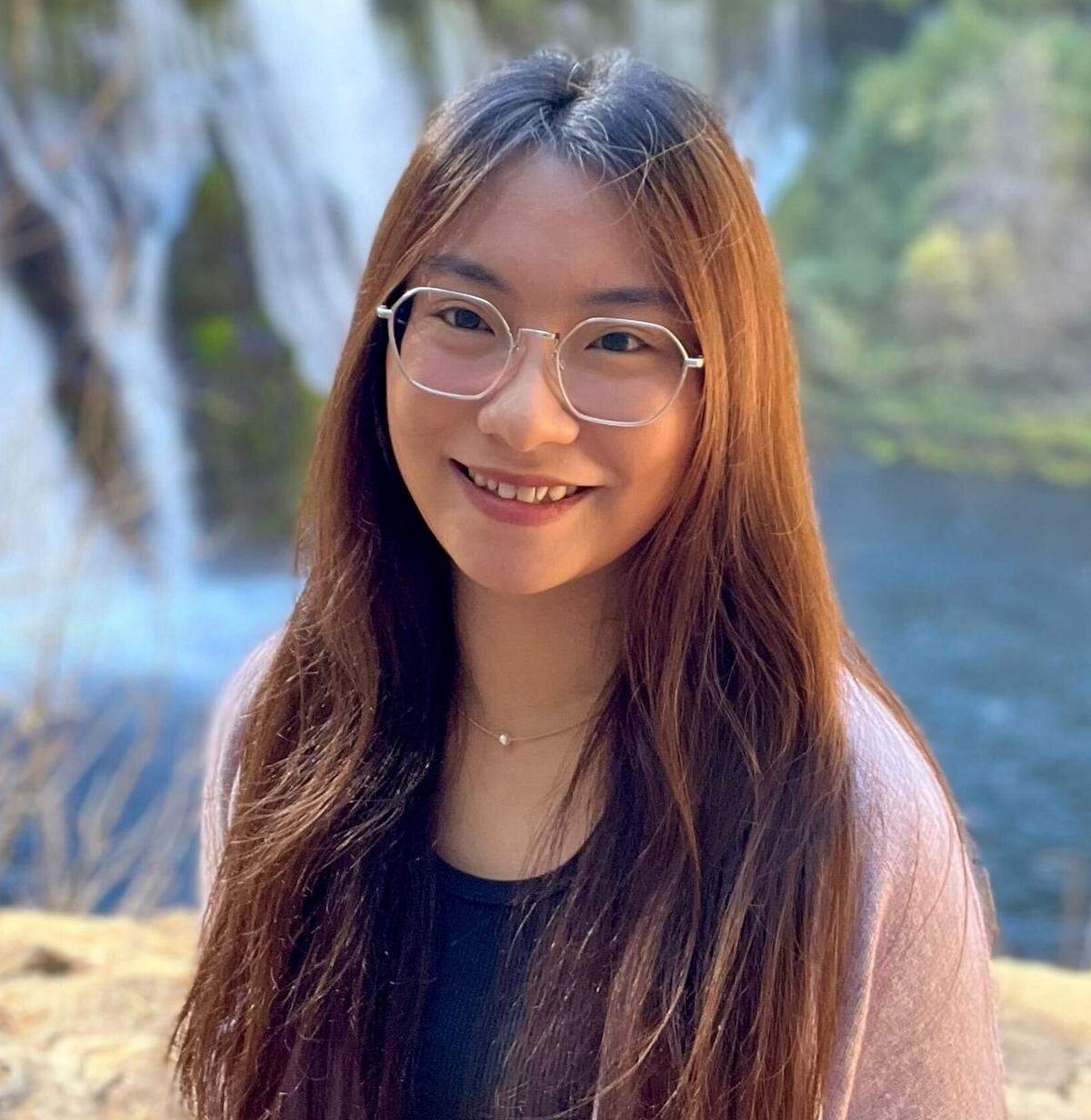
Vanessa Ventura’s senior year of high school resembled her experience during the pandemic, when, as a seventh-grader, she’d log into her computer and start her day, alone, in front of a screen.
“The main reason I decided to stay home was because I don’t like socializing and having bad connections with people at school,” said Ventura, who graduated this month from Fresno Unified’s virtual school. “I found it more comfortable coming online.”
Five years ago, the pandemic forced unprepared school districts across the country to shift to online learning. Fresno students spent more than a year studying remotely. But, while the vast majority of kids eagerly returned to in-person classrooms after schools reopened, several students stayed home.
They chose to continue remote learning.
Fresno Unified had only 40 students enrolled in its online eLearn Academy before 2020. Now, the district of 70,000 pupils enrolls more than 800 students from kindergarten through 12th grade at the rebranded Farber School of Online Learning, which has become one of the largest online programs in California.
The district has 36 teachers who teach synchronous classes — where students and instructors interact in real time — at the Farber Educational Campus near downtown Fresno.
“Fresno Unified had a vision to continue supporting our students, who, for whatever reason, decided to stay home and learn from home,” said Tony Flori, a literacy coach at Farber Online.
Besides learning behind a computer screen, remote learning students follow the same schedule as students who attend school in person. For each lesson, teachers take attendance and assign homework. During P.E. class, kids practice jumping jacks and push-ups in their driveways and backyards with their cameras on.
Remote learning students can take Advanced Placement classes and dual-enrollment courses as well as participate in 15 school clubs.
Farber Online’s teacher-student ratio is slightly lower than in-person classrooms, with each teacher supervising about 20 students, Flori said. Middle school classes have the largest number of students, with some having as many as 30 students.
Why some Fresno students opted to stay in remote learning
Ventura preferred remote learning partly because of her many responsibilities at home. One of her five sisters was diagnosed with autism, Ventura said, and the therapy takes a lot of her mom’s time and attention.
”I’m always going up and down the house. I have five sisters and they each come home at a different time,” she said. “I was helping my mom with my sisters. It’s just a lot of going to therapy each day, and when she comes home and I can see she’s stressed, so I take over half the time.”
Still, Ventura took two dual-enrollment classes this past school year — the campus she would have graduated from Roosevelt High School, offers only one dual-enrollment course. This fall, she’ll enter Fresno State with 10 college credits.
“After being online for two years, I learned to be more responsible,” Ventura said. “I have to get up and motivate myself to get the assignments done and turn them in. I definitely have grown as a person, both mentally and academically.”
A veteran educator with 25 years of teaching experience, Flori said there is no one-size-fits-all solution for learning, especially as students become more proficient with technology.
The purpose of online learning is not to get students to return to comprehensive campuses, but to provide kids with the best option to meet their needs and achieve academic success, he said.
Traditionally, online classes have been viewed as an alternative form of learning for students unable to physically be on campus for a variety of reasons. Prior to the pandemic, students enrolled in eLearn Academy because their parents were traveling nurses or they had to take on the responsibility of caring for sick family members, said Rachael Maciel, executive officer of credit attainment at Farber Educational Campus.
Educators witnessed how the pandemic reshaped students’ learning experiences. Enrollment at Farber Online ballooned from three dozen to nearly 900 students.
“Some kids are here because of social anxiety, that’s been a common theme. We do see a lot of kids who have struggled at the comprehensive sites with anxiety,” Flori said. “You’re probably not going to encourage them to go back, unless you really feel like they have the confidence in themselves and their parents have seen a change that’s going to be a good fit for them to go back.”
Maria Orozco Serna, a junior who has severe social anxiety, said she enjoys online learning because she doesn’t have to socialize in settings with big crowds of students and is able to take care of her elderly family members.
“It’s a really good school. It’s just as challenging as it would be in person,” she said.
Orozco Serna said taking online classes saves her time — she no longer has to commute to school — but a key challenge is time management and fighting procrastination. When she finds herself distracted, Orozco Serna fiddles with a little white fidget spinner on her desk to stay focused.
Brandon Araiza, a junior, has been doing school online since sixth grade. His mom was concerned about him encountering a culture with “endless drugs, fights, violence and inappropriate behaviors” in high school, Araiza said, so his family embraced remote learning after the pandemic shut down schools.
Araiza, who is autistic, said he was often bullied in elementary school. During a recent virtual English class, Araiza told his teacher, Cyndi Mello, that the switch to remote learning not only helped to improve his academic performance, but also his social skills.
“It makes interacting easier because you’re not around two dozen different students, and your social anxiety is just up and up and you just feel like, I don’t know any of these people, I don’t know what to say, I don’t know what to do,” Araiza said. “For online class, for people who have social struggles or troubles like myself, it makes communicating my voice more digestible, more convenient, more comfortable.”
Mello, a high school English teacher at Farber, said Araiza noticeably improved his social skills and became one of the students who frequently unmutes himself in class and interacts with peers.
“I’ve been teaching online for four years now, and the way you just worded that moved me to tears, because what you just said affirms that what we’re doing is best for students,” Mello told Araiza on the other side of the screen.
How remote learning in Fresno changed since pandemic
Over the years, remote learning has evolved from distributing digital materials to resembling something much closer to a normal comprehensive campus, Flori said.
“I think teachers have gotten much better at the ability to use educational technology tools to engage kids in different ways, as opposed to the traditional ‘stand and deliver,’ throw the presentation up and I just kind of talk,” Flori said. “They’re in a room sitting by themselves, so what’s engaging these kids? What’s getting these kids locked into what’s going on here and with my classmates?”
Some teachers use breakout rooms with regularity, assigning students to the same discussion partners. Students get to know each other, come out of their shells and feel more comfortable participating in class, he said.
Ventura, the recent Farber graduate, said some of her instructors use Nearpod, an interactive desktop application that provides formative assessments, 3D simulations and virtual reality, to make the classes more enjoyable.
Farber teachers also found that while students prefer to sit alone in front of the screen for much of their educational journey, they are still eager to establish connections.
Oftentimes, Mello is the first to notice when students are struggling with emotions and experiencing difficulties, and she connects them to the school’s counseling team.
It’s about building trust and being a listener to the students, Mello said.
“They’re very willing to open up to you, but you have to build those relationships. It’s about sharing your life with them too,” she said. “Every time I go on a vacation or do whatever with family, I share pictures with them.”
Araiza said he enjoys physics class the most because his physics teacher is funny and spends time connecting with students.
”It’s very comfortable being in that class because, hey, there’s someone who’s actually relatable,” Araiza said.
Meanwhile, Orozco Serna said she appreciates Mello’s high standards and the encouragement she received from her throughout their past year together — virtually.
“I think you were probably one of my teachers who gave me the most assignments. They were challenging, and they would have me stressing all night,” said Orozco Serna. “But I was looking back at my test scores, and I scored way higher in English than ever.”
This story was originally published June 30, 2025 at 5:00 AM.