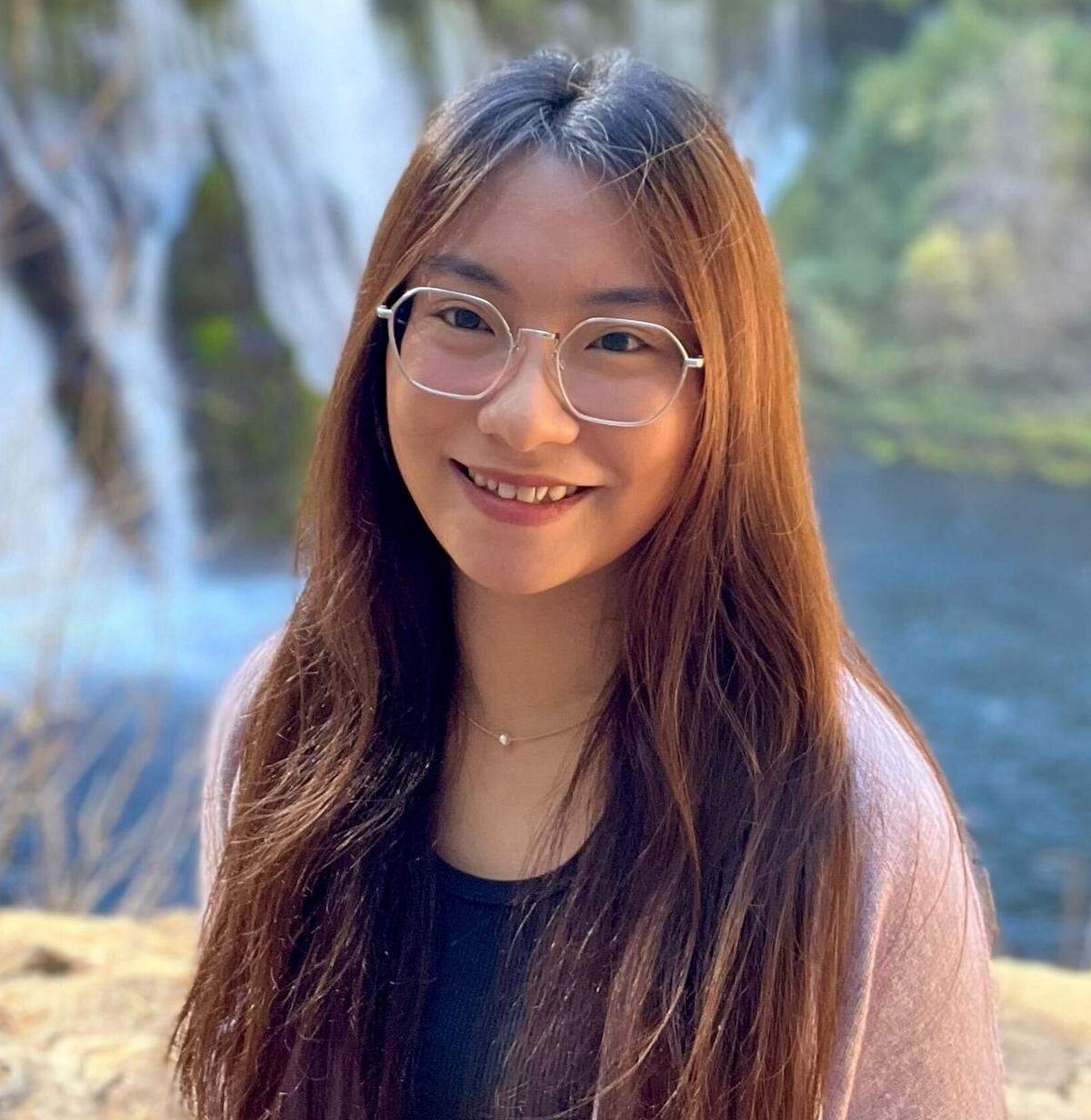
Clovis Unified school board president makes history. Here’s her message to students
Clovis Unified Trustee Yolanda Moore made history in December after colleagues elected her to become the first African American board president in the school district’s 65-year history.
“We were seven individuals who didn’t know each other who were elected to make decisions on behalf of the district and our community,” said Moore. “I think the beauty of that is you have people from different walks of life, different views, different perspectives, that come together to try to meet the needs of all of our families.”
Moore grew up in Fresno and attended local public schools before leaving the Central Valley in the 1990s for school and work. She has lived in different parts of California and Wisconsin, and her children have attended private, public and charter schools.
But when her family moved back to the Central Valley a decade ago, their decision on where they’d live felt like “a no-brainer.”
“My husband’s from Southern California; he never lived here. He looked at the area and said, ‘We have to live in Clovis because the kids have to go to Clovis Unified,’” Moore said.
Moore was first elected to the board in 2020 and won a second term in November 2024 running unopposed.
The Bee sat down with Moore to talk about her journey as Clovis Unified’s first Black trustee and board president. Answers are edited for length and clarity.
What is the school board’s priority?
The priority is really student achievement. There was a lot of learning loss during COVID, and especially for those little ones who would have been in pre-kindergarten or kindergarten. We’re seeing a lot of residual effects of kids not being in school academically and socially. So for me, it really is to close that gap in student achievement.
You’re active in attending school events. Are you focused more on your constituency area after the district’s voting system shifted from at-large voting?
I do it just because I love the district. My kids are at one high school, but my nephews and other family friends are at another, so I still try to go and support across the district because that’s what we should do. As a board, we don’t want to be fighting over resources because my school is more important than yours. All of our kids deserve the same opportunities, no matter where they’re at.
If you look at our map, every trustee has multiple high schools in their areas, and that’s intentional. We don’t want it to become like a territorial thing where some kids are getting things that other kids are not getting because they have a more vocal board member. We really try to be equitable with things when it comes to repairs, like every school is getting something with the bond measure, just to make sure that every kid has a nice environment to learn.
How does it feel like being Clovis Unified’s first Black trustee and board president?
I think in the past, there was kind of a rotation, but the way our board is now, somebody definitely has to show that they’re ready to be in the leadership role — be it clerk, vice president, or president — and have the confidence and the respect from the rest of the board. So I was flattered that they thought that I was ready.
In the beginning, I’ll be honest, I didn’t think it was that big of a deal. But when I meet students who have graduated, and they come up me and say, “I voted for you,” I realize the importance. It’s historic, and I am honored.
But I’m here for a reason, and I don’t think it’s just for a particular group. I’m here to have an impact on our community as a whole. So I think it’s important for minority students, Black and brown students, to see someone like them in a leadership role. But I think it’s equally important for students who are not minorities to see that it’s OK for somebody who doesn’t look like them to be in a leadership role.
Clovis Unified has some rules that contribute to the conservative reputation of the district, such as the dress code policy.
I could definitely see that. But what’s interesting though, is that if you look at the dress code of other districts — because I did when we were doing our dress code — they all have the same dress code, it’s just a matter of enforcement. Most of them (dress code policies) are all very similar in terms of what’s appropriate and what’s not, it’s just a matter of whether you are holding your students accountable for what you’re saying the rules are.
We do take accountability seriously in our district. If we say this is the rule, we’re going to expect our kids to behave in such a way. People have this idea that public school is just anything goes. But you have to have some rules and order.
For me, I think it’s important to keep in mind what the trends are so that when parents are trying to shop for their kids, they can find clothes that are appropriate and the kids want to wear.
Some board members say the district doesn’t need change and Clovis Unified doesn’t like the rules from Sacramento.
There are rules and things that come from Sacramento, and it sounds great in theory, but when it comes to implementing it, wait a minute, how’s that gonna work? How is this going to impact families?
Some years ago, they implemented the “late start” requirement that middle and high school can’t start school earlier than 8:30 a.m. because kids need more sleep. The thought was, that if school starts late, kids can have a little bit more rest. But when you think about it, if they’re starting school late, they’re getting out later, practices are going later. They’re getting home later, homework is going later, and they’re probably still staying up late. The thing is, school districts have these systems in place, such as buses. And if the older kid is getting to school later than the younger kid and parents may have to be at work at 8 a.m. — now you’re leaving and hoping that your 15-year-old goes to school. It just created different challenges for different families that people (in Sacramento) hadn’t thought about.
We made it work. But it’s not to say that it’s easy. So this is an example of when people are talking about things coming from Sacramento that they want us to make happen, but there’s no funding, there’s no guidance. We’re told to do it, so we have to figure it out.