
Learn more about what’s happening in Ukraine. This Fresno State professor is an expert
If you don’t know much about Ukraine and have questions about the current crisis there, consider heading to Fresno State on Wednesday to learn more.
Political science professor and Ukrainian Dr. Nataliia Kasianenko is hosting a “teach in” at the Fresno State library, room 2206 from noon to 1:30 p.m. The event is open to the public. A recording of the event may be available afterward.
Kasianenko’s research focuses on nationalism, identity politics and human rights in the countries of the former Soviet Union. She is a native of Ukraine, and she still has family there and in Russia.
Kasianenko continues to teach her classes on international politics and the global political economy while Russian attacks in Ukraine escalate. The Russian military bombarded residential areas of her hometown of Kharkiv, Ukraine’s second-largest city. Her parents are hiding in an underground shelter near their apartment building.
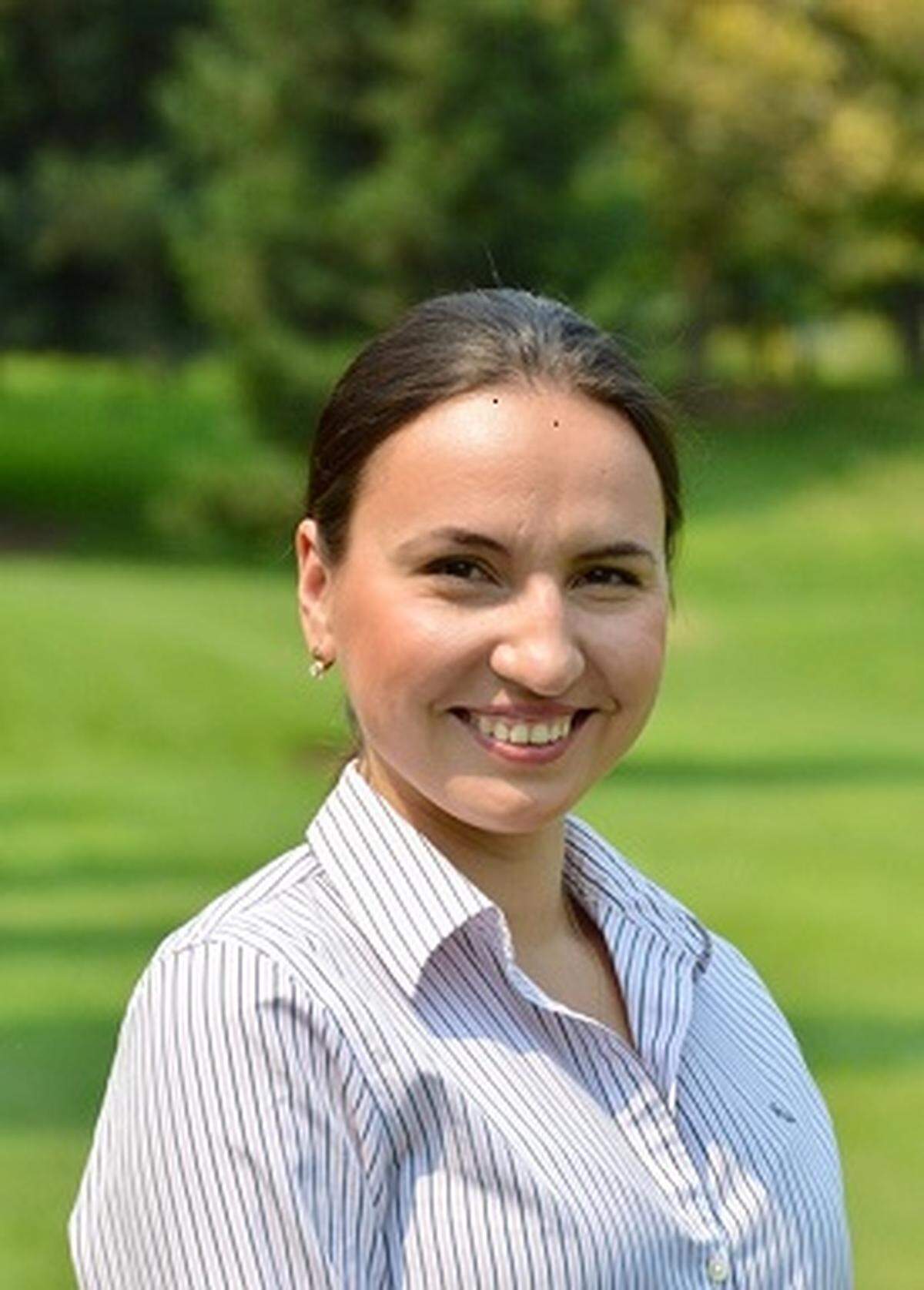
“My hometown is now at the forefront of the fighting,” Kasianenko said. “Russian tanks are on the outskirts of town. People were told to shelter underground, but it’s nighttime in February. Many underground shelters are cold and dirty, with no running water and electricity, and only standing room. My parents are staying at home for this reason. Everyone is scared and we do not know what the future will bring.”
The Bee spoke with Kasianenko over the phone Tuesday to preview her presentation. Here are a few highlights:
Is Ukraine part of Russia?
No. Ukraine gained its independence in 1991.
Parts of Ukraine previously were under the control of Russia and other countries, such as Poland, Lithuania and Hungary, Kasianenko said. Because of this, and until more recently, Ukraine was somewhat divided socially by language, religion, economy and politics. In parts of southern and eastern Ukraine, some Ukrainians speak Russian and align with the Russian Orthodox Church, she said.
Ukraine became more united in 2014 in the aftermath of the Euromaidan Revolution, which resulted in the annexation of Crimea to Russia and hostilities in Donbas.
“The levels of nationalism, sort of benign civic nationalism and patriotism, were elevated, and the government promoted Ukrainianization and banned some Russian media channels that were basically spewing out propaganda.”
On U.S. and Western media coverage
“We’re seeing a lot of inspirational coverage of what’s going on in Ukraine, right? In light of this insane aggression, we’re seeing acts of heroism, people are being so brave. The Ukrainian president is just being so brave and inspirational, and that’s fantastic. It kind of highlights that the Ukrainian people have the resolve to fight back,” Kasianenko said. “They’re not just going going to give up, and other countries should support that. But at the same time, I think that misses the idea and the reality of things, which is there’s immense human suffering.”
People fear for their lives, and the Russian attacks are intensifying, she said. During the first three or four days, Russia mostly was targeting military sites and infrastructure.
“Now at this point in time, on days five and six, we’re seeing basically war crimes being committed against civilians, hospitals, schools, residential buildings,” Kasianenko said. “Apartment complexes are being shelled. Rockets are being launched day and night.”
Ukraine, NATO and the West
In geopolitical discussions, Ukraine is viewed as a sort of buffer between NATO countries and Russia, Kasianenko said.
“The message I’m getting from my family and friends is that’s how they perceive the West is treating them — as the buffer zone, as something that can be divided and basically broken up into spheres of interest,” Kasianenko said.
“The Ukrainian people, they do not want to represent the buffer zone. They are people of an independent, European state that decidedly chose to pursue a European future, embrace democracy, and embraced reforms aligned with the European Union, aligned with the United States. They decidedly turned away from Russia now eight years ago and put their trust in the West.”
Ukrainians feel the response from Europe and the West has been slow, painstaking and discouraging, she said.
Kasianenko called the economic sanctions “unimpressive,” and said, “It seemed like the West was just standing by and waiting — waiting to see how things will go, how badly things will turn, and just observing the violence and the aggression.”
While the U.S. and other countries have sent military equipment and weapons, she said, more help is needed.
“We are looking at a potential disappearance of Ukraine as a state,” Kasianenko said. “I think the Ukrainians are going to fight until the last bitter moment here defending their country, but they need more help and more support.”
Putin’s disconnect from Russians
“Most people in Ukraine — actually, all people who I talk to, think that Putin is simply mad,” Kasianenko said. “He lost his mind. He’s detached from the reality of what his own people want.”
There are many trains of though and predictions about Putin’s goals, she said.
After Putin gave a speech claiming Ukraine is not a sovereign nation, some believe he wants to recreate the Soviet Union, she said.
As a political scientist, Kasianenko said Putin’s “brute force” against civilians doesn’t make much sense to her, since some Ukranians already identify with some aspects of Russian culture. Perhaps Putin’s goal is an ongoing civil war, she said.
While hundreds of thousands of Russians put themselves at risk to protest the attacks against Ukraine, many believe the propaganda spread on Russian state media, Kasianenko said.
State media channels are banned from using the terms “war” or “invasion,” she said.
“Russians who watch state-controlled media believe in the narrative perpetrated by Putin and the Russian government, essentially that the Russian military is engaged in a special military operation,” she said. “So this idea is perpetuated that actually the Russian troops in Ukraine are the liberators of the Ukrainian people from the neo Nazi state, and a lot of Russians actually believe that.”
State-controlled media are reporting the “special military operation” is to prevent the Ukrainian military from attacking two republics in Donbas. The Russian government also claims the Ukrainian government is comprised of fascist, neo Nazis, which doesn’t make sense since the Ukrainian president is Jewish, she said.
This story was originally published March 1, 2022 at 7:04 PM.