
With more foggy days ahead, should Fresno-area schools change foggy day schedules?
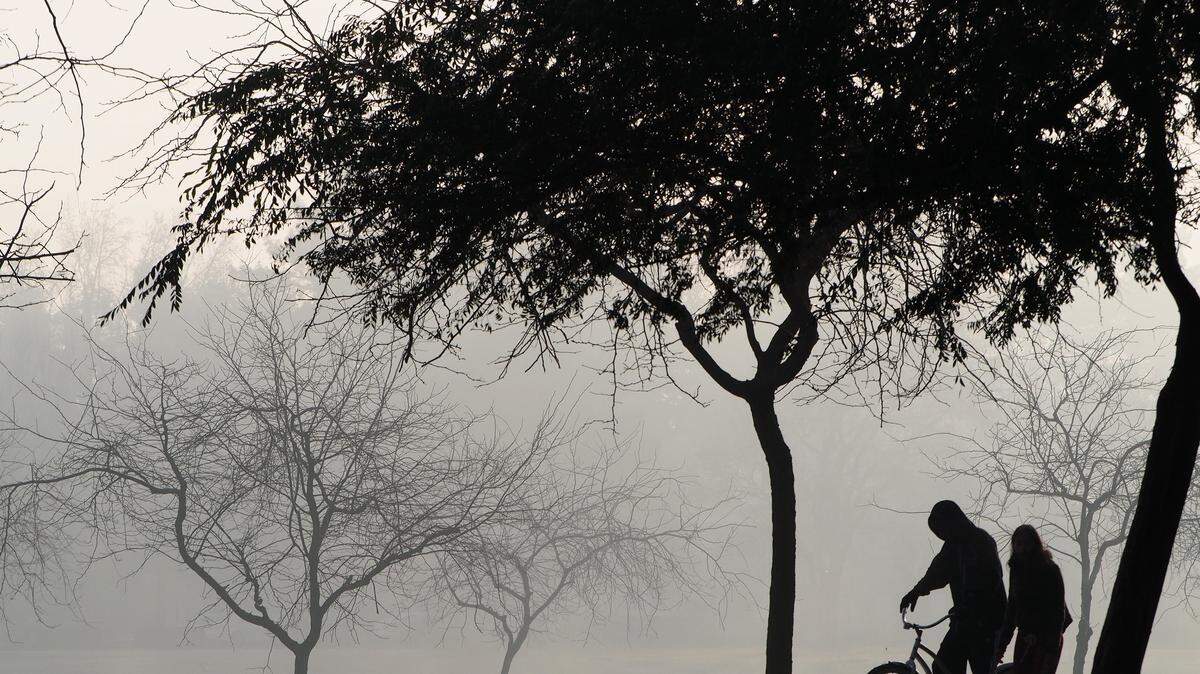
Joanna Chen said memories of her car accident on the way to school on a foggy day last week remain “just a blur.”
The 17-year-old Central High senior was driving on Dickenson Avenue near the school when she lost control of her car and was hit by another driver on the two-lane road.
“To be honest, I don’t know who swerved first and who got into what lane,” she said. “It was just so foggy that both parties just couldn’t see what was going on.”
The airbag went off, mostly protecting her. Her car was totaled. The other driver was mostly OK, too, she said. The school nurse checked Chen out before she went home.
“I (had) really high blood pressure because of the accident and whatnot, but I was relatively OK,” she said. “I was like slightly woozy and then forgetful for the first 10-20 minutes.”
Chen’s accident has underscored what some Central Unified parents have been worried about so far this fall — that dense fog is making the commute to schools dangerous for bus passengers, drivers, and pedestrians. Meanwhile, administrators in the Central and Selma districts deal with balancing foggy-day schedules that serve both urban and rural students.
Meteorologists are seeing more densely foggy days this year than at least in the prior two years, according to Jeff Barlow, a senior meteorologist at the National Weather Service in Hanford.
Barlow said after the ground was drenched with rain in late October, fog has been a problem. Fog develops from the moisture in the ground and radiates up as water vapor into the lowest 200 feet of the atmosphere. The lack of wind has also made the Valley favorable for foggy days, because it doesn’t get blown out.
Barlow doesn’t see the central San Joaquin Valley getting a break anytime soon.
“It’s already been going and it’s really hard to break out of this pattern, you know, unless you have a cold front come through and give us more rain.”
But he said even that wouldn’t work for long.
“All that does is prime the pump, you know, that just puts more water in the ground and that’s where the fog develops.”
On Facebook, some parents said the fog stayed heavy last week until late morning. Others said they pulled over to try and wait out the fog while driving to Justin Garza High School, Central High, and Central East.
Barlow said last Monday’s dense fog advisory was extended out until noon.
But Central Unified has not called foggy day schedules (which delay bus transportation) on those days, and parents feel pushed to get their students to school on time. Parents say the fog has been rolling in later in the morning after the buses are already out.
Chen said when she leaves her house in the city in the morning, it’s about a 20-minute drive to her school.
“(The fog) gets like 10 times worse once you get into the countryside,” she said, making it harder to decide if she should venture out or not.
“I knew sooner or later something would happen. Honestly, I just hope that they just take into consideration that there are students (driving) because, frankly, we don’t have a lot of experience with driving and it’s just really scary driving out in the fog.”
Calls for change in CUSD
Some parents are calling on the district to adjust its foggy day policies so rural-area schools can delay class schedules without having to include city schools each time.
But Central Unified spokesperson Gilbert Magallon said that calling foggy day schedules for the district isn’t so easy. He said students who attend different schools are often picked up from the same stops across the 88-square-mile district.
“This means students who attend Central East High School, Central High School and Justin Garza High School may all be getting picked up from the same areas, making it challenging to call a foggy day for just one school. This is why foggy days are called districtwide.”
Like most area schools, the transportation department works with spotters, who live across the district. A supervisor checks the visibility on the way to work between 4:30 and 5 a.m., and then spotters “give distance markers that correlate with the visibility in their area, which is logged.”
If the visibility is less than 200 feet, a foggy day is called by 5:30 a.m. to get the word out on time. Buses normally begin to pick up students at 6:05 a.m.
“It may be extremely foggy in several areas, with no fog in others, but the call is made for the whole district,” the protocol reads.
Selma parents caught off guard
Miles away in Selma, parents also are struggling with foggy day schedules, but for a different reason.
Near the end of the Selma Unified School District board meeting on Nov. 15, Interim Superintendent Marilyn Shepherd made a quick announcement that caught some parents off guard.
She said beginning after Thanksgiving break, “we will be implementing a new foggy day process here in the district where only the bus riders will be delayed, not the entire district.”
That means school will start at the regular time on foggy days, unlike in previous years. Shepherd told the board that she believes delaying instruction for everyone until 10 a.m. is not a procedure followed by most Fresno County schools.
“(In) most districts the school district starts at the regular time, just the bus riders are late,” she said. “We must have been asleep at the wheel, and my apologies for not catching it sooner.”
Shepherd told the Education Lab that, since then, she’s fielded emails from parents who are worried that students who walk or are driven to school will be placed in dangerous situations because of the fog.
“If it’s not safe for a parent to bring their child to school, of course they can be late,” she said. “They would be excused. We’re not going to penalize anybody that is delayed.”
But Shepherd said the reality is, most students live in town, where it’s less foggy. Selma Unified has two rural elementary schools, but only about 20 students get bused into the town from rural areas, she said.
If there are 500 bus riders, and about 6,000 students in the district, most of whom live within a mile of their school site, it wouldn’t make sense to delay instruction for all students, she said.
Barlow, the meteorologist, said one of the reasons it gets more foggy in the country is because of the “heat island effect,” because concrete, roads and buildings hold in more heat.
“So the temperatures in Fresno are going to be different than say the temperature in Laton or Pixley or somewhere more rural,” he said.
There’s also more vegetation, “which holds the water, (which is) a key source of fog, from the rain. So there’s trees and there’s fields and those those areas have more moisture than concrete or asphalt.”
Some parents worried bus riders might be left behind in classes if school starts on time, but Shepherd said they would have time to catch up in class, and now students have better ways to access work from home, such as Google Classroom.
“When you think about it, everybody’s losing two hours of instructional time the way it is now,” she said. “This gets them in school sooner and we can start working with them and it’s not perfect but I think for most of our kids that will be better.”
Selma Unified parents, speaking out on social media, weren’t sure that it was typical of schools to not delay their start times for all children.
A spokesperson for the Fresno County Office of Education could not say if it was the norm, but said it’s up to each school to have its own procedure.
For example, Central, Clovis and Sanger Unified begin instruction at their normal time when buses are delayed, but some rural schools, such as Caruthers and Fowler Unified, delay their start times.
Teachers in Selma are expected to be at school 30 minutes before class begins, Shepherd said, and will have to follow the new foggy day rules of arriving on time. Other staff have always had to arrive at their normal time.
Shepherd said she expects teachers and staff will arrive on time, but “if they encounter something they are to call their immediate supervisor and let them know if they’re going to be a little late. But we hope everybody will adjust their time because of the foggy weather.”
More foggy days this year
Both school administrators and meteorologists said that fog is hard to predict.
“It’s not like an evenly distributed thing, Barlow said. “It moves around and is very difficult to forecast. We try to do the best we can. We do have models available to us that show where it thinks visibilities are going to go down or fog is potentially going to develop.”
For drivers, using low beams, and rolling down the window to hear for other traffic could help navigate in poorly visible areas. Barlow said pulling over is also an option, but unlike a thunderstorm, fog lasts hours.
Many schools, whether they begin at the normal time on foggy days, or are delayed, allow for students to be excused for tardiness if the fog is making it dangerous to get to school.
“As parents, if you feel that it is not safe to drive your students to school, you may keep them home until you feel it is safe to transport them to school,” the Kingsburg Joint Union School District foggy day protocol reads. “The schools will not consider students as ‘tardy’ on Foggy Days.”
A lot of times, fog will be worse in the early morning, Barlow said, making it easier to call foggy day schedules.
“But you can’t put it in a box, you know?”
This story was originally published November 29, 2021 at 5:00 AM.