
‘Covid Poops?’ How a silly social media handle fuels serious research at UC Merced
Scientists have found different ways to track coronavirus outbreaks, but one of the more interesting methods been under our noses forever.
And much of this cutting-edge scientific research at UC Merced has been fueled by a humorous social media hashtag that’s likely to please most elementary school students. It’s kind of a good old-fashioned poop joke.
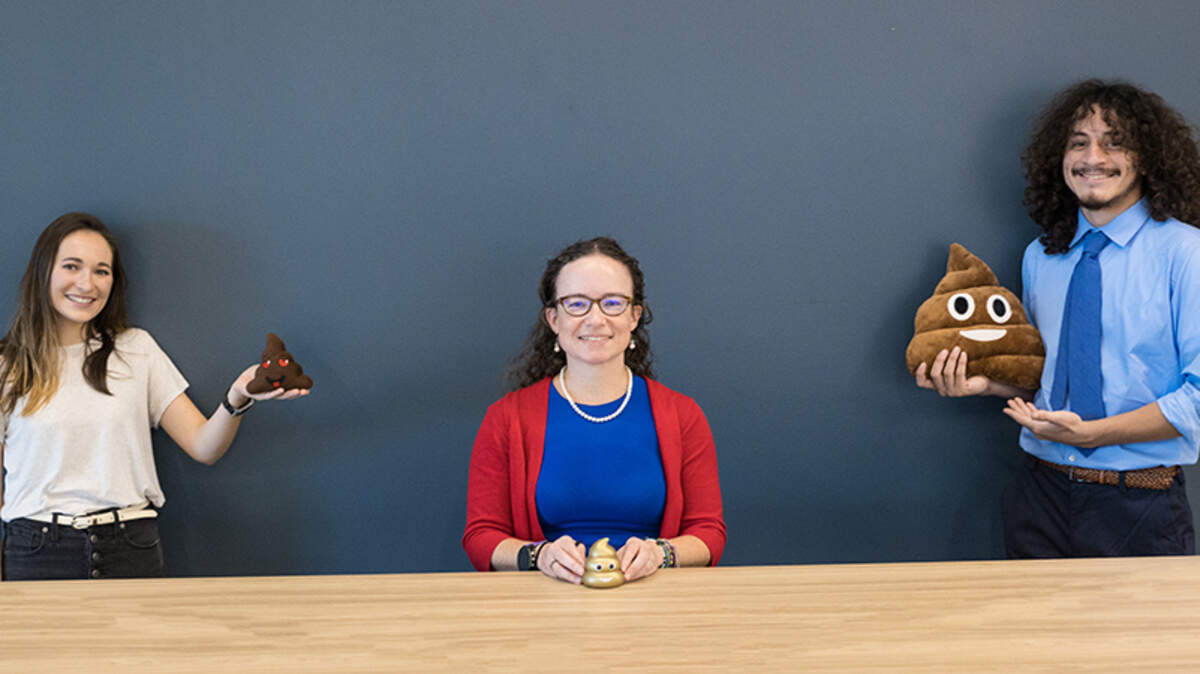
Under the Twitter handle of “CovidPoops19,” UC Merced School of Engineering Professor Colleen Naughton has helped create a space for scientists and other experts to monitor and track data on coronavirus pathogens found in wastewater. That data is then funneled into an online dashboard Naughton also helped create with students.
“I’ve always been passionate about wastewater, so, when the pandemic hit, I wanted to use some of my knowledge to help out. I applied for a small seed grant through the Center of Information Technology Research in the Interest of Society (CITRIS),” Naughton said.
Naughton said scientists previously used wastewater to track pathogens of polio and other diseases.
The dashboard helps researchers monitor communities for possible COVID-19 outbreaks since humans shed pathogens of viruses in our waste.
The dashboards have been a way of predicting upticks in COVID-19 and can be an early warning sign of a possible outbreak. Wastewater data is not meant to replace testing but can inform a community of a potential outbreak.
One example of wastewater helping a community discover coronavirus infections came in July 2020 when scientists at Yosemite National Park tested wastewater and found higher rates of COVID in sewage than what was being reported by visitors.
The weekly sewage samples suggested 10 times more people in the area had coronavirus than COVID-19 test results showed.
“It could help disadvantaged communities since nationally we have seen they have less access to clinical testing or they have less access to transportation to go get individual testing. It could help in those settings that have less access to get a big sample at once to know where to target mobile testing,” Naughton said.
The consistent contribution of data to the dashboard is powered by citizen scientists and researchers worldwide. The Covidpoops19 dashboard has a google form people can fill out indicating their location.
Through the Twitter handle, researchers have been able to connect and share their findings regularly.
“It’s really grown with how many people are monitoring, and we’re still adding sites every week. We recently added Liechtenstein, and we are going to be adding Serbia this week,” Naughton said.
When the project first launched in September, the dashboard had 23 countries and 70 Universities. Now 79 dashboards, 54 countries, 251 universities, and 2,216 sites are tracking COVID-19 through wastewater.
Covidpoops19 is also a part of a developing global data center for wastewater and COVID-19 monitoring lead by Michigan State University and funded by the Bill and Melinda Gates Foundation.
“It’s been really rewarding to interact with other people in the research community or in the public,” Naughton said. “Also, the help of the students and their passion to help during this time, they’ve really stepped up to not only pursue their regular classes but with their research to help serve society at this time.”