
Fresno teachers open up about online classes. ‘I was not prepared for how hard it really is’
Late one night not long after the coronavirus shut down Fresno schools, Debbie Downs got a phone call from one of her young students.
He was scared. His parents were fighting.
The Yosemite Middle School special education teacher stayed on the phone with her student, doing what she could to comfort him and let him know he wasn’t alone.
“I’m the person who is always there. We’re the one consistent thing in their life,” Downs said. The student “doesn’t have anyone right now, so he called his teachers.”
Teachers who spoke with The Bee said the “social-emotional” effects the shutdown had on students and teachers couldn’t really be measured. They said those emotional connections can be critical components of a child’s education.
It’s just one of the many reasons some teachers say they are eager to return to the classroom. But other aspects of the distance-learning experiment in Fresno were measured at least in part. The numbers weren’t good.
Many — and frequently, most — students skipped lessons. Teachers who tried to make online education work sometimes labored even to find their students.
Thousands of Fresno students never showed up
Downs is one of the thousands of Fresno Unified School District teachers whose work-life changed drastically on March 13, when the district moved classes online to slow the spread of COVID-19.
Teaching and learning got harder and, in some cases, nearly impossible.
Downs said some of her students are homeless. Others don’t have Internet access. Some parents don’t have a good handle on technology or email. Many parents had to continue working regardless of their access to childcare.
Special education students and teachers struggled particularly hard.
“It’s been very saddening teaching this way because there is a population that is simply not getting instruction right now,” Downs said. “SPED (special education) kids are already so far behind.”
She did everything she could to get in touch with her students. She made phone calls, sent emails and letters, and even tried to track down students at their homes.
Still, Downs said, she was only in touch with six out of the 12 students in her daily class.
“It’s been a learning curve for everyone, and the reality is this is the future of education, so we’re having to figure that out,” Downs said. “I didn’t think it would be easy, but I was not prepared for how hard it really is.”
And many of Fresno Unified’s 74,000 students never showed up.
During the shutdown, Fresno schools did not make schoolwork mandatory because so many students didn’t have internet access or a device, among other challenges.
Most of the teachers who spoke to The Bee said, on average, only about half their students participated online. And for some teachers, the numbers were even worse.
Anna Jierian, a sixth-grade teacher at Kratt Elementary School, said she regularly had 12 to 14 students show up for Zoom classes out of 34 students.
Seventh-grade math and science teacher Robert Vasquez teaches at Tioga Middle School and said only about 45 of 90 students participated in joint virtual lessons.
Kelly Castillo, a teacher who works with elementary students who have autism at Susan B. Anthony, taught 11 out of her 12 students during the closures.
Fresno schools began tracking student-teacher interactions in mid-May. The district only collected four weeks of data but showed engagement trailing off weekly among both students and teachers.
In the first week, 99% of teachers reported reaching out to their students, and 43% of students engaged in some type of distance learning. About 76% of teachers tried to contact students in the second week, and 43% of students participated.
During the third week, 65% of teachers interacted with students, and only 22% of students engaged in distance learning. In the fourth week, 56% of teachers reached out to students, and 19% of students participated.
Teachers struggle with distance learning
But even as student participation plummeted, the teachers who kept pressing ahead said their jobs became even more difficult.
“Since March, I have probably felt more overwhelmed by my job but also worked 10 times harder than I ever had to do in the classroom,” Jierian said. “I’m trying to make it work for everyone in every way possible.”
Math lessons were particularly difficult online.
“I looked at them and said, ‘I don’t know how to teach you this through the computer,’” Jierian said. “So it became a matter of trying our best to see what we get and try next week on how we can understand it better.”
Technology has also been a learning curve for teachers. Jierian enrolled in a class to beef up her tech skills.
“I am the worst millennial,” Jierian said. “I hate technology.”
Castillo said that getting families to assist during lessons is critical, but challenging because parents have jobs and their own schedules to juggle.
“For my students, it’s better if parents are there,” Castillo added. “Kids have trouble engaging with the computer.”
Consistent routines are crucial for her students with autism, Castillo said, and during school closures, the only consistency she could offer were weekly lessons.
“As long as they don’t regress, I’m happy,” she said. “That’s my biggest fear. Being out of school for a couple of months and (students) come back and lose everything. So as long as they stay where they’re at, we’ll be in good shape.”
But while many teachers reported working harder than ever, school officials fielded numerous complaints from parents who said their children never heard from a teacher after campuses closed. The American Civil Liberties Union even sent the district a letter demanding it “do more” for its students.
Reaching students remained a challenge as the spring semester wound down and, looking ahead to the fall, there’s little evidence any schools have solved that problem.
It’s still unclear what schools will look like on Aug. 17, when Fresno schools resume classes. In June, the district put out its first set of possible guidelines, but it remains unclear whether Fresno students will remain online, return to campus or see a mix of online and in-person classes next fall.
Teachers have been told to prepare for virtual and in-person learning, Downs said, which will take double the prep time.
Emotional toll on Fresno teachers, students
Jierian said she considers herself lucky because she was able to say goodbye to her students just hours before Fresno Unified formally announced the closure in March. A friend sent her an online news article that broke the story shortly before the district’s announcement.
“It was helpful to know before school let out,” she said. “I got to give them (students) closure. I took extra time at the end of the day. My kids emptied their desks and grabbed their things. I told them how much I love them, and I’m proud of them. I know a lot were scared, and I let them know everything would be OK, and I gave them a hug as school let out.”
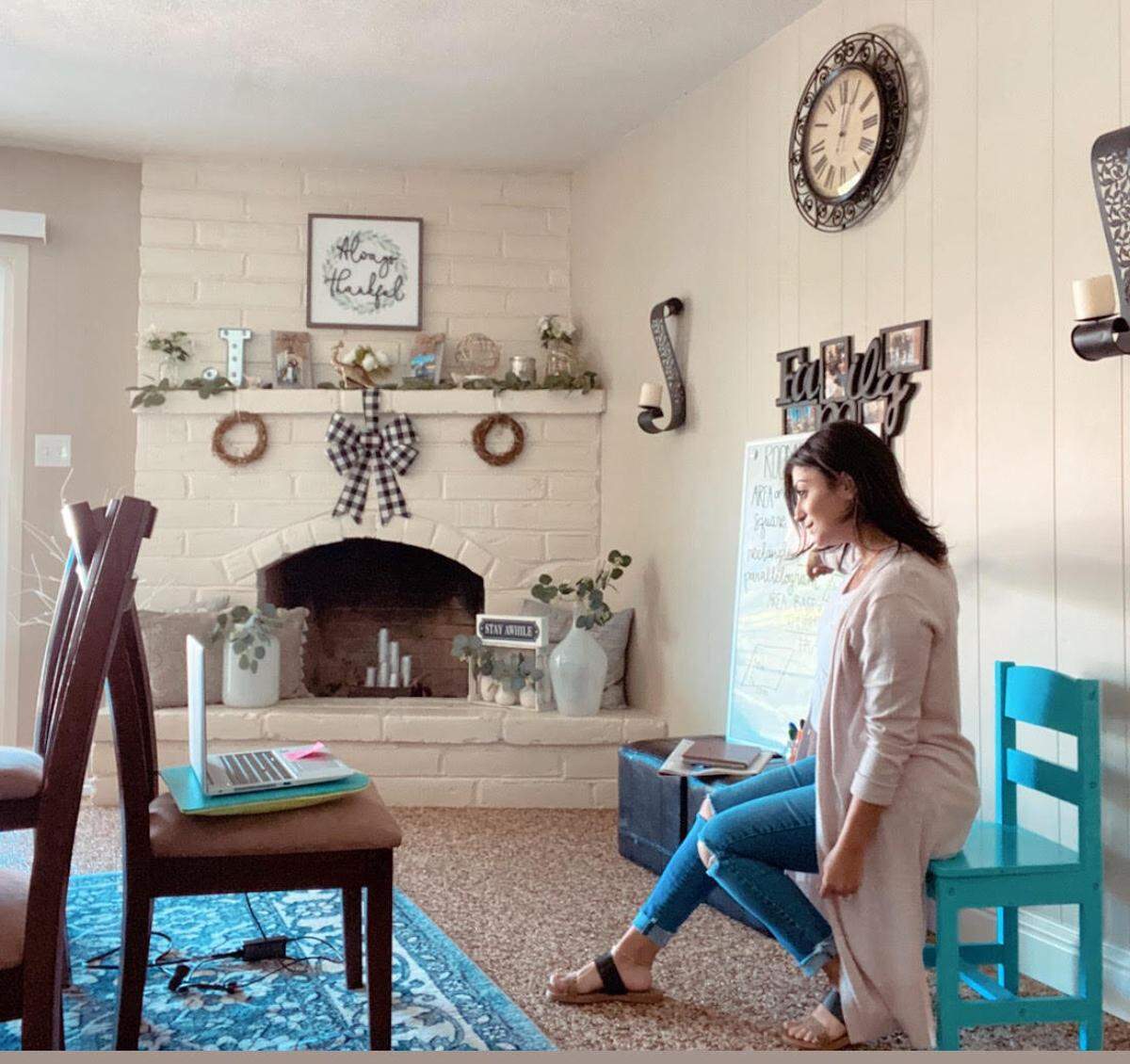
But many teachers didn’t get to say goodbye to their students, because they found out about the closures after the students were gone.
Castillo fought back tears, thinking about her students. She didn’t get to say goodbye.
“I miss my kids so much,” she said.
Teachers who spoke with The Bee said while distance learning is a struggle, most said they believe it could work academically as students and teachers adapt over time. But they also said there are essential aspects of teaching and learning — relationships and social connections — that can’t be duplicated in virtual classrooms.
Downs said making sure students are safe is harder during a global pandemic. There’s no way to gauge a student’s “emotional temperature” or see if they have unusual bruises or injuries.
Many of Down’s students often eat lunch in her classroom. Frequently, students talk to her about things happening at home.
So she wasn’t really surprised when her student called her so late at night.
“We don’t have a daily check-in (anymore),” Downs said. “Typically, a lot of kids at our site have social-emotional issues. That’s the reason I need to be in school is because of that. I need to build a foundation with my kids, so they feel comfortable calling me at 10 p.m.
“I was glad he called.”
The Education Lab is a local journalism initiative that highlights education issues critical to the advancement of the San Joaquin Valley. It is funded by donors. Learn about The Bee’s Education Lab on our website.
This story was originally published July 6, 2020 at 8:47 AM.