
What are Fresno State's options to deal with the professor who did the Barbara Bush tweet?
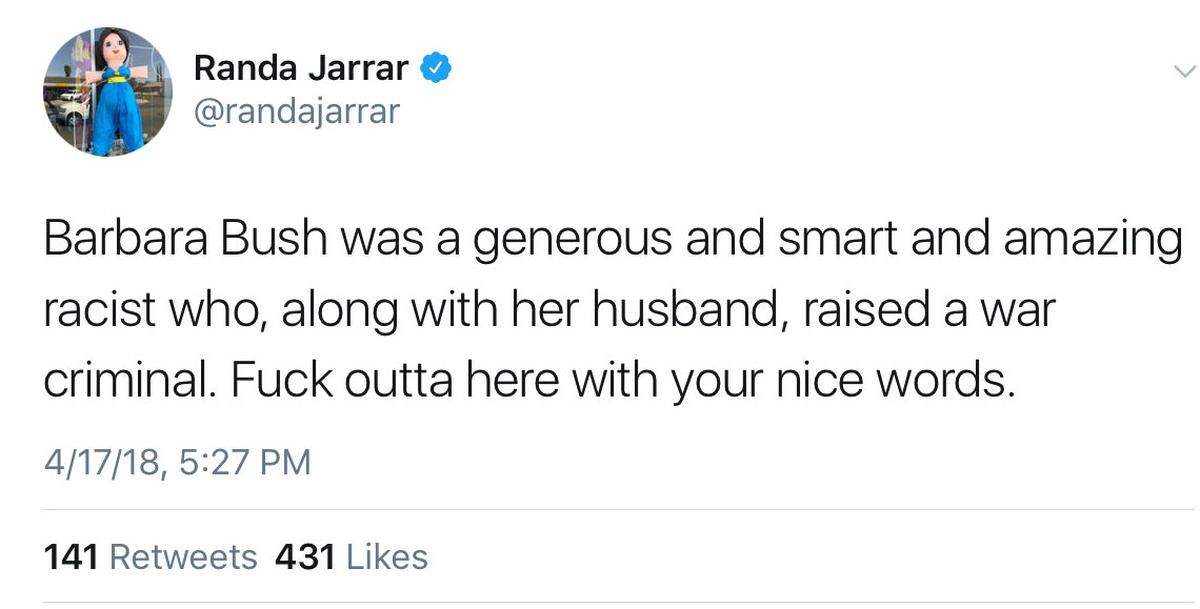
In the aftermath of Randa Jarrar's controversial tweets about Barbara Bush, people are asking whether Fresno State can fire the professor for her comments.
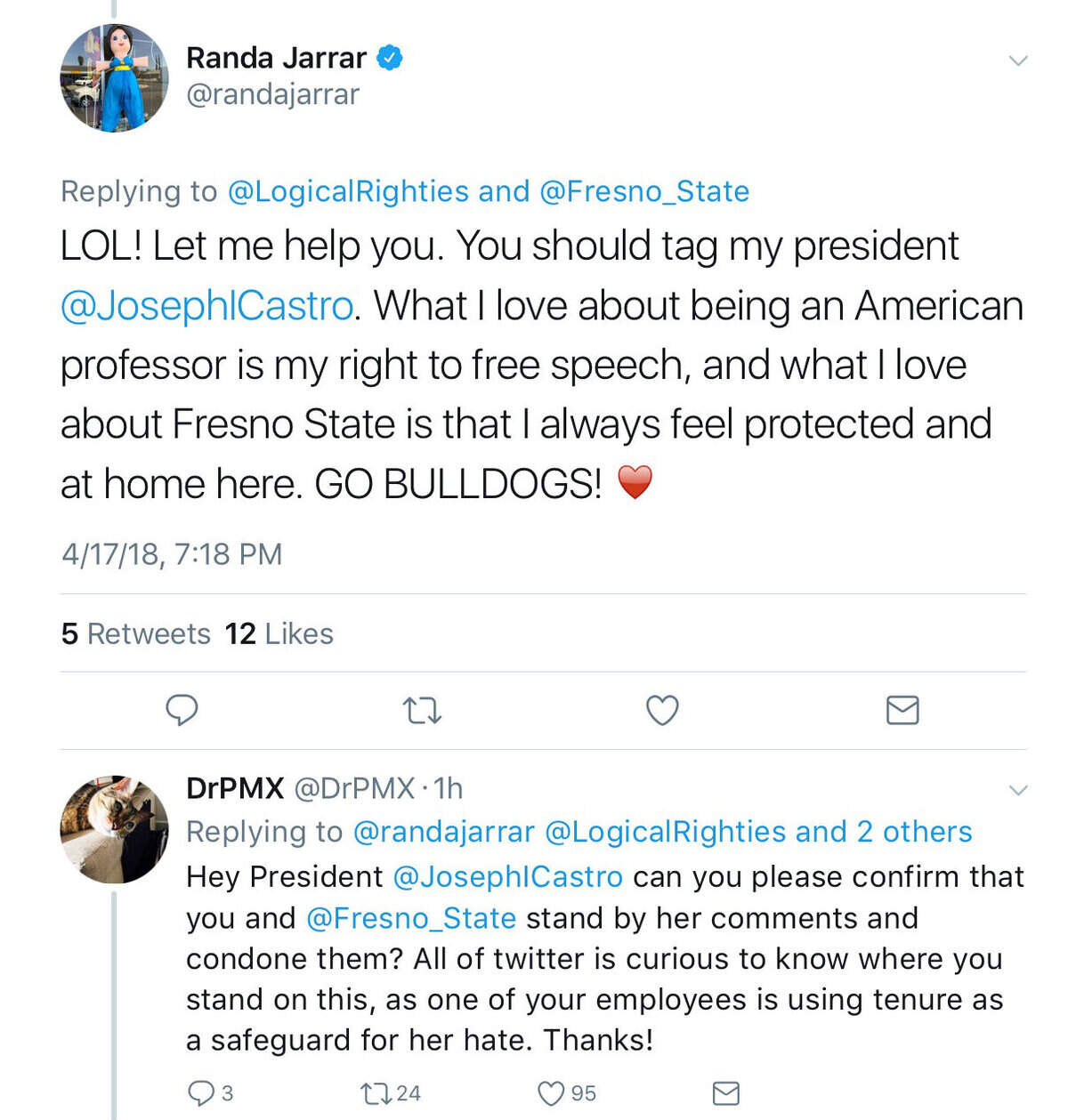
Jarrar didn't seem to think so Tuesday night, as she tweeted about her tenure and salary: "Sweetie I work as a tenured professor. I make 100k a year doing that. I will never be fired."
To attorney Ken White, the question of whether she can be fired has a simple, two-part answer: Her speech is protected speech. But that doesn't mean she wins.
White, who wrote about Jarrar on law blog Popehat, said to think of free speech as a right to a jury trial.
"You have a right to be tried by a jury, but that doesn't mean you'll win your case," he said.
While the First Amendment typically only protects speech from persecution by the government and not from employers, in Jarrar's case she is employed by the government.
A case like this, White said, would be subject to a three-stage analysis:
- Was the public employee speaking on a matter of public interest?
- Was she speaking as a private citizen or as part of her job duties?
- Did she cause enough disruption to interfere with orderly business?
It's clear Jarrar was speaking on a matter of public interest and as a private citizen, White said. Public university professors also have more protection than other public employees to speak as part of their job duties, as has been upheld in previous court cases.
One factor that complicates Jarrar's situation is that she told angry commenters they could reach her at a phone number that turned out to be a mental health crisis hotline run by Arizona State University.
An ASU official said her tweet swamped their phone lines with angry callers, causing the service to bring on more staff members to handle them. The line typically gets a handful of phone calls per week, but on Tuesday night and into Wednesday afternoon it was getting many more times that.
White wrote that if Jarrar's tweet had led to tied-up phone lines at a Fresno State crisis line, the university would have a good argument that she had disrupted operations — good enough to satisfy the last factor in the multi-stage analysis of the law.
But White said he thinks Fresno State also has a legitimate interest in professors not disrupting other universities. That alone could be grounds for discipline, although Fresno State would have to consider that tweet separately from her expressed political views.
What that discipline could look like depends on the university's collective bargaining agreement, the teachers union and Jarrar's status as a tenured professor, White said.
Tenure is a protected job status that means a worker is no longer an at-will employee. Historically, tenure is extended to university professors to protect them when they express controversial opinions, thereby promoting the free expression of ideas, White said.
White said it's "functionally impossible" to fire a tenured professor.
Lars Maischak, who last year came under fire for his comments about President Trump, was reassigned to teaching online classes for this year, which "meets his unit requirement per the faculty collective bargaining unit agreement."
Maischak was not tenured, but a union spokeswoman said at the time, under the terms of his contract, Maischak had a right to work.
Fresno State officials said Wednesday that tenure doesn't necessarily protect Jarrar.
President Joseph Castro said "all options are on the table" in deciding the university's course of action. He declined to comment on specifics citing personnel matters, but said the university will look into the faculty's collective bargaining agreement.
Fresno State faculty is part of the California Faculty Association. A representative from the union was not available for comment Thursday.
A release from the American Association of University Professors said that in a case of “extramural utterances,” the university should err on the side of the professor absent any clear evidence of their unfitness to teach.
“The controlling principle is that a faculty member’s expressions of opinion as a citizen cannot constitute grounds for dismissal unless it clearly demonstrates the faculty member’s unfitness to serve,” the statement read. “Moreover, a final decision should take into account the faculty member’s entire record as a teacher and scholar.”
Castro expressed his shock at Jarrar's tweets, calling the comments "outrageous" in one interview and "disrespectful" in another.
White said Castro is within his rights to make those statements.
"It's perfectly fine for another public employee to condemn your speech," White said. "When your higher-up suggests you will be disciplined for your speech, it's a problem."
On Thursday, a coalition of organizations sent a letter to Fresno State, calling out Castro for his comments and asking the university to end any investigation of Jarrar's tweets. The coalition included the ACLU of Northern California and the National Coalition Against Censorship, as well as FIRE, an organization that advocates for free speech on campuses.
"In launching its investigation into Jarrar's plainly protected speech, Fresno State places itself at odds with the First Amendment and the very principles of higher education," the letter read.
This story was originally published April 19, 2018 at 4:02 PM with the headline "What are Fresno State's options to deal with the professor who did the Barbara Bush tweet?."