
Clovis West had 4 threatening calls in 1 week. Why is the school a target of ‘swatting’?
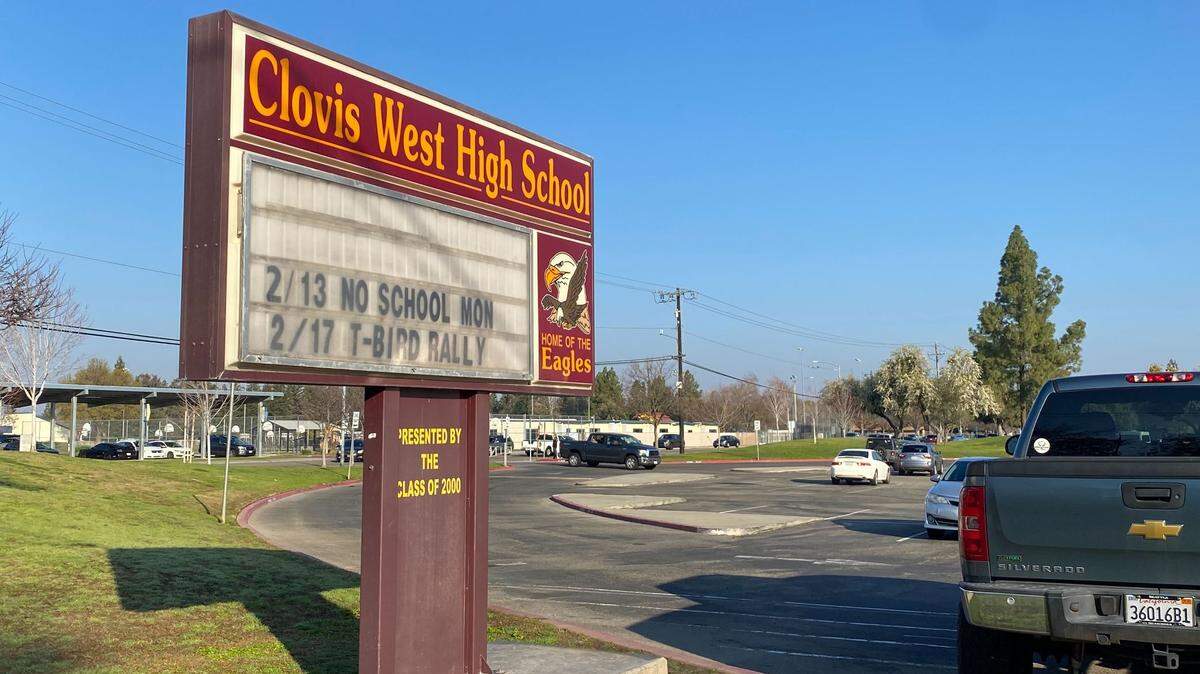
Why is Clovis West High School the target of repeated threats that might be coming from anywhere in the world?
That’s still an unknown to investigators, but FBI Special Agent Brian Nardella in Fresno said it’s possible whoever is making the calls might have some sort of connection to the school, or perhaps the central San Joaquin Valley.
It is just one of the questions investigators had after the school at Millbrook and Teague avenues was targeted again Thursday with a threatening phone call, the fourth time in a week.
“There’s all kinds of reasons for why that could be,” said Nardella of the motivation for picking the school.
The new threat was received just hours after school officials, including Superintendent Elmear O’Brien, offered reassurance to parents at a special meeting in an effort to calm fears among the Clovis West community.
Also at that meeting, Fresno Police Deputy Chief Mindy Casto said the threats might be tied to a separate threat made at a Fresno Costco over the weekend.
Clovis West is far from alone as a victim. School threats, sometimes called “swattings,” are on the rise across the nation. According to a report by National Public Radio, there were 113 cases between Sept. 13 and Oct. 5 in 2022. Most of the cases remain unsolved. When the calls originate outside of the U.S., tracking them down becomes even more difficult.
Swatters use technology to disguise the source of the call. Nardella said the FBI has the ability, through a legal process, that helps uncover the source of the call. That can hold true even when the call comes from another nation. However, it’s also problematic when relations between the United States and the other nation are less than good.
There’s also a cat-and-mouse game between bad actors using new technology to make threats, and law enforcement trying to stop them.
“It’s so easy to (be anonymous),” said Nardella. “It creates a huge challenge for us to crack that overnight.”
But, he added that “we are constantly advancing our technical capabilities to hopefully stop this type of crime.”
When swatters are caught, the consequences are severe.
In a 2019 case, swatter Tyler Rai Barriss agreed to serve more than 20 years in prison for making hoax reports of bombs and murders to police departments, high schools and a convention center across the United States.
In a 2020 case, a former white supremacist leader faced five years in prison for making swatting threats to a university, a church, and a former cabinet official.