Two murder-suicides in the central San Joaquin Valley in two weeks underline the deadly consequences of guns remaining in the hands of domestic violence offenders, even as legislators, courts, and police struggle for ways to separate the two.
When police later tried to pull over Vue, he killed himself.
Neither of the men responsible for their murder-suicide should have had a gun.
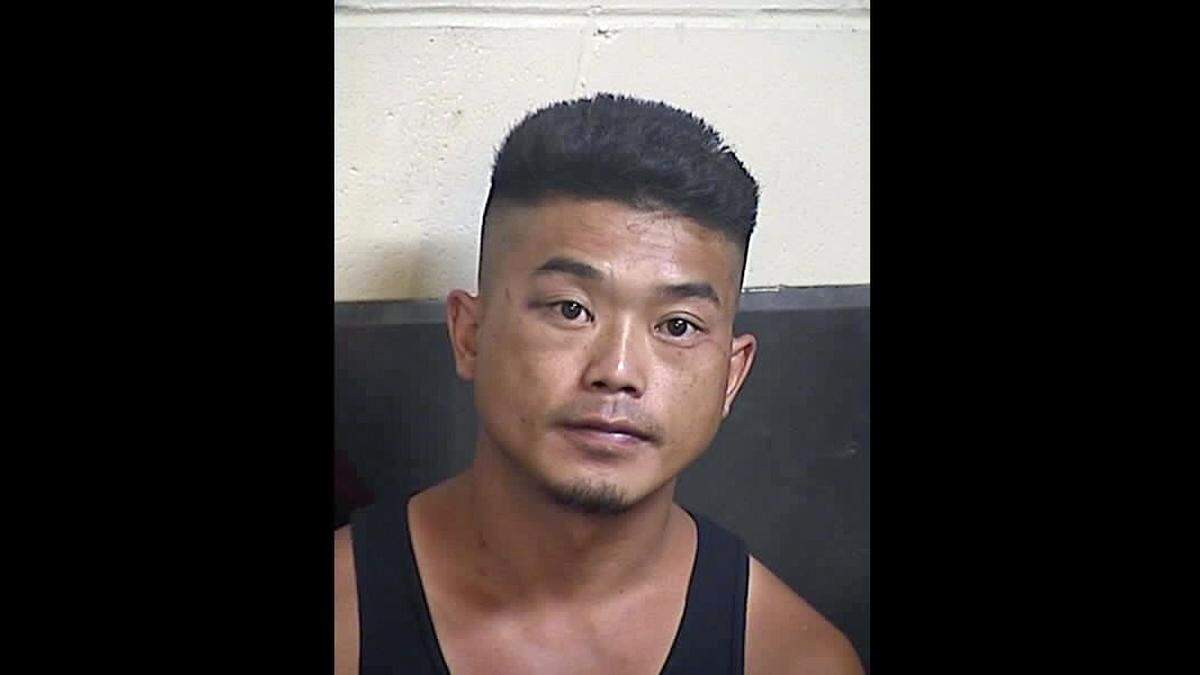
Kou Vue Fresno County Sheriff's Office
No legal right to possess firearm
As domestic violence offenders, neither man had the legal right to possess a firearm.
The deaths in Madera County and Fresno highlight rampant domestic violence in Fresno, which Charity Susnick of the Marjaree Mason Center said ranks at the top, per capita, among California counties.
California lawmakers have given police and counts the power to quickly obtain emergency protective orders allowing for the removal of guns from domestic violence suspects.
But Fresno County Sheriff’s spokesman Tony Botti said many have the opportunity to quickly get another gun.
Emergency protective orders easy to obtain
Madera County Sheriff Tyson Pogue called the Dec. 6 murder-suicide involving Monty and Julie Bounds a “tragic outcome to a frightful incident. Everyone has the basic human right to live in safety, free from violence and abuse.”
The couple died in a home in the 33300 block of Avenue 12.
Each suffered a single gunshot wound.
Pogue said that preceding the deaths, police issued an emergency protective order against Monty Bounds following a domestic violence arrest.
He was again arrested on Oct. 31, and deputies were granted a non-release order and a bail enhancement to keep him away from his wife.
Deputies also took guns from the home.
Monty Bounds also fought with deputies during one arrest and was subdued with an electronic stun device.
He was released by a Madera County Judge on Nov. 4 with a no-contact order, and banned from having guns.
Still, he managed to obtain a handgun that was not registered to him to commit the fatal shootings, the sheriff said.
Where suspect got his gun unknown
California Highway Patrol spokesman Mike Salas said Vue used a privately manufactured firearm — popularly known as a “ghost gun” — to kill his girlfriend’s sister.
The sheriff’s office confirmed that on July 8 of this year, Vue was arrested on assault with a deadly weapon, child endangerment and a warrant for domestic violence. His bail was set at $45,000.
However, he was let out July 12 as part of a probation pre-trial supervision agreement.
In 2012, he was arrested for kidnapping and false imprisonment, but the charges were dismissed.
Accord to CHP, both Vue’s girlfriend and her sister Ta-Sheng Ly were in a car on Highway 41 about 10 p.m. Saturday when Vue, in his car, persuaded them to pull over on southbound Highway 41 south of Ashlan Avenue.
When Vue stepped out of his car brandishing a handgun, Ta-Sheng Ly, who was driving, attempted to speed away.
Vue shot at the car multiple times, CHP said.
He then sped away after Ta-Sheng Ly crashed her car. She died at Community Regional Medical Center.
Later, Vue killed himself just after police stopped him and tried to get him out of his vehicle.
How sheriff’s deputies take guns
Botti said when deputies go to a domestic violence incident, they offer the victim assistance obtaining an emergency protective order from a judge, who is on standby to receive after-hour calls, “right there.”
Then, they take any guns “we know about,” if the victim tells deputies where they are located.
But there is an “X factor,” he added.
“There are so many illegal guns out there ... ghost guns alone,” he said, that makes it difficult to prevent a suspect from rearming.
“It’s safe to say our ability to take somebody’s gun is only as good as the information we have,” said Botti. “If the (victim) has no knowledge (of the suspect’s gun), that’s going to be difficult.”
Susnick, of the Marjaree Mason Center, said the agency has a close working relationship with police, including following up after police go to an incident.
She said the agency is seeing more violence in general, “including more severe physical injuries.” The agency utilizes a Lethality Risk Assessment to evaluate the level of danger a victim may face.
Domestic violence spikes during the summer months and after the holiday season, she added.
But it’s a year-round crime.
“During the holidays, people try to reconcile. But red flag issues will come back,” she said, “triggered by causes including alcohol, family stress and debt.”
This story was originally published December 21, 2022 at 5:00 AM.
A native of Colorado, Jim Guy studied political science, Latin American politics and Spanish literature at Fresno State University, and advanced Spanish grammar in Cuernavaca, Mexico.