
Fresno gang member challenged judge over the law. 13 years later, the gang member won
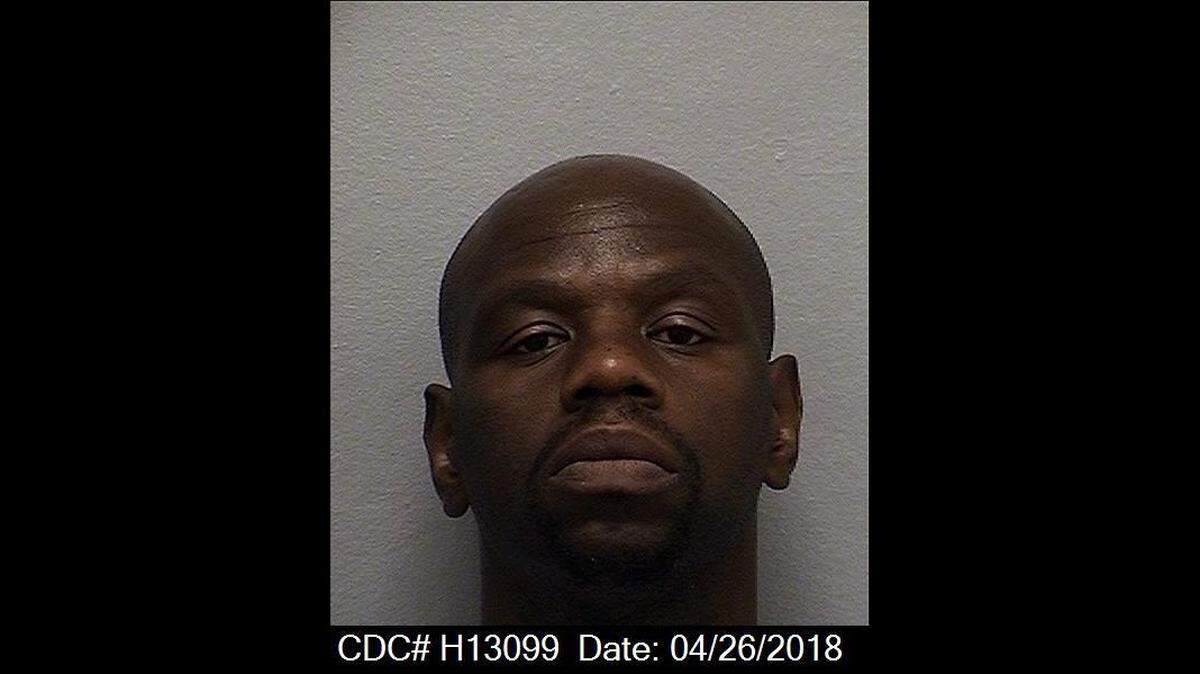
A Fresno gang member who spent time behind bars for his role in the 1990 Labor Day shooting rampage that left one dead and nine wounded, and was sent back to prison in 2006 on a gun charge, has won his petition for new trial.
Thirteen years ago, Dwight Tamplin Jr. told a Fresno Superior Court judge that he wanted to represent himself against the gun charge. But the judge said no.
When Tamplin warned Judge Gary Orozco that he was violating his rights, the judge cut him off. “You don’t know the law, sir,” Orozco said, according to a transcript from Tamplin’s criminal case from 2004 to 2006. Tamplin, represented by a lawyer, was convicted of the gun charge and sentenced to 25 years to life in prison.
But evidently, Tamplin knew the law after all.
This month, the U.S. Court of Appeal for the Ninth Circuit in San Francisco ruled that Orozco and several other Fresno judges violated Tamplin’s Sixth Amendment right to self-representation in his criminal case. The ruling means Tamplin has a right to a new trial on the gun charge, unless prosecutors successfully appeal the Ninth Circuit decision.
“He never gave up,” said Fresno attorney Katherine Hart, who argued Tamplins’ case in front of a panel of Ninth Circuit judges.
The ruling is important, Hart said, because it is a published decision. That means the ruling will affect defendants facing similar circumstances as Tamplin, she said.
More importantly, Hart said, Tamplin’s case shows that the courts are not just for people with law degrees. “This shows the courts are accessible to the common man, or anyone who has a legitimate complaint,” Hart said.
According to Hart, Tamplin wrote his own petition for a new trial from prison, first to Fresno Superior Court. After his petition was rejected in Superior Court and by the 5th District Court of Appeal in Fresno and the California Supreme Court, Tamplin filed his petition in U.S. District Court Fresno.
It was rejected in Fresno federal court, too, but a judge appointed Hart to represent Tamplin.
“It’s pretty remarkable what he did,” Hart said, noting that Tamplin has little education, no legal training and has spent most of his life behind bars. “But he knew enough of the law to write down the basics,” Hart said. “He even attached transcripts from his trial to his petition.”
Police say Tamplin was 16 years old when he and three other teens went on a 1990 Labor Day weekend rampage in Fresno, randomly shooting people. One man was killed and nine others were wounded.
Tamplin, a member of the Villa Posse street gang, was tried as an adult after being found unfit for the juvenile justice system.
Initially charged with murder, Tamplin was sentenced to 23 years in prison after accepting a plea agreement and pleading no contest in May 1991 to attempted murder and robbery.
Paroled in July 2003, Tamplin got in trouble eight months later.
According to court records, the gun charge stems from events on March 21, 2004, when Tamplin, then 30, and three others were pulled over by the California Highway Patrol near Olive and Crystal avenues, just west of Roeding Park. Inside the car, the CHP found two loaded revolvers.
All four people in the car were charged with being ex-felons in possession of a firearm. Anthony Lynn Taylor, 26, and Anthony Lynn Robinson, 30, never made it to trial; they were shot and killed April 22, 2004, at an apartment complex near Manchester Center in central Fresno. The fourth suspect, Brandon Lambert, then 22, pleaded guilty to possession of a firearm in August 2004. He received a two-year prison term, court records show.
A jury convicted Tamplin, who was sentenced under California’s Three Strikes and You’re Out repeat offender law to 45 years to life in prison. On appeal, his sentence was reduced to 25 years to life, the Ninth Circuit ruling says.
Now 44 years old, Tamplin is behind bars at North Kern State Prison in Delano, awaiting word on whether the California Attorney General’s Office will appeal the Ninth Circuit decision. The AG’s office did not return The Bee’s telephone call and email seeking comment.
According to the Ninth Circuit ruling, Judge Orozco had his own reasons for denying Tamplin’s right to represent himself.

After his arrest on the gun charge, Tamplin cycled through three court-appointed attorneys. In February 2005, he was successful in his motion to defend himself. But as his trial neared, he decided on June 22, 2005, to hire Fresno attorney Greg Morris, who requested time to file a motion to sub in as Tamplin’s attorney.
But two days later, the State Bar of California stripped Morris from practicing law for “misappropriation of client funds,” the ruling says.
Back in court on July 8, 2005, Tamplin informed Orozco that he wanted to represent himself. When Orozco asked Tamplin if he would be ready for trial on July 14, Tamplin said no.
According to the ruling, Tamplin told the judge that his court-appointed lawyers “haven’t been representing me, they haven’t filed anything, they haven’t done nothing that’s going to help my case.”
If that’s the case, Orozco asked Tamplin why he hired Morris. “I felt I needed to do it at the time,” Tamplin said, explaining that a lawyer could assist him in such things as making objections to evidence.
With Morris out of the picture, Tamplin said he wanted to represented himself. Orozco, however, denied the motion, saying, “obviously he wanted counsel to do things he could not do at trial.” The judge also noted that Tamplin’s motion was made days before trial and his argument appeared equivocal. Orozco appointed a lawyer to represent Tamplin.
After his conviction, Tamplin’s appointed appellate lawyer failed to raise his right to self-representation, the Ninth Circuit ruling says. Tamplin then wrote his own petition for a new trial, first to Fresno Superior Court. Tamplin argued that he had a right to represent himself and that his appellate counsel was ineffective since the issue was not raised on appeal.
But Superior Court Judge James Oppliger denied the petition, ruling that Tamplin’s appellate lawyer was not ineffective and that Tamplin had “not unequivocally requested to represent himself.” Because he had tried to hire Morris, Tamplin “was simply searching for a compatible attorney,” Oppliger said, according to the ruling.
Tamplin also waived his right to self-representation, Oppliger said, because he never objected to having a court-appointed lawyer during the months spent waiting for his trial on the gun charge.
The 5th District Court of Appeal and California Supreme Court later rejected Tamplin’s Appeal of Oppliger’s ruling, prompting him to file his petition in U.S. District Court. where Judge Anthony Ishii appointed Hart to take over Tamplin’s petition.
Ishii later denied the petition, prompting Hart to take the issue to the Ninth Circuit.
Hart said Tamplin was standing on solid legal ground.
“Since the 1970s, the U.S. Supreme Court, under Faretta versus California, has said a criminal defendant has a right to refuse counsel and represent himself or herself in state criminal proceedings,” Hart said.
“This ruling is not new law,” Hart said. “But it sends a message to state courts and reaffirms an old point in law that a defendant has an absolute right to represents himself or herself.”
This story was originally published July 13, 2018 at 2:10 PM.