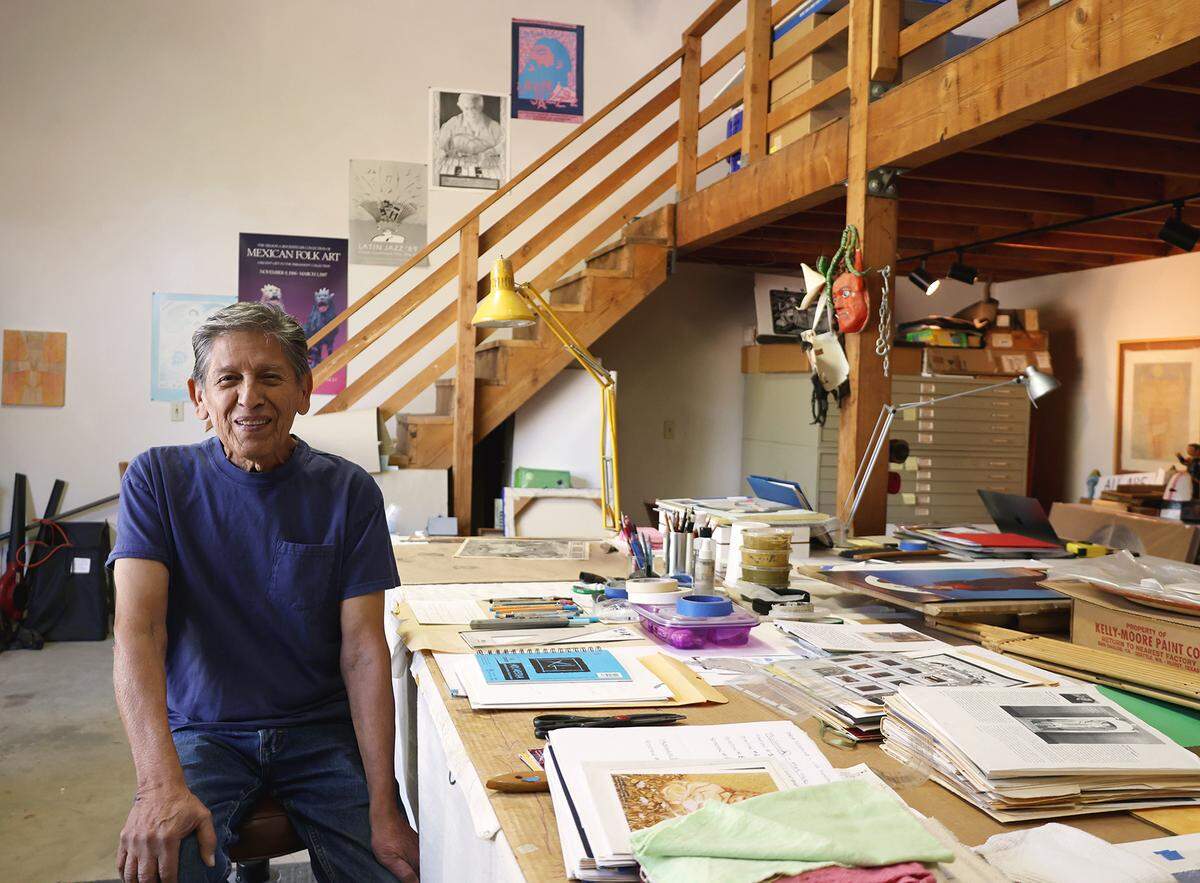
Co-founder of Arte Américas and champion of Chicano art dies in Fresno at 83
AI-generated summary reviewed by our newsroom.
- F. John Sierra, co-founder of Arte Américas, died at age 83 on April 17.
- Sierra completed The Planting of Cultures, a five‑story mural in Fresno in 1982.
- A funeral mass is scheduled for August 6 at St. Anthony’s with a celebration after.
F. John Sierra, one of the San Joaquin Valley’s leading artists and co-founder of Arte Américas, has died. He was 83.
Sierra died at his home on April 17, with family members at his side.
Born Felix John Sierra to a Mexican immigrant father and a U.S.-born mother, Sierra was one of nine children. The family moved several times over the years, from Kerman to Biola, a farming community north of Kerman, and then to Fresno in the mid-1950s.
Sierra began using John as his first name when he grew tired of kids calling him Felix the Cat, after the long-running cartoon character.
In Fresno, Sierra attended St. John’s Elementary and later San Joaquín Memorial High School. After graduating, he took an evening art class at Fresno City College, where his passion for creating began to develop.
He became skilled at drawing and in the mid-1960s, with the Vietnam War raging, enlisted in the Air Force and became a technical illustrator stationed in Waco, Texas.
During the turbulent 1970s, Sierra’s work began to reflect a deep sense of cultural pride and support for the struggles of the disenfranchised. He worked with Luis Valdez’s El Teatro Campesino, a cornerstone of the Chicano arts movement, to create pamphlets.
In 1978, Sierra earned a Rockefeller/NEA Fellowship in Museum Administration, allowing him to train at the de Young Museum in San Francisco.
Arianna Paz Chávez, executive director of Arte Américas, said Sierra was inspired by his experience at the de Young Museum. “John returned home decidedly ambitious for his community in his commitment to the representation of our communities in arts institutions,” she said.
In 1987, Sierra, Lilia Gonzáles Chávez and Nancy Marquez conceptualized and created Arte Américas as a place where Latino community members could see themselves and their stories represented through art.
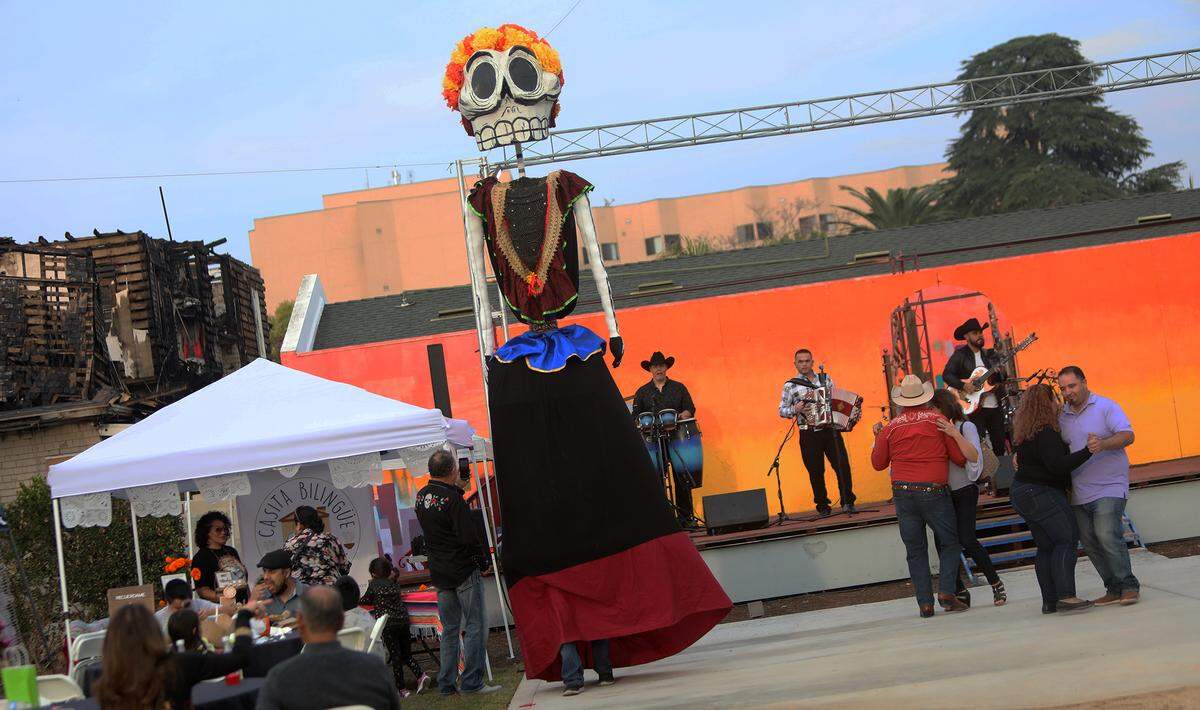
The center, the only one of its kind in the San Joaquin Valley, moved into its permanent home on Van Ness Avenue in 1995.
Chavez said Sierra organized the first community celebration of día de Muertos in Fresno in 1985 with a procession from St. John’s Cathedral to what was once the Fresno Metropolitan Museum of Art.
“He advocated for expanded representation of our Latino communities within the museum, and when his suggestions were not prioritized, he and Arte’s co-founders established Arte as a space that would do what the Valley’s dominant institutions would not,” Chavez said. “He served as curator of Arte Américas for many years, connecting Fresno and the Valley to the broader Chicano Arts Movement at every opportunity.”
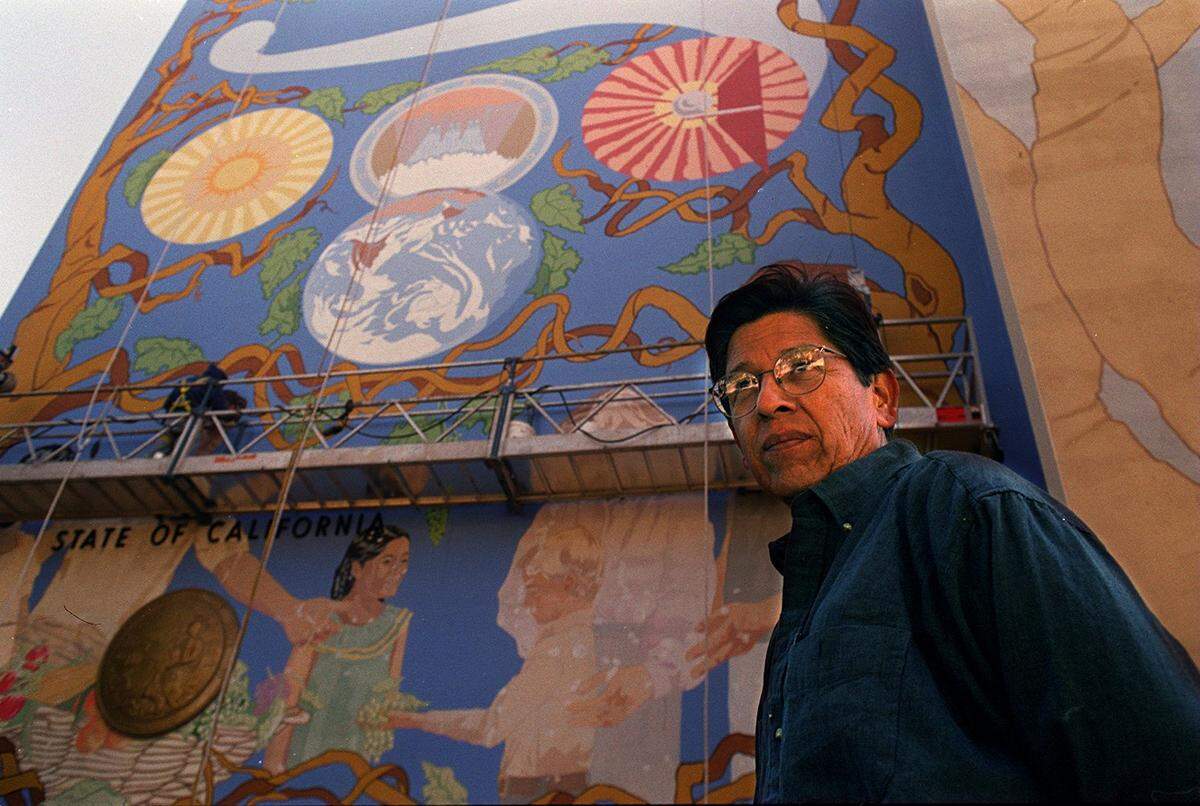
Sierra’s legacy in the art world also includes perhaps his best-known work, “The Planting of Cultures” mural, completed in 1982. He was awarded a public art commission to create the five-story mural on the Hugh Burns state building, 2550 Mariposa St. in Fresno.
The mural covers the entire side of the building and serves as testament to Sierra’s artistic and humanistic vision. It is the tallest mural in the Valley and stands as a key piece in California’s history of public art.
Sierra’s longtime friend Rick Soto drove down from the Bay Area a few weeks ago to spend some time with his friend of more than 50 years.
Soto met Sierra in an art class at Fresno State taught by Ernest “Ernie” Palomino, a pioneering muralist and activist in Fresno. Palomino is among the first artists to become part the emerging genre of Chicano art, a movement Sierra would eagerly embrace.
Soto and Sierra became fast friends, sharing a love of creating art despite having completely different personalities. Soto described Sierra as being very methodical in choosing what colors to paint with. He favored muted, sophisticated colors as opposed to bold and shocking.
As Soto drifted away from Chicano art and into marketing and branding, Sierra remained steadfast to painting, creating murals and teaching at Roosevelt High School.
Leaving Sierra after their recent visit, Soto admitted it was hard to keep his emotions in check, but he also didn’t want to upset his friend’s wife, Virginia, who he described as a rock. “After I gave her a hug, I went out to my car in the driveway and started to cry,” Soto said.
Soto’s brother Gary, a novelist and poet, also was a close friend of Sierra’s and visited him shortly before his passing.
Gary Soto said Sierra was truly a master at his craft and a wonderful person. “John was one of the most humble, sincere and kindest people I have ever met,” he said. “If more men and women were more like him, we could solve a lot of problems in this world.”
John and Virginia Sierra were married for 55 years and raised three children, Danielle, Kristen and Joshua.
Virginia, who also goes by Ginny, still remembers their first date: the Christmas Catholic Singles Dance in the basement of St. John’s Cathedral. She even remembers the day, Dec. 17, 1969.
Virginia Sierra said she was not only impressed with her future husband’s good looks but also his incredible posture. “He had such beautiful posture and he walked with such an air of pride,” she said. “He held his head up and dressed up in a nice suit. He really caught my eye.”
The couple married about a year later. “We were just stupid over each other,” Virginia Sierra with a sigh. “I am really going to miss him.”
A funeral Mass will take place at St. Anthony’s on Aug. 6 at 10 a.m., and Arte Américas will host a celebration of life in its plaza at 6 p.m. the same day.