Those big statues lurking just off Fresno’s Highway 41? Here’s the backstory
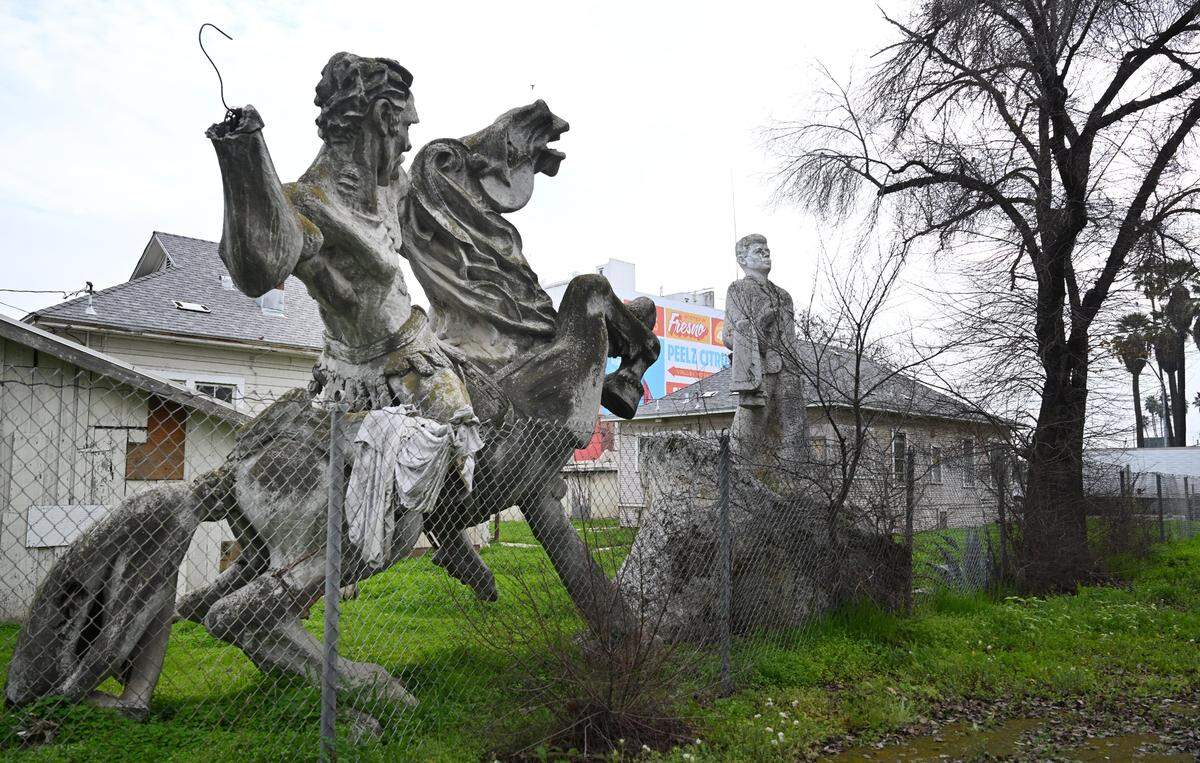
Tucked off the side of a Highway 41 overpass in an industrial section of downtown are two of Fresno’s most surprising pieces of public art; in that they were never intended for public view.
Created by Fresno artist/sculpture Varaz Samuelian in the 1960s, the pair of large-scale statues were works in progress, abandoned to become a kind of roadside attraction and forgotten to all but those who know where to look.
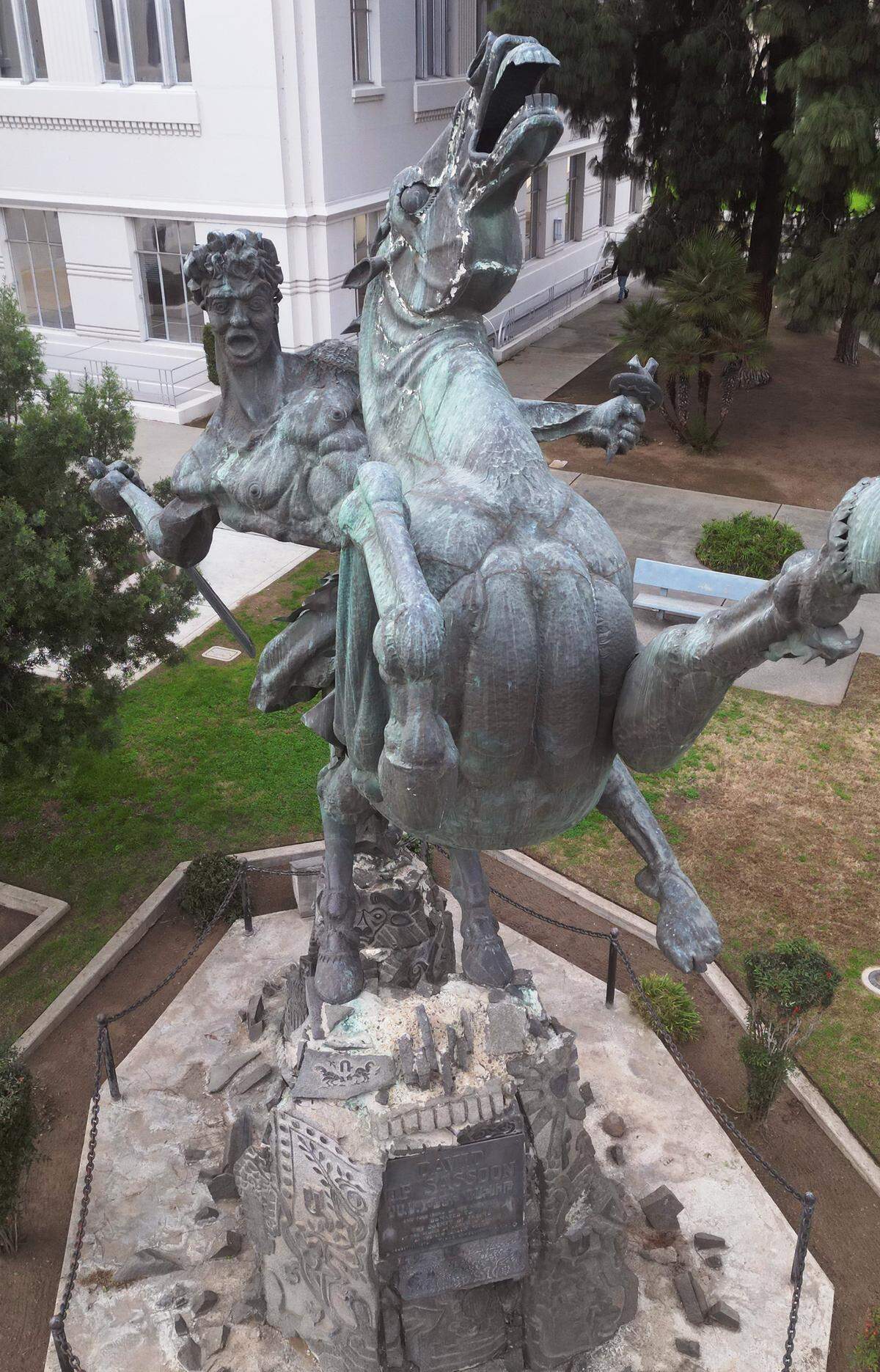
“Those pieces were prototypes for final works,” says Fresno Arts Council executive director Lilia Gonzales Chavez. She’s answered this question before. “I only know that David of Sassoon was installed at Court House Park near the Hall of Records.”
She’s talking about the two-and-a-half-ton copper statue Samuelian created as an ode to Armenian folk hero David of Sassoon. The statue depicts David, shirtless and on horseback with sword in hand, reared up as if ready for battle. “You can’t miss it,” The Fresno Bee wrote of the statue shortly after its installation in 1970, “all muscle and revenge, clawing hoofs and frozen terror.”
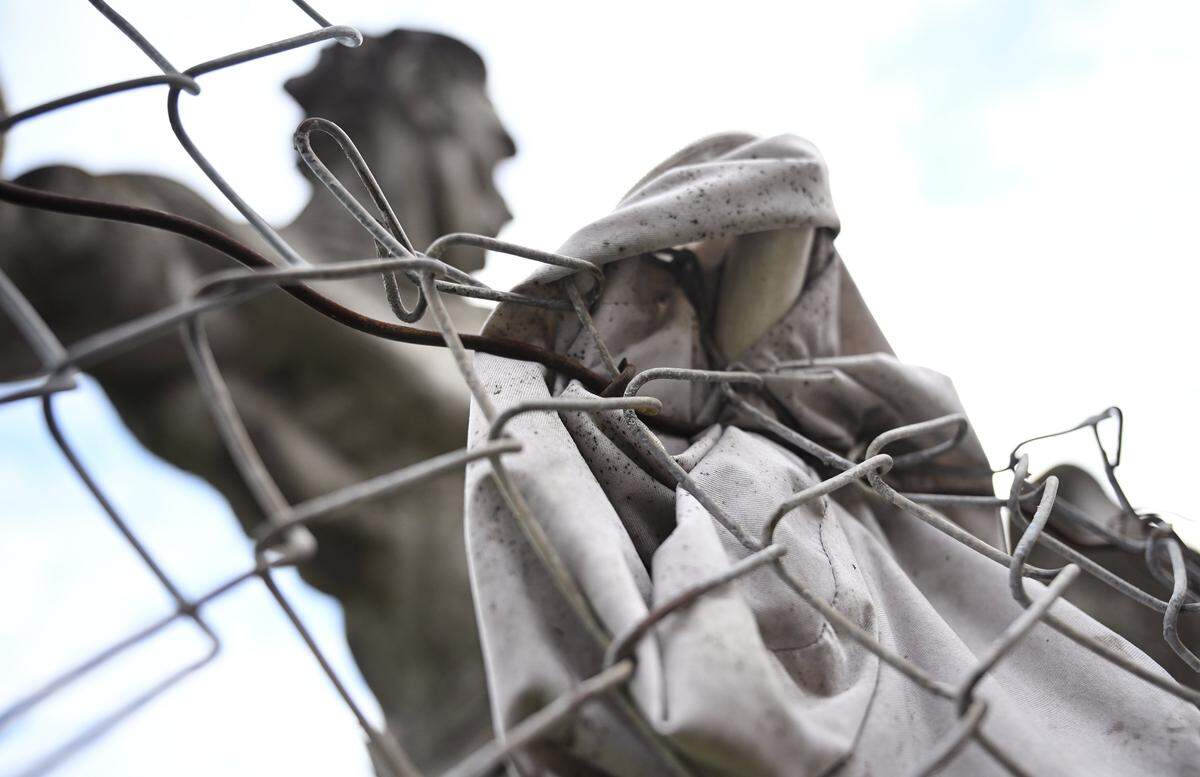
The roadside version is done in concrete, not copper, and visibly unfinished or in disrepair. David is missing part of his right leg and his right arm ends where his hand should be. In place of his sword is a steal pipe, bent into a hook. It’s menacing in a way the artist may not have intended.
The unwanted JFK
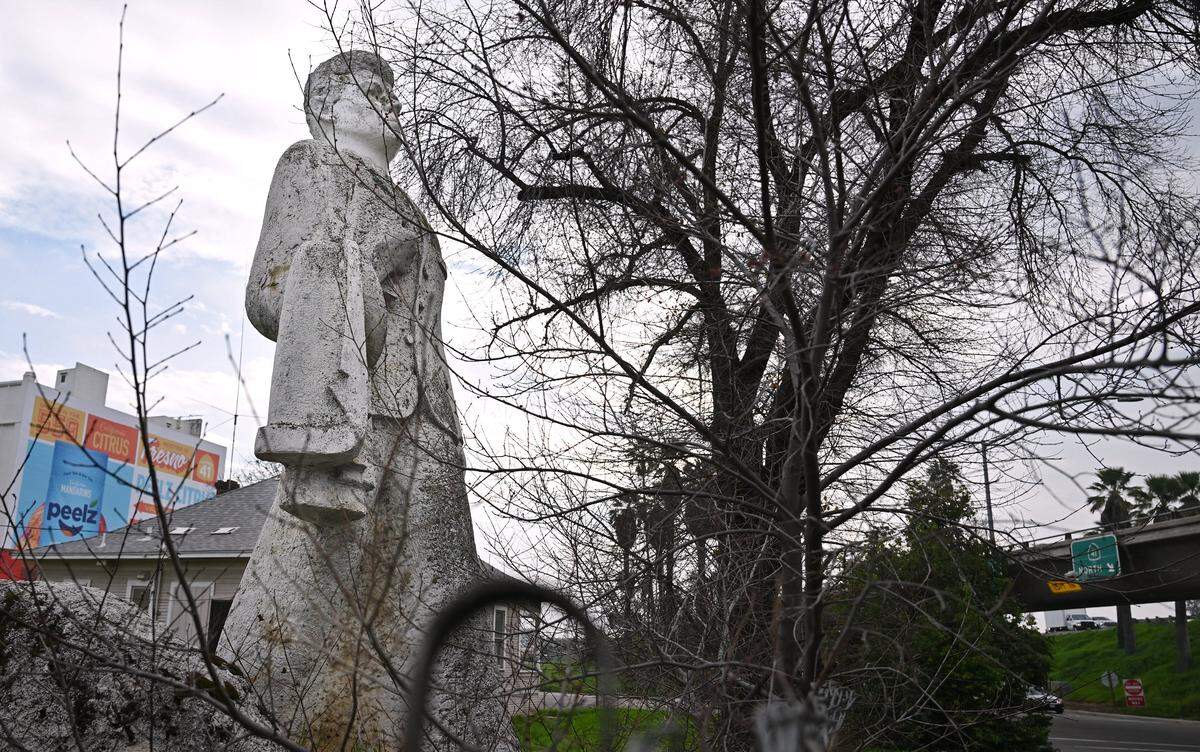
From his mounted position, David appears to be looking directly at the other statue, a 16-foot likeness of John F. Kennedy, which Samuelian created following the president’s death in 1963.
“When the president was killed, I felt so bad,” Samuelian told The Fresno Bee in 1964. “He was such a good man. I think, ‘What can I do?’” He sketched and painted and even sculpted out a bust of the president, before setting to work on the clay piece in the yard outside what was then his studio just of Van Ness Avenue near Old Armenian Town.
“He’s too big to go inside.”
There was question at the time about where the statue would go and how long it could be left standing in the elements. “Clay cannot last,” Samuelian told The Bee. “I could make him in concrete, or bronze. But where can he go? He shouldn’t stay here.”
But the statue was never commissioned, or purchased, and remained on the property, even following Samuelian’s death in 1995.
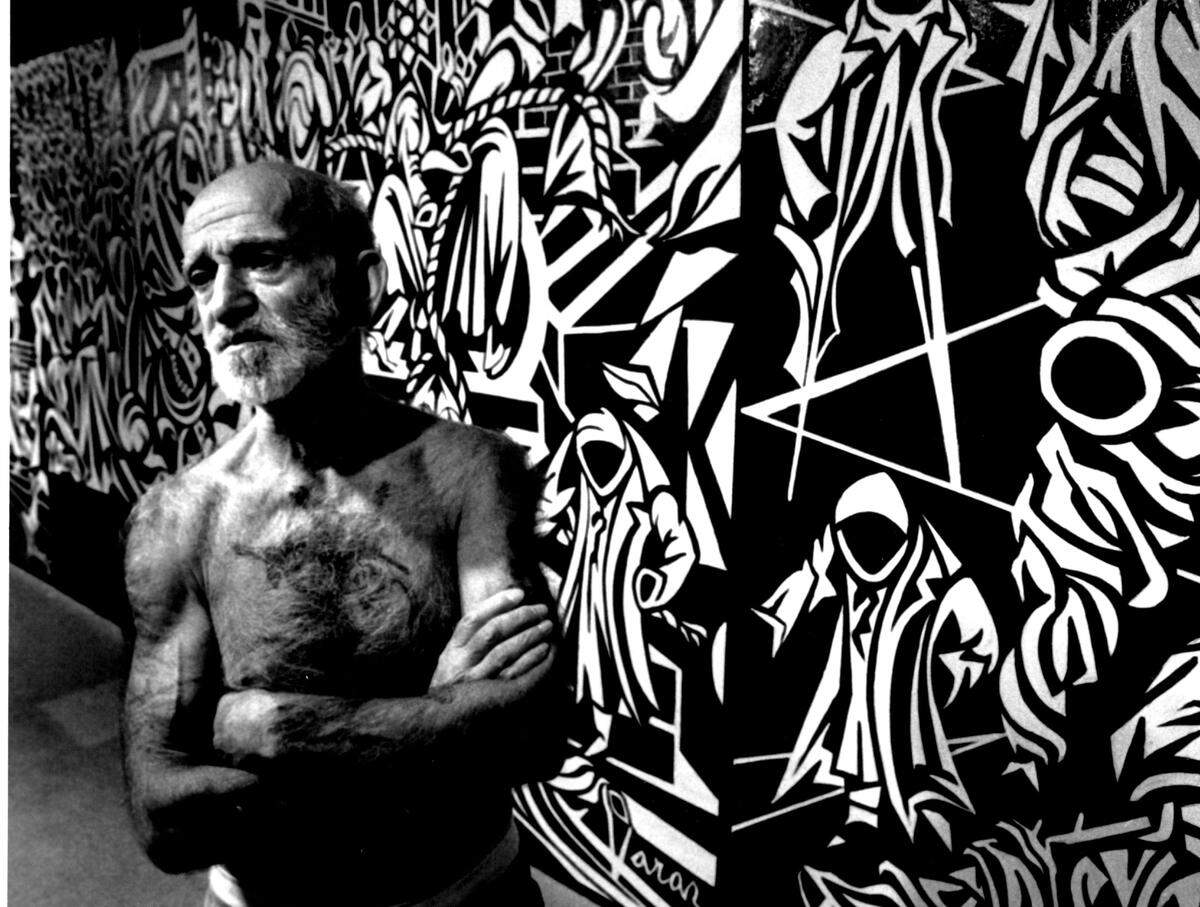
Who was Varaz Samuelian?
For a time, Samuelian was one of Fresno’s best-known and most prolific artists.
Born in Armenia in 1917, he immigrated to the United States from France following the end of World War II. Depending on the biography you read, Samuelian ended up in Fresno either to be with his brother or to be with his wife’s family, or on the recommendation of noted author William Saroyan. The two were close friends.
See: Samuelian’s 1985 memoir “Willie & Varaz: Memories of My Friend William Saroyan.”
Or: the bronze bust of Saroyan that sits at the entrance of the Fresno Convention Center. Samuelian had originally intended it to be a full-sized stature of the author, complete with the bicycle he was known to ride through town, but the money for that never came through.
A charter member of Fresno’s Fig Tree Gallery, Samuelian exhibited his abstract paintings and other works at galleries across the world; in Nice, Marseilles, Barcelona, Mexico City, New York and Paris, where he would eventually split residence in his later years, in emulation of Saroyan.
In Fresno, he created his own space to exhibit the work, which he once estimated to be more than 1,000 pieces. In, 1982, he opened the Varaz Museum of Modern Art in a 5,000 square-foot building at Merced and R Street, next to what was then Community Hospital. He constructed the museum, “almost singlehandedly,” according to a story in The Bee at the time.
It was a “monument to Samuelian’s indefatigable creativity.”
“The first thing, a museum is the best cultural thing a city can have,” he told The Bee.
“It is the mirror of the city. In a museum, you can see a city’s whole culture.”